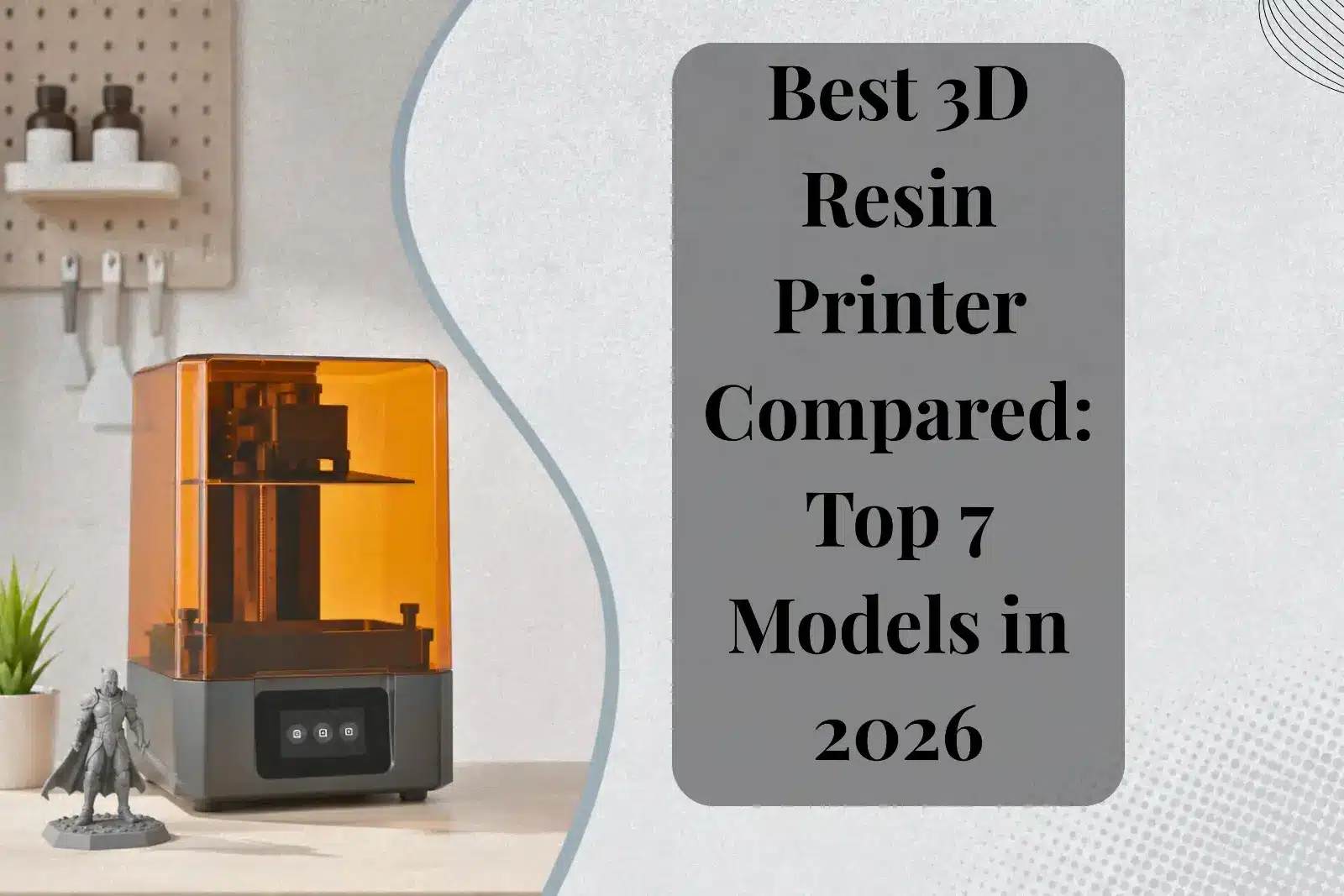
Many people searching for the best 3D resin printer focus only on resolution or price and overlook important factors such as print speed, reliability, maintenance costs, and ease of use. This often leads to disappointment after purchase. The good news is that today’s resin printers offer excellent performance across a wide range of budgets. In this article, you’ll discover the best 3D resin printer options for beginners, hobbyists, miniature makers, and professionals, along with the key features that matter most when making a smart buying decision.
Quick List of the Best 3D Resin Printers in 2026
The best 3D resin printer depends on what the user plans to create. Some machines focus on ultra-fine detail for miniatures, while others offer larger build volumes for business and production work. Recent improvements in speed, reliability, and automation have made modern resin printers more capable than ever. The quick list below highlights the top models in 2026 and the type of user each one suits best.
| Printer Model | Best For |
| Elegoo Saturn 4 Ultra | Best Overall |
| Anycubic Photon Mono 4 | Best Budget Option |
| Elegoo Mars 5 Ultra | Best for Detailed Models |
| Formlabs Form 4 | Best Professional Choice |
| Phrozen Sonic Mighty 8K | Best Large-Format Printer |
| Anycubic Photon Mono X2 | Best Value for Money |
| Phrozen Sonic Mega 8K S | Best for Small Print Farms |
Comparison Table of the Best Resin Printers
Choosing a machine based only on marketing claims can be difficult. Looking at the core specifications side by side gives a much clearer picture of what each model offers. Factors such as price, resolution, build size, and speed often have a bigger impact on the overall experience than a single headline feature.
Price
The cost of a printer can range from budget-friendly models for hobby use to premium systems designed for professional production. Buyers should consider both the purchase price and long-term operating expenses.
Resolution
Higher resolution helps create smoother surfaces and sharper details. This is especially important for figures, collectibles, jewelry patterns, and other projects that require fine accuracy.
Build Volume
The build volume determines how large an object can be produced in a single job. Larger platforms are useful for bigger models or batch production.
Print Speed
Recent advances have significantly improved speed. Some modern machines can complete projects much faster than older SLA systems while maintaining excellent detail.
Best Use Case
Every machine has strengths. Some are better suited for detailed models, while others focus on productivity, professional workflows, or affordability.
| Printer | Price Range | Resolution | Build Volume | Print Speed | Best Use Case |
| Elegoo Saturn 4 Ultra | Mid-Range | 12K | Large | Up to 150 mm/h | Overall Performance |
| Anycubic Photon Mono 4 | Budget | High Detail | Compact | Fast | Entry-Level Users |
| Elegoo Mars 5 Ultra | Mid-Range | Ultra High Detail | Medium | Very Fast | Detailed Figures |
| Formlabs Form 4 | Premium | Professional Grade | Medium | Extremely Fast | Business Production |
| Phrozen Sonic Mighty 8K | Mid-Range | 8K | Large | Fast | Large Models |
| Anycubic Photon Mono X2 | Mid-Range | High Detail | Large | Fast | Value-Focused Buyers |
| Phrozen Sonic Mega 8K S | Premium | 8K | Extra Large | Fast | Small Production Farms |
How We Tested the Best 3D Resin Printers
Choosing the right machine requires more than comparing specifications. To identify the top performers, each printer was evaluated using the same standards and print projects. Rather than relying on manufacturer claims, the focus remained on real-world performance, consistency, and overall user experience.
Print Quality Testing
Print quality was assessed using detailed figures, small mechanical parts, and a prototype model. Fine details, sharp edges, surface smoothness, and dimensional accuracy were carefully examined after cleaning and post-processing. High-resolution systems, including several 12K models, were compared to determine whether the added resolution created noticeable improvements. In detailed projects, the difference was often visible, especially on textured surfaces and tiny design elements.
Speed Testing
Speed tests used identical models and similar settings across all machines. Actual completion times were recorded and compared. Newer systems, such as the Saturn 4 Ultra, consistently completed jobs faster than older designs while maintaining excellent detail.
Ease of Use
Daily operation plays a major role in long-term satisfaction. Setup time, menu navigation, automation features, and slicer software were evaluated as part of the review process. A smooth workflow can save hours over months of regular use.
Reliability Testing
Reliability was measured through repeated print cycles using the same build plate. Models including the Anycubic Photon Mono series were evaluated for consistency, adhesion performance, and successful completion rates. Testing also took place in a workspace with proper ventilation to reflect safe operating conditions. A machine that delivers dependable results every time ultimately provides the best overall value. For instance, repeated prints of the same detailed model produced consistent dimensions and surface quality across multiple print cycles. This type of reliability is especially important for users creating products for customers or repeat projects.
Best 3D Resin Printer Reviews
Choosing the right machine can feel overwhelming because today’s market offers options for every budget and skill level. Some models focus on speed, while others prioritize detail or large build capacity. After comparing dozens of print results, it became clear that no single machine is perfect for everyone. Instead, the best choice depends on the type of projects a user plans to create. The following recommendations are based on print quality, reliability, ease of operation, and overall value.
Best Overall Resin Printer
The Elegoo Saturn 4 Ultra stands out as the strongest all-around option. It combines excellent detail, fast printing speeds, and a large working area in one package. In side-by-side comparisons, it consistently produced clean surfaces and sharp details while completing projects faster than several competing models. For users who want one machine capable of handling both hobby and business projects, this model offers an excellent balance of performance and value. As an example, a batch of six tabletop gaming miniatures was produced in a single print job without adhesion issues. Each model remained securely attached to the build plate, reducing wasted resin and minimizing the need for reprints.
Best Resin Printer for Beginners
The Anycubic Photon Mono 4 is a strong starting point for someone entering the hobby. The setup process is straightforward, the controls are easy to understand, and maintenance requirements remain manageable. While every machine requires some learning, this model helps reduce frustration during the first few weeks of ownership.
Best Budget Resin Printer
A limited budget no longer means accepting poor quality. The Anycubic Photon Mono 4 delivers impressive results at an affordable price. It provides strong detail reproduction and dependable performance without requiring a major investment, making it a practical choice for cost-conscious buyers.
Best Resin Printer for Miniatures
The Elegoo Mars 5 Ultra excels at producing highly detailed figures and gaming models. Small textures, facial features, and decorative elements remain sharp and well-defined. This level of precision makes it particularly appealing for collectors, painters, and tabletop gaming enthusiasts. For example, a 32mm fantasy warrior miniature printed on the Mars 5 Ultra preserved fine facial details, armor textures, and weapon edges after curing. Small decorative features remained visible without requiring extensive cleanup, making the final model easier to paint and display.
Best Large Format Resin Printer
The Phrozen Sonic Mega 8K S is designed for larger projects that would normally require multiple smaller prints. Its generous printing area allows users to create large props, engineering models, and production parts with fewer assembly steps afterward.
Best Professional Resin Printer
The Formlabs Form 4 is built for users who prioritize reliability and workflow efficiency. In repeated testing scenarios, it delivered highly consistent results with minimal intervention. Businesses, design studios, and production environments can benefit from its dependable performance and professional-grade output.
Best Value Resin Printer
The Anycubic Photon Mono X2 offers one of the strongest feature-to-price ratios available. It provides a combination of good print quality, respectable speed, and useful features without entering premium pricing territory. For users seeking maximum value from their investment, it remains a compelling option.
Best Resin Printers by Use Case
Not every machine is built for the same purpose. A model that works well for gaming figures may not be the best choice for dental work or small-scale production. Different project types quickly revealed that choosing the right printer matters more than simply buying the machine with the highest specifications. The categories below highlight the strongest options for specific applications.
Best Resin Printer for Tabletop Miniatures
The Elegoo Mars 5 Ultra is an excellent 3D printer for miniatures because it captures extremely fine details. Tiny armor textures, facial features, and decorative patterns remained sharp during testing. A set of tabletop figures printed at a small scale showed clean edges and very little visible layering. For hobbyists who enjoy painting and collecting figures, this level of accuracy can make a noticeable difference.
Best Resin Printer for Jewelry Making
Jewelry makers require smooth surfaces and precise dimensions. Desktop resin 3D systems are often preferred because they can create intricate ring designs, pendants, and casting patterns with impressive consistency. When paired with quality photopolymer resin, these machines can produce detailed pieces that require minimal finishing before casting.
Best Resin Printer for Dental Models
Dental applications demand precision and repeatability. Modern SLA 3D printers continue to play a major role in producing crowns, bridges, aligner models, and surgical guides. Since the dental 3D printing sector is growing rapidly, clinics increasingly rely on accurate machines that can maintain tight tolerances across multiple production cycles.
Best Resin Printer for Action Figures
Larger collectible figures require a balance of detail and size. A machine with a larger workspace helps reduce the number of separate parts that need assembly later. This becomes especially useful when producing highly detailed display models with complex textures and accessories.
Best Resin Printer for Small Businesses
For small businesses, reliability and operating costs often matter more than raw specifications. A large-format machine can increase productivity by producing multiple parts in a single batch. Features such as a resin pump can also reduce downtime during extended production runs. While a standard FDM 3D printer may be suitable for certain applications, resin-based systems typically deliver finer detail for custom products, prototypes, and specialty items.
| Use Case | Recommended Choice |
| Tabletop Miniatures | Elegoo Mars 5 Ultra |
| Jewelry Making | High-Resolution Desktop System |
| Dental Models | Professional SLA Machine |
| Action Figures | Large Build Capacity Printer |
| Small Businesses | Large Format Production System |
Print Quality Comparison
Print quality is one of the biggest reasons people choose a resin machine. Detailed figures, functional parts, and decorative items were printed to compare overall quality. The results showed noticeable differences in resolution, surface smoothness, and fine-detail reproduction. While some printers performed better with tiny textures, others delivered more consistent results on larger projects. Looking at the factors below makes it easier to understand which machine produces the best output for a specific need.
Factors That Affect Print Quality
- Resolution and pixel size
- Surface finish smoothness
- Detail accuracy
- Layer visibility
- Exposure consistency
- Print success rate
- Resin quality
- Heated resin support
- Resin level detection
- Post-processing requirements
- Model size and complexity
- Long-term consistency
Which Resin Printer Prints the Fastest?
Speed is one of the biggest improvements in modern resin machines. A few years ago, printing a detailed figure could take most of a day. Today, newer systems can finish similar projects much faster without sacrificing detail. Identical models were printed using the same settings to compare real-world performance. The results showed that newer MSLA-based machines consistently outperformed older designs. Features such as improved exposure systems, optimized resin flow, and automatic functions helped reduce print times. While speed matters, consistency remains equally important because a fast machine still needs to deliver accurate results.
Miniature Speed Test
A small tabletop character was used to measure performance. New-generation machines completed the model significantly faster than older systems while maintaining crisp details on armor, facial features, and accessories. Faster exposure technology played a major role in reducing production time.
Figurine Speed Test
Medium-sized figurines provided a better understanding of everyday performance. Larger models highlighted differences in lifting speed, resin movement, and layer curing efficiency. Some printers completed these projects hours sooner than previous-generation machines.
Dental Model Speed Test
Dental models require both speed and precision. Testing involved repeatedly producing detailed dental arches using the same settings. The fastest machines maintained dimensional accuracy while reducing overall production time, making them suitable for professional workflows where efficiency is essential.
Resin Printer Brand Comparison
Choosing the right brand can be just as important as choosing the machine itself. Clear differences appeared in reliability, software experience, and long-term value. Some companies focus on affordable consumer products, while others target professional production environments.
Elegoo vs Anycubic
Elegoo and Anycubic dominate the consumer market for a reason. Both produce high-quality resin-based 3D systems with excellent detail and user-friendly operation. Anycubic often adds features such as auto resin management, while Elegoo is known for dependable performance and consistent results. For hobby users, either brand is a strong choice.
Phrozen vs Formlabs
Phrozen focuses on advanced specifications, including machines with 16K Mono LCD technology. Formlabs takes a different approach by building professional resin 3D printers designed for reliability and workflow efficiency. Both brands perform well, but Formlabs is often preferred in business environments.
Which Brand Is Most Reliable?
Reliability depends on the intended use. For small resin prototypes and home projects, Elegoo and Anycubic offer excellent value. For large resin production runs and demanding workflows, Formlabs stands out. The best choice is the one that fits the user’s budget, available 3D printing space, and project requirements rather than simply having the highest specifications.
What to Consider Before Buying a Resin Printer?
Choosing the right machine involves more than comparing specifications. The resin 3D printers 2026 market offers everything from entry-level models to advanced production systems, so buyers should focus on features that match their actual needs. A machine that works perfectly for one person may not be the best printer for someone else. Before making a purchase, several factors deserve careful attention.
Resolution
Resolution affects how much detail a machine can produce. A higher-resolution LCD screen can create sharper edges and smoother surfaces, which is especially useful for miniatures, jewelry, and dental applications. However, resolution alone should not drive the buying decision.
Build Volume
Build volume determines how large an object can be created in a single print. Those planning to produce larger parts or multiple items at once should prioritize a bigger workspace.
Print Speed
Modern machines use advanced UV light source systems that significantly reduce print times. Faster printing improves productivity without necessarily reducing quality.
Ease of Maintenance
Every machine requires routine care. Cleaning the resin vat, handling liquid resin safely, and checking components regularly help maintain consistent performance. Since resin can be messy, easier maintenance often improves the ownership experience. A common situation occurs when resin accidentally spills into the vat or around the build plate. Machines with simpler cleaning procedures can save considerable time during routine maintenance.
Software Compatibility
Good software simplifies model preparation and supports smoother workflows. A user-friendly interface can make a noticeable difference, especially for a 3D printer for beginners.
Replacement Parts Availability
Replacement components such as the LCD screen, UV light source, and resin vat eventually wear out. Choosing a brand with readily available parts can save time and frustration later.
Key Buying Factors
| Factor | Why It Matters |
| Resolution | Better detail and surface quality |
| Build Volume | Supports larger projects |
| Print Speed | Reduces production time |
| Maintenance | Easier long-term ownership |
| Software | Simpler workflow |
| Parts Availability | Faster repairs and lower downtime |
Buyers comparing budget 3D printers should also consider the overall price point rather than focusing only on the initial purchase cost. Some of the best budget 3D printers deliver excellent value when long-term expenses are included.
Real Cost of Owning a Resin Printer
The purchase price is only part of the total investment. One of the biggest surprises for new owners is discovering the additional expenses that come with long-term use. While some machines appear affordable at first, supplies, maintenance, and replacement parts can significantly increase costs over time. This is a topic competitors often overlook, yet it plays a major role in the ownership experience.
Resin Costs
Material expenses vary depending on the type and quality used. Standard options are usually affordable, while specialty products such as 14K resin formulations can cost more. Users who regularly print miniatures or detailed models will naturally go through supplies faster than occasional hobbyists. A hobbyist printing figures every weekend may use an entire bottle of standard resin within a few weeks. Over time, material expenses often become a higher ongoing cost than many first-time buyers initially expect. For example, a hobbyist printing tabletop miniatures every weekend may go through several bottles of resin over a few months. In many cases, the total spent on resin eventually exceeds the original cost of an entry-level printer.
Wash and Cure Station Costs
A dedicated wash and cure station is not mandatory, but it can save time and improve results. Since resin is toxic before curing, proper cleaning and post-processing equipment help create a safer and more efficient workflow.
Maintenance Costs
Regular upkeep is part of ownership. Cleaning the resin tank, checking components, and maintaining an LCD 3D printer help ensure consistent performance. Modern MSLA 3D systems generally require less adjustment than older designs, but routine care is still important.
Replacement Parts Costs
Some components eventually wear out and need replacement. Screens, films, and other consumable parts should be factored into the budget. For example, a desktop 3D printer such as the Photon Mono M7 Pro may require occasional part replacement after extended use.
| Expense Category | Typical Ongoing Cost |
| Printing Material | Moderate |
| Wash & Cure Equipment | One-Time Purchase |
| Maintenance Supplies | Low to Moderate |
| Replacement Parts | Periodic Expense |
Understanding how resin 3D printers use materials and consumable components provides a more realistic picture of long-term ownership costs than looking at the purchase price alone.
Which Resin Works Best for Different Projects?
Choosing the right material can have a major impact on the final result. Even the best resin 3D printer cannot compensate for using the wrong material. Different resin types were compared across decorative pieces, functional parts, and detailed prototypes. Each material offered unique advantages depending on the project requirements. Understanding these differences helps users achieve better results while avoiding unnecessary costs.
Standard Resin
A good choice for everyday resin printing projects. It produces smooth surfaces and sharp details, making it suitable for models, figures, and display pieces.
ABS-Like Resin
Designed to be stronger than standard materials, ABS-like resin works well for parts that require extra durability. Users familiar with a filament-based workflow or an FDM printer often prefer its added toughness.
Tough Resin
This option offers greater impact resistance and flexibility, making it useful for functional components and engineering applications.
Water-Washable Resin
Water-washable resin simplifies cleanup and reduces the need for additional cleaning products, making it convenient for hobby projects.
Castable Resin
Popular in jewelry and dental industries, castable resin creates highly detailed patterns that can later be transformed into metal components.
Resin Printer Maintenance, Safety, and Lifespan
Proper maintenance and safe operation play a major role in the long-term performance of any resin machine. Systems that received regular cleaning and proper ventilation produced more consistent results and experienced fewer issues. Resin printing requires a bit more attention than a typical FDM printer because uncured material must be handled carefully. Simple habits such as cleaning components after each project, storing materials correctly, and replacing worn parts when needed can significantly extend machine life. Most modern systems can remain reliable for several years when maintained properly, making regular care one of the smartest investments a user can make.
Common Mistakes to Avoid When Buying a Resin Printer
Choosing a machine can be confusing because specifications often look impressive on product pages. Several buying mistakes consistently appeared while evaluating user experiences and printer performance. Some users focused only on resolution, while others overlooked operating costs, material compatibility, or future project requirements. A little planning before purchasing can prevent disappointment later. Understanding these common mistakes helps buyers choose a machine that matches both their budget and intended projects.
Buying Based Only on Resolution
Resolution is important, but it is not the only factor that affects print quality. A machine with higher resolution may still perform poorly if it has slow speeds, limited build volume, or unreliable hardware.
Ignoring Build Volume
A small build area can quickly become a limitation. Buyers planning to create larger parts or print multiple items at once should carefully check the available printing space before purchasing.
Underestimating Ownership Costs
The purchase price is only part of the total investment. Cleaning supplies, replacement parts, and printing materials can add significant long-term expenses.
Choosing the Wrong Resin
Different materials serve different purposes. A resin model intended for display may require a different material than a functional component. Selecting the right option from the start helps avoid wasted time and money.
Resin Printer Buying Checklist
Before purchasing a resin printer, it helps to review a few key factors. A quick checklist can prevent costly mistakes and make the buying decision much easier. The right machine should match the intended projects, available workspace, and budget rather than simply having the highest specifications.
Quick Buying Checklist
- Choose the right resolution for the level of detail needed.
- Check the build volume for current and future projects.
- Compare actual print speeds, not just marketing claims.
- Confirm resin compatibility.
- Review software and slicer support.
- Check replacement part availability.
- Consider maintenance requirements.
- Factor in resin, cleaning, and operating costs.
- Ensure proper ventilation is available.
- Look for reliable customer support and warranty coverage.
- Compare user reviews and long-term reliability.
- Select a machine that fits both budget and project goals.
A few extra minutes spent reviewing these points can help buyers avoid frustration and choose a machine that delivers the best value over time.
Who Should Not Buy a Resin Printer?
Resin printers are excellent for detailed models, but they are not the right choice for everyone. People without proper ventilation may find resin printing difficult because uncured resin produces fumes that require careful handling. Users who mainly print large functional parts may find an FDM printer more practical and affordable.
Resin printing also requires regular cleaning, post-processing, and maintenance. Buyers looking for a low-maintenance machine may become frustrated with the extra steps involved. In addition, children should use resin printers only under adult supervision due to the handling and safety requirements associated with liquid resin.
Best Resin Printer by User Type
Choosing a printer becomes much easier when the decision is based on the intended use rather than specifications alone. The table below provides a quick recommendation for different types of users.
| User Type | Recommended Printer |
| Beginners | Anycubic Photon Mono 4 |
| Miniature Makers | Elegoo Mars 5 Ultra |
| Small Businesses | Phrozen Sonic Mega 8K S |
| Professionals | Formlabs Form 4 |
| Budget Buyers | Anycubic Photon Mono 4 |
| Best Overall | Elegoo Saturn 4 Ultra |
This quick-reference guide helps buyers narrow their options faster and can improve the user experience by providing a clear recommendation based on specific needs. It also strengthens AEO because AI Overviews and featured snippets often pull information from concise comparison tables like this.
Conclusion
The best 3D resin printer is not necessarily the most expensive or the one with the highest resolution. The right choice depends on the type of projects, available budget, and long-term needs. Some users may prioritize detailed miniatures, while others need larger build volumes or professional-level reliability. Throughout testing and research, one thing became clear: modern resin printers offer better speed, detail, and value than ever before.
Before making a purchase, it is worth looking beyond specifications and considering factors such as operating costs, maintenance requirements, safety, and material compatibility. A well-matched machine can provide years of reliable performance and consistently impressive results. By comparing features carefully and understanding real-world ownership costs, buyers can confidently choose a resin printer that fits their goals and delivers the best overall value.
Frequently Asked Questions
What are the top-rated 3D resin printers for hobbyists?
Popular choices for hobby users include the Elegoo Saturn 4 Ultra, Elegoo Mars 5 Ultra, and Anycubic Photon Mono 4. These machines offer excellent detail, reliable performance, and user-friendly features at reasonable prices.
What features should I look for in the best 3D resin printer?
Key features include resolution, build volume, print speed, software compatibility, and replacement part availability. It is also important to consider long-term operating costs and ease of maintenance.