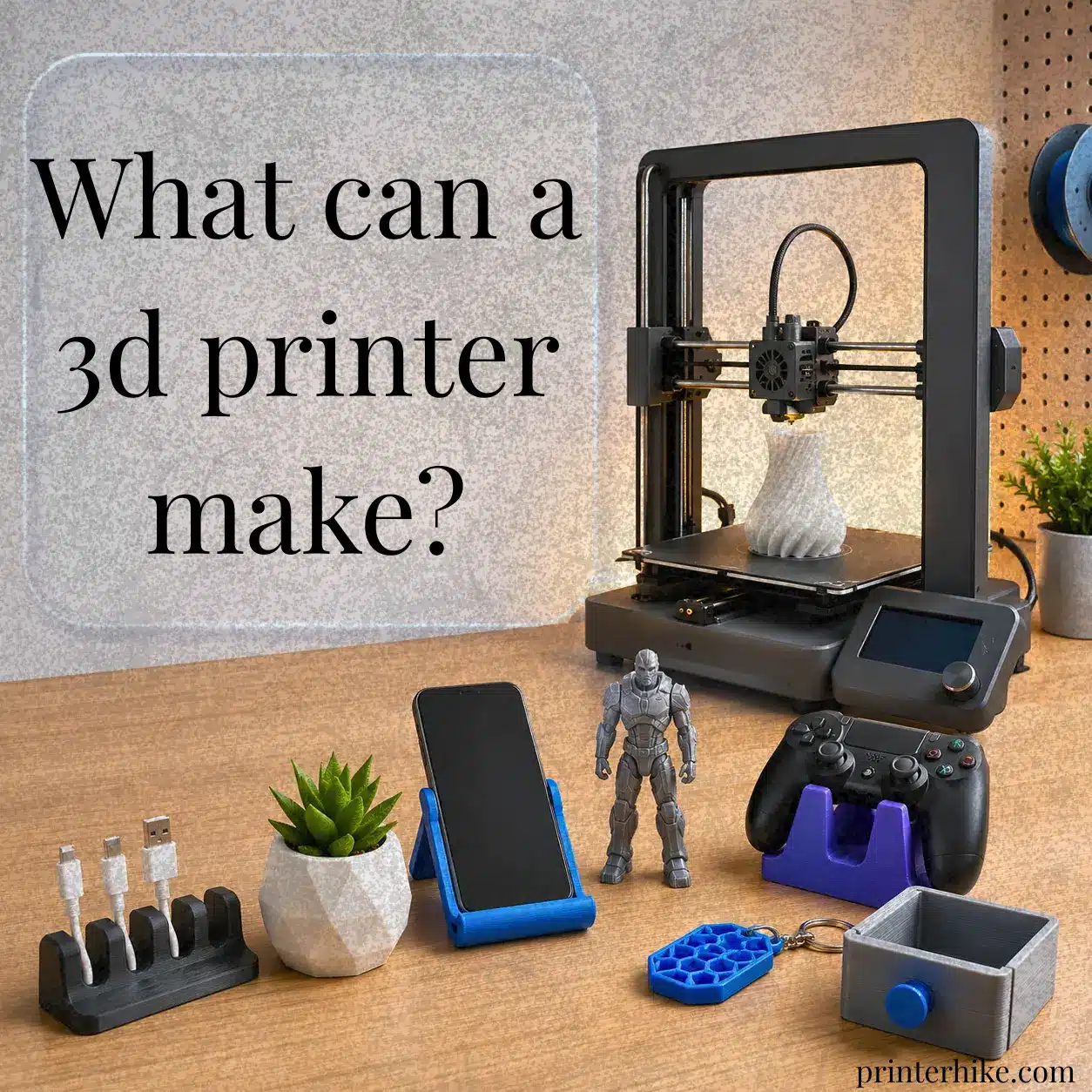
What can a 3d printer make? Many people think a 3D printer is only for making small toys or decorative models, but that is far from reality. A 3D printer can solve everyday problems by creating replacement parts, storage tools, custom organizers, and personalized items at home. Instead of throwing away broken products or buying expensive accessories, users can print practical solutions in just a few hours. If you are curious about what a 3d printer makes, this guide will show real examples of useful, creative, and functional items that people print for daily life, hobbies, and even small businesses.
What Can You Make With a 3D Printer?
A modern 3d printer can create far more than simple plastic toys or small decorative pieces. Today, people use 3d printing for practical household items, replacement parts, gaming accessories, educational tools, and customized products made for daily use. What once looked like a technology only used in factories has slowly become part of normal home workshops, classrooms, and even small online businesses.
Flexibility is a major reason 3D printing keeps expanding into homes, schools, and small businesses. A user can create a phone stand in the morning, repair a broken cabinet handle in the afternoon, and print a personalized desk decoration later the same day. That variety makes 3d print projects useful for both creativity and problem-solving. In fact, recent market research shows the global additive manufacturing industry continues expanding rapidly as affordable desktop printers become easier for beginners to use.
Everyday Household Products
Household products are among the most common things people make with a 3d printer. Simple items like cable organizers, drawer dividers, soap holders, wall hooks, and storage trays help reduce clutter around the home. Small problems that usually seem annoying suddenly become easier to fix with a quick print. A tangled desk setup, for example, can look much cleaner after adding a few printed cable clips.
Functional Replacement Parts
Functional repairs are another major reason many families buy a printer. Broken battery covers, appliance knobs, zipper pulls, and shelf clips can often be recreated at home instead of replacing the entire product. Some repair shops even use 3d model software to rebuild discontinued parts for older appliances. Choosing the right filament matters here because stronger materials like PETG usually last longer for mechanical use.
Decorative and Practical Creations
Decorative items remain popular too. Users often customize wall art, keychains, name signs, gaming accessories, and small desk decorations to match personal styles. Hobby communities especially enjoy creating miniatures, cosplay props, and controller stands for gaming setups.
Educational and Learning Projects
Schools and parents also use 3d printing for educational purposes. Teachers print science models, engineering prototype designs, and geography tools that help students understand difficult topics visually. Physical learning models often keep attention much longer than textbook diagrams alone, which explains why applications of 3d technology continue growing in education worldwide.
Everyday Household Items You Can Make With a 3D Printer
A home 3d printer is no longer just a hobby machine sitting in the corner of a workshop. Families now use it to solve small daily problems, organize spaces, and create useful tools that would otherwise cost much more in stores. Some households even rely on printed accessories weekly without realizing how quickly these small items become part of normal routines.
Convenience plays a huge role in why home printing keeps growing. Someone can download a design before bed and wake up to a fully finished product the next morning, which still feels surprisingly satisfying for many beginners. That process feels rewarding after the print finishes, especially when the print solves an annoying problem that has existed for months. Small fixes often bring the biggest relief.
Cable Organizers and Desk Accessories
Messy cables make workspaces look cluttered very quickly. Printed cable organizers, headphone stands, pen holders, and monitor risers help keep desks cleaner and easier to manage. Office workers and students often customize these accessories to fit exact desk layouts instead of forcing generic store products into awkward spaces.
Kitchen Tools and Storage Helpers
The kitchen is another area where printed tools become useful fast. Bag clips, spice holders, measuring scoops, drawer organizers, and bottle stands help improve storage without expensive renovations. Instead of throwing away older appliances, many people now print small replacement clips or knobs at home for only a few cents of material. Compared to traditional methods, this approach saves both time and money.
Bathroom Organizers and Soap Holders
Bathrooms usually have limited storage, which creates clutter around sinks and shelves. Soap trays, toothbrush holders, razor stands, and small storage baskets help organize tight spaces neatly. PLA works well for light bathroom accessories because it handles normal indoor moisture reasonably well.
Wall Hooks and Shelf Accessories
Wall hooks, cable holders, shelf brackets, and hanging clips are simple but highly practical items. A single hook may look unimportant at first, though it often becomes the item everyone in the house starts using daily.
Drawer Dividers and Storage Boxes
Custom drawer dividers and storage boxes allow users to create complex organization systems for tools, cosmetics, office supplies, and kitchen utensils. Standard containers rarely fit perfectly, so customized prints help maximize small spaces much better than traditional manufacturing methods.
Real-Life Situations Where These Prints Save Money
A broken storage clip or missing drawer divider may seem minor, yet replacing entire products for small broken parts often feels unnecessary. That is where 3d printing shines. Instead of buying almost anything new, households can print affordable replacements using small amounts of material while reducing unnecessary waste.
Practical Replacement Parts You Can Print at Home
A 3d printer becomes very practical in daily life when small household parts break. Tiny plastic pieces like drawer handles, appliance clips, zipper pulls, or battery covers often fail long before the main product stops working. Replacing the entire item feels wasteful, especially when the damaged section costs only a few cents to reproduce with modern 3d printing technologies.
Broken Drawer Handles
Cabinet and drawer handles crack regularly in kitchens, offices, and storage rooms. A desktop 3d printer can recreate replacement handles that match the original size closely. Some homeowners even improve the grip shape slightly during the 3d printing process to make the new version more comfortable.
Missing Battery Covers
Remote battery covers are one of the most commonly replaced household parts because older replacements are often unavailable online. Many users print custom covers instead of replacing the full remote
Zipper Pull Replacements
Broken zipper tabs make backpacks and jackets difficult to use. Printed zipper pulls offer a simple repair while also allowing users to customize colors or shapes.
Appliance Knobs and Clips
Older appliances often fail because of tiny plastic clips or knobs. Since traditional manufacturing methods focus on mass production, manufacturers rarely sell these parts separately anymore. That is one reason applications of 3d printing continue growing in home repairs.
| Common Replacement Part | Typical Use Case |
|---|---|
| Drawer Handles | Furniture repair |
| Battery Covers | Electronics protection |
| Appliance Clips | Kitchen repairs |
| Zipper Pulls | Bags and jackets |
When Printing a Replacement Part Is Better Than Buying One
A simple repair can extend product life significantly. While metal 3d printing supports industrial repairs, most households use a desktop 3d system because this type of 3d printer stays affordable and practical for daily fixes.
Fun and Easy Things to Print for Beginners
Starting with simple 3d printing projects helps new users learn faster without feeling overwhelmed. Small beginner prints usually take less time, use less material, and teach important printer settings step by step. That learning process matters because even a small setup mistake can affect print quality later. A slightly loose belt or uneven print bed may not seem serious at first, though the issue usually appears during larger prints.
Calibration Cubes
Calibration cubes are often the first object beginners print. These tiny test models help check whether the 3d printer works correctly before larger projects begin. Uneven corners, poor layer alignment, or rough surfaces usually reveal setup issues early, which saves time later.
Phone Stands
Phone stands remain one of the most practical starter prints. They are simple, useful, and easy to customize for different phone sizes. Some users even design angled stands for video calls or charging cables. Watching a useful object print layer by layer feels rewarding.
Keychains and Name Tags
Keychains and name tags are popular because they print quickly and allow creative personalization. These small projects also help users understand how text and shapes behave during printing.
Cable Clips and Desk Organizers
Messy workspaces annoy people more than expected. Simple cable clips and small desk organizers solve that issue while teaching clean printing techniques. In fact, rapid prototyping often begins with small practical accessories exactly like these.
Fidget Toys and Small Gadgets
Fidget toys, spinning gadgets, and simple moving parts introduce beginners to more advanced designs. Some examples of how 3d printing is being used in schools involve printing educational puzzle toys that improve hands-on learning.
| Beginner Print | Why It Helps |
|---|---|
| Calibration Cube | Tests printer accuracy |
| Phone Stand | Simple functional project |
| Keychain | Quick personalization practice |
| Cable Clip | Helps desk organization |
| Fidget Toy | Introduces moving parts |
Beginner Printing Mistakes to Avoid
New users sometimes rush through settings too quickly. Many beginners blame the filament when prints fail, but poor bed leveling is often the real issue. Even a small tilt in the print bed can cause weak first layers or detached corners. While 3d printing offers exciting possibilities, careful setup usually decides whether a project succeeds or fails.
Cool Things Gamers Can Make With a 3D Printer
Gaming communities quickly embraced home printing because it allows players to build personalized setups without spending huge amounts on accessories. Modern 3d printers create useful gaming tools, decorative pieces, and collectible items that match specific games or room styles. For some players, printing custom gear becomes part of the hobby itself. Watching a project slowly appear layer by layer feels exciting, especially during larger builds.
Controller Stands
Controller stands remain one of the most popular beginner gaming projects. They help organize desks while protecting expensive controllers from scratches or accidental falls. Some stands even include charging cable slots and headphone hooks for cleaner setups.
Headset Holders
Gaming headsets are bulky and often end up tossed onto desks after long sessions. Printed headset holders solve that problem neatly. Wall-mounted versions save desk space, while under-table hooks keep accessories hidden but still easy to reach.
Keyboard Accessories
Keyboard accessories have become a huge trend in the 3d printable community. Wrist rests, cable guides, keycap trays, and custom switch testers help personalize gaming setups. The flexibility of 3d printing makes it easier to match accessories with different keyboard sizes and desk layouts.
Miniatures and Gaming Props
Miniatures and cosplay props show how 3d printing turns digital ideas into physical creations. Tabletop players often print custom figures, terrain pieces, or dice towers instead of buying expensive retail sets. Some hobby creators spend hours painting their prints afterward, which many hobby users find relaxing after stressful workdays.
LED Gaming Room Decor
LED lamp covers, wall signs, and themed desk decorations are also growing fast. Since printers can print highly customized shapes, users create room decor based on their favorite games, logos, or characters.
| Gaming Print | Main Purpose |
|---|---|
| Controller Stand | Desk organization |
| Headset Holder | Space saving |
| Keyboard Accessories | Setup customization |
| Miniatures | Gaming collections |
| LED Decor | Room personalization |
The possibilities are endless when creativity meets home printing. Beyond gaming, industrial applications already show how 3d printing is helping industries reduce waste and speed up production. Those same benefits of 3d printing now reach hobby users through affordable home machines. Even the most common type of 3d printer can produce impressive gaming accessories with patience and proper settings.
Custom 3D Printed Items You Can Make at Home
A 3d printer at home gives people the freedom to create items that match their own style instead of relying on mass-produced products. That personal touch is one reason custom printing continues growing so quickly. From gifts to room decorations, users now create products designed for specific names, hobbies, or spaces. Small personalized details often feel more meaningful than expensive store items, and honestly, many people value personalized items more than expected.
Personalized Gifts
Custom gifts remain one of the most popular home printing ideas. Name plaques, photo frames, pen holders, and decorative keepsakes are often made for birthdays, weddings, or holidays. Since the design can be adjusted easily, users create custom products that feel unique rather than generic.
Custom Phone Cases
Phone cases are practical beginner projects because they combine creativity with daily use. Some users print textured grips, card holders, or personalized logos directly into the design. Good print quality matters here because rough edges or weak corners can make the case uncomfortable to hold.
Name Signs and Wall Art
Customized wall signs and home decor pieces help personalize bedrooms, offices, and gaming rooms. Families often print children’s names or motivational quotes for wall displays. Some hobby creators even experiment with layered colors and lighting effects for a more premium look.
Cookie Cutters
Cookie cutters may sound simple, though they are surprisingly fun to design. Holiday shapes, cartoon characters, and themed baking sets are common projects. Parents especially enjoy making personalized baking accessories for birthdays and school events.
Personalized Keychains
Keychains remain one of the best 3d printing starter projects because they are quick, affordable, and easy to customize. Initials, logos, pets, or favorite symbols can all become wearable accessories within a few hours.
| Custom Print | Popular Use |
|---|---|
| Name Signs | Room decoration |
| Phone Cases | Daily protection |
| Cookie Cutters | Baking projects |
| Keychains | Personalized accessories |
| Gift Items | Special occasions |
Why Customization Is One of the Biggest Advantages of 3D Printing
Traditional production processes usually focus on large quantities of identical products. In comparison, 3d printing is revolutionizing personalization because users can modify single designs easily without expensive equipment changes. The flexibility of customized 3d designs allows creators to experiment with cool things that standard stores rarely offer. Some advanced systems, like fusion 3d printing, even support highly detailed designs for professional-level production.
Things Kids and Students Can 3D Print
3d printing has become a useful learning tool for schools, parents, and students who want more hands-on education. Instead of only reading diagrams in books, students can hold real models, solve puzzles, and build projects themselves. That physical interaction often makes lessons easier to understand. Some classrooms even developed a 3d printer workspace because students stayed more engaged during practical activities than traditional lectures.
Educational Models and Puzzles
Educational prints are among the best applications of additive manufacturing for learning. Teachers use cad and 3d software to create intricate geography maps, science models, and engineering demonstrations that help explain difficult subjects visually. Puzzle models also improve problem-solving skills while making learning feel more interactive.
Pen Holders and Study Tools
Simple desk accessories remain popular because they combine creativity with daily usefulness. Students often print pen holders, cable organizers, flashcard stands, and ruler trays to organize study areas better. Some even turned to 3d printing after struggling to find storage products that fit smaller desks properly.
Fidget Toys
Fidget toys are small projects, though they teach important printing basics like layer settings and moving parts. These prints also help students stay focused during homework or long study sessions.
Creative School Projects
School projects become much more exciting with printed models and displays. The ability to create custom objects allows students to make complex ideas easier to present during science fairs or robotics competitions. The precision of 3d printing also helps produce cleaner project details compared to handmade cardboard models.
| Student Print | Educational Benefit |
|---|---|
| Puzzle Models | Improves problem-solving |
| Pen Holders | Organizes study spaces |
| Fidget Toys | Helps focus attention |
| Science Models | Supports visual learning |
For modern classrooms, 3d printing is the perfect way to combine creativity, practical learning, and technology in one activity.
Things to Print and Sell With a 3D Printer
Selling printed products has become a real side-income option for hobby creators and small businesses. A single machine can produce useful items from home without requiring expensive factory equipment. That flexibility is one reason different industries are now leveraging 3d printing for both prototypes and consumer products. Small sellers especially benefit because they can test ideas quickly before investing heavily in inventory.
Personalized Products
Personalized products continue performing well because buyers enjoy items designed specifically for them. Name signs, keychains, custom tools, and desk accessories are common examples. Printing can also be used to create seasonal gifts and event decorations that feel more personal than mass-produced store products.
Functional Everyday Gadgets
Practical items usually attract repeat customers faster than decorative products alone. Cable clips, phone stands, storage hooks, and kitchen organizers solve daily problems while remaining affordable to produce. Careful print settings matter here because poor layer quality or weak parts can lead to negative reviews surprisingly fast.
Gaming Accessories
Gaming products remain one of the strongest online categories. Controllers, headset holders, dice towers, and miniature displays sell well because players enjoy customized setups. Some creators even built small businesses after their first 3d gaming products gained attention on social platforms.
Home Decor Products
Wall signs, plant pots, LED lamp covers, and shelf decorations are popular because buyers want personalized solutions for their rooms and offices. The growing demand for unique decor has pushed more sellers toward materials for 3d printing that offer smoother finishes and stronger durability.
Pet Accessories
Pet tags, food scoop holders, toy organizers, and leash hooks are simple but profitable products. Small pet accessories often require little material while staying fully functional for daily use.
| Product Category | Popular Seller Item |
|---|---|
| Personalized Gifts | Name signs |
| Gaming Products | Controller stands |
| Home Decor | LED lamps |
| Pet Accessories | Leash holders |
Common Mistakes New Sellers Make
Some new creators focus too heavily on quantity instead of quality. Weak designs, rushed settings, and poor packaging damage customer trust quickly. A basic guide to 3d printing principles helps avoid those early mistakes.
Realistic Profit Expectations for Beginners
Earning money takes time. Most sellers start small while learning customer preferences and improving product quality. Still, 3d printing in the automotive repair market, gaming industry, and custom product space shows how profitable small-scale printing businesses can eventually become.
What Materials Change What You Can Make With a 3D Printer?
The material used in a 3d printer affects strength, flexibility, surface finish, and durability. Two objects printed from the same design can behave very differently depending on the material choice. Many beginners do not expect materials to affect durability this much. A print may look great at first, then crack later, simply because the wrong material was used.
PLA for Beginner-Friendly Prints
PLA is one of the most common starter materials because it is easy to print and works well for decorations, school projects, and desk accessories. Since printers have become simpler to operate, PLA is now widely used in homes and in 3D printing in educational programs. It is perfect for beginners because it requires fewer adjustments during setup.
PETG for Stronger Functional Parts
Many users switch from PLA to PETG after outdoor prints start cracking under sunlight or heat exposure. PETG usually handles stress and daily wear much better for storage hooks, tool holders, and garage accessories
ABS for Heat Resistance
ABS works better in warmer conditions, which explains why printing in the automotive industry sometimes relies on it for certain interior parts. Still, ABS can be frustrating without proper ventilation because of the fumes produced during printing.
TPU for Flexible Products
TPU is a soft, flexible material commonly used for phone cases, protective covers, and grips. It helps create shapes that are difficult with harder plastics.
Resin for High-Detail Models
Resin printing builds material layer by layer to create extremely detailed surfaces for miniatures, jewelry, and display pieces.
| Material | Best Use |
|---|---|
| PLA | Beginner projects |
| PETG | Functional parts |
| ABS | Heat-resistant items |
| TPU | Flexible products |
| Resin | Detailed models |
Choosing the Right Material for Everyday Prints
Different materials support a wide range of applications across a wide range of industries. Choosing correctly helps turn ideas to life while improving print strength and reliability for everyday use.
Industrial and Advanced Things a 3D Printer Can Make
3d printing is no longer limited to hobby projects or small desk accessories. Industries now use advanced printers to produce medical tools, aircraft components, automotive prototypes, construction parts, and even food products. The technology helps companies test ideas faster, reduce material waste, and improve customization. Some hospitals now use printed anatomy models before complex surgeries because doctors can study patient-specific structures more clearly before entering the operating room. The technology has advanced rapidly in recent years; this technology has moved from simple home projects into large-scale manufacturing environments.
- Medical models and prosthetics
- Lightweight aerospace components
- Automotive prototype parts
- 3D printed houses and structures
- Customized food designs and chocolate printing
- Surgical planning models for hospitals
- Industrial testing and engineering parts
- Rapid manufacturing for product development
What Cannot Be Made With a 3D Printer?
A 3d printer can create useful products, custom tools, and even industrial prototypes, but the technology still has important limits. Some online videos make it look like printers can build anything instantly, though real-world results depend on material strength, heat resistance, and safety requirements. New users sometimes expect every project to work perfectly, then feel disappointed when certain items fail under pressure or heavy use.
Complex Electronic Devices
3d printing is used for electronic cases and protective covers, but fully working electronics are much harder to produce. A home setup cannot easily print advanced processors, batteries, or internal circuits safely.
High-Pressure Engine Components
Engine parts face extreme heat and pressure inside vehicles. Standard materials often melt, crack, or weaken over time. Because of that, 3d printing work in automotive manufacturing usually focuses more on testing models and prototypes instead of final engine components.
Unsafe Food Containers
Printed cups or food containers may look safe, but rough print layers can trap bacteria. Without proper sealing and food-safe materials, these products should not be used to store hot meals or liquids regularly.
Extremely Heavy-Duty Products
Large industrial beams, heavy machinery parts, and structural equipment still depend on traditional manufacturing because they require much stronger materials and testing standards.
| Product Type | Main Limitation |
|---|---|
| Electronics | Complex internal circuits |
| Engine Parts | High heat and pressure |
| Food Containers | Bacteria buildup risk |
| Heavy Machinery | Extreme weight loads |
Common Misunderstandings About What 3D Printers Can Do
3d printing allows creators to produce cool stuff quickly, but expectations should stay realistic. Companies use 3d printers for custom parts, medical models, and prototypes because the technology works best in controlled situations. While 3d printing is changing manufacturing rapidly, it still cannot replace every industrial production process completely.
Best Websites to Download 3D Print Files
Reliable websites make 3d printing much easier because good files reduce failed prints, wasted material, and setup frustration. Platforms like Thingiverse, Printables, MakerWorld, and Cults3D offer thousands of printable models for beginners and advanced users. Some sites focus on free household tools and gaming accessories, while others provide premium designs with better detail and optimized settings. Beginners usually get better results by choosing smaller models with strong user ratings and clear printing instructions before starting larger projects.
Conclusion
3d printing has grown far beyond simple hobby projects. Today, a single printer can create household tools, replacement parts, gaming accessories, educational models, personalized gifts, and even advanced industrial prototypes. That flexibility is one reason the technology continues to expand in homes, schools, and businesses around the world.
The most exciting part is how practical it has become for everyday life. Small printed items can solve real problems, reduce waste, save money, and help people create custom products that stores often do not offer. At the same time, understanding the limits of printing is just as important as knowing its possibilities.
Whether someone wants to organize a workspace, repair broken items, start a small business, or explore creative hobbies, 3d printing opens the door to ideas that once felt impossible for regular households. And honestly, watching a digital design slowly turn into a real object still feels rewarding for many users.
Frequently Asked Questions
What are the main categories of items possible with 3D printing?
3D printing can create household products, replacement parts, gaming accessories, educational models, custom decorations, tools, and industrial prototypes. Some people also use it for personalized gifts and small business products.
What types of household items can be made with common 3D printing filaments?
Common filaments are used to make cable organizers, wall hooks, storage boxes, soap holders, kitchen clips, phone stands, and drawer dividers. Stronger materials can also produce durable repair parts for daily use.
How can I use a 3D printer to make household tools and gadgets?
A 3D printer can create custom storage tools, repair parts, desk organizers, measuring tools, and kitchen gadgets. Users usually download a design file, adjust settings, and print the item at home.
Where can I order custom 3D-printed prototypes?
Custom 3D-printed prototypes can be ordered from online printing services, local maker shops, and freelance 3D designers. Many companies also offer prototype printing for product testing and business development.

Willis C. Mathes
About the Author
Willis C. Mathes is a technical writer focused on 3D printing workflows, printer setup, and troubleshooting. His content is based on practical research into FDM and resin printing systems, slicer optimization, filament handling, and common beginner printing problems.
He regularly covers topics related to printer performance, calibration, maintenance, and beginner-friendly 3D printing setups.