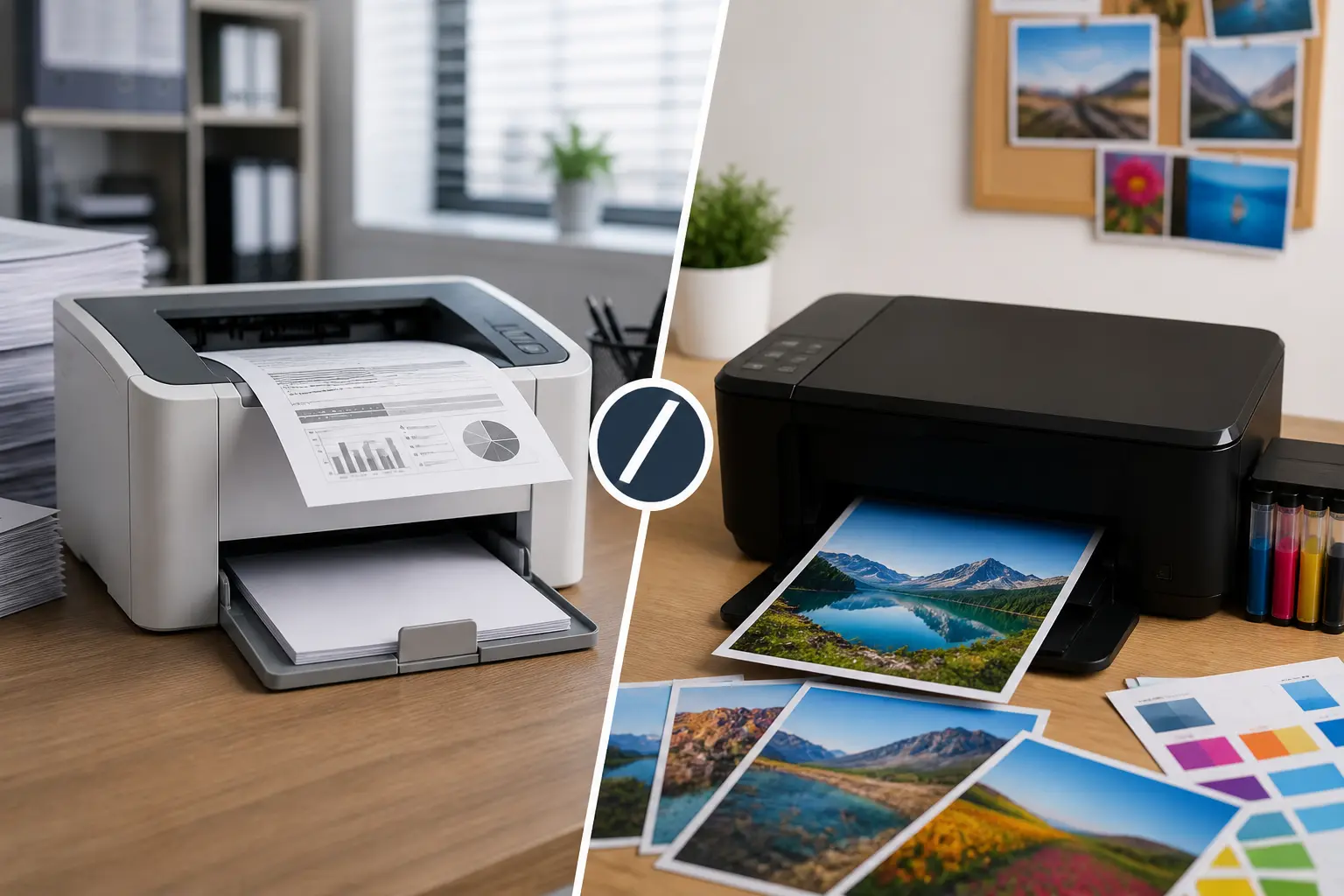
Choosing between a laser printer vs inkjet printer can feel confusing at first, and honestly, I’ve seen many people pick the wrong one and regret it later. Some go for a cheap inkjet printer thinking they’re saving money, but then the ink runs out quickly, or the printer sits unused and starts causing problems. Others buy a laser printer without really understanding if they even need that type of machine.
The truth is, this decision isn’t just about price or brand. It’s about how you actually print in real life. A laser printer works very differently from an inkjet printer, especially when it comes to print speed, long-term cost, and how often you use it. One uses toner powder, while the other uses liquid ink—and that small difference can completely change your experience.
In this guide on laser printer vs inkjet printer, I’ll explain everything in a simple and honest way. No confusing terms, no fluff—just real examples to help you choose the right printer without wasting money or dealing with daily frustration.
Laser Printer vs Inkjet Printer — Quick Answer
If you are confused between a laser printer vs inkjet printer, here is the simple truth in a few lines.
A laser printer is best for heavy printing, office work, and fast document printing because laser printers use toner instead of liquid ink, which keeps the cost per page low over time. It also handles large print jobs easily and offers higher print speed compared to most inkjet models.
An inkjet printer is better for light use, school work, and photos because it uses ink and ink cartridge systems that give better color printing, but it can become costly if you print often.
So the simple rule is:
- Go for a laser printer if you print a lot and want long-term savings
- Go for an inkjet printer if you print occasionally and care more about color and photos
In short, both inkjet and laser printer options work well — the right choice depends on how often you print, not just the starting price.
Laser Printer vs Inkjet — Key Differences That Actually Matter in Real Life
When comparing a laser printer vs an inkjet printer, most people only look at price and basic features. But in real life, the difference shows up in how they handle daily printing, maintenance, and long-term cost. I’ve seen many users regret their choice just because they didn’t think about their usage habits.
Let’s keep it simple and real.
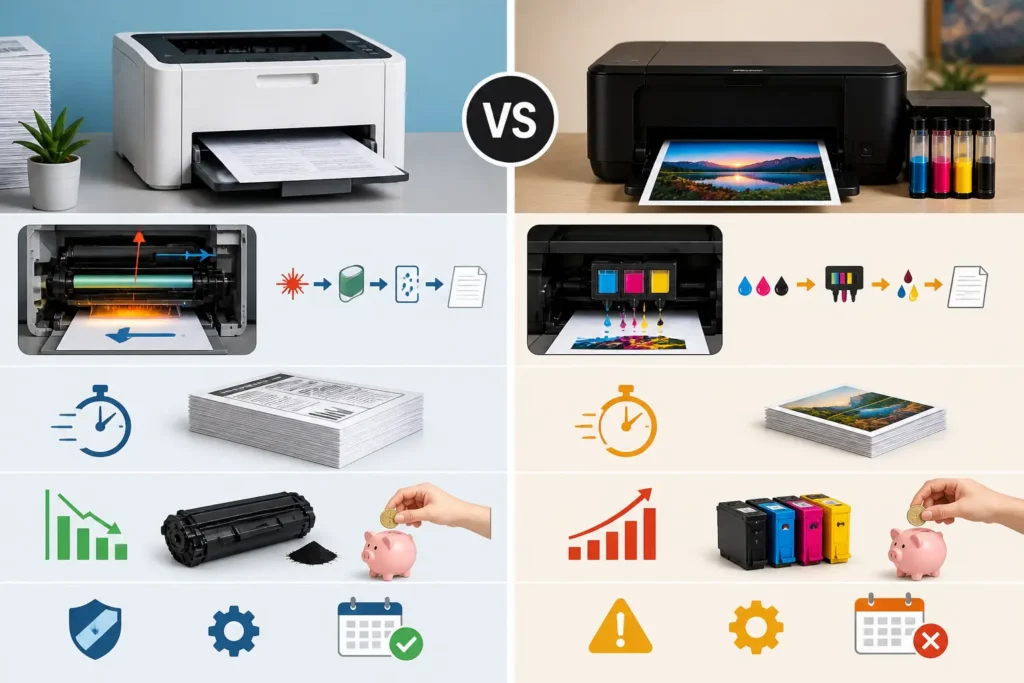
How Each Printer Works (Simple Explanation)
A laser printer works with toner powder. It uses heat to fix the toner onto paper, so prints come out dry instantly. This makes it clean and fast for regular office or school work.
An inkjet printer uses liquid ink that sprays onto paper. An inkjet printer is better for colors and photos, but the ink can dry if the printer is not used often. That’s something many users complain about, and honestly, I understand their frustration.
Real-World Speed (Not Just Specs)
Speed is not just about numbers on a box.
A laser printer may take a few seconds to warm up, but then it prints very fast. It handles big print jobs easily and often delivers higher pages per minute.
An inkjet printer starts quickly for single pages, but slows down when you print more. Inkjet printers are typically better for small, light tasks, while laser printers use faster printing systems for bulk work.
So in simple terms:
- Laser printer = better for bulk printing
- Inkjet printer = fine for small daily tasks
Upfront Cost vs Long-Term Cost
This is where people often make mistakes.
An inkjet printer is cheaper to buy, but the ink cartridges and ink replacements add up over time. This increases the cost per page, especially if you print often.
A laser printer costs more initially, but toner lasts longer and reduces long-term expenses. In many cases, the running cost of a laser printer is much lower than that of an inkjet printer.
Simple truth:
- Cheap at start = inkjet printer
- Cheap over time = laser printer
Maintenance and Ease of Use
A laser printer is low-maintenance. You install it, and it keeps working without much attention. That’s why offices trust it for daily use.
An inkjet printer, however, needs regular use. If left idle, the ink can dry and block the system. This is one of the most common problems users face, and it can suddenly stop important print jobs.
So:
- Laser printer = easy and stable
- Inkjet printer = needs care and regular use
Real-Life Use Cases — Which Printer Is Best for You?
Choosing between an inkjet and a laser option becomes much easier when you look at real life instead of specs. Different users need different types of printers, and this is where most people get confused. I’ve seen it many times—people buy the wrong printer and later complain about slow results, high ink costs, or poor print quality.
Let’s make it simple.
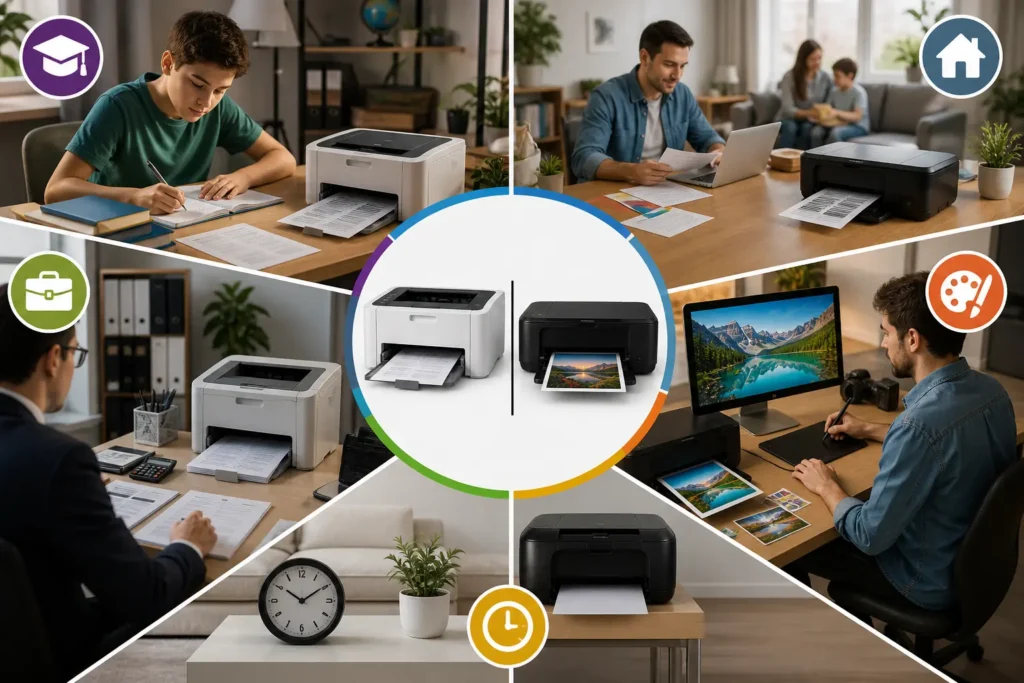
Best Printer for Students (Assignments, Notes, PDFs)
For students, both laser and inkjet printers can work, but usage matters.
A laser printer is better if you print notes and assignments regularly. It gives fast results and handles heavy print jobs without stress. Many students prefer it because it stays reliable during exam time (and trust me, that’s when you don’t want problems).
An inkjet printer works if printing is light and occasional. It gives good print quality for school charts and images, but it needs care.
Simple rule: frequent printing → laser wins.
Best for Home Use (Occasional Printing)
For home users, the right type of printer depends on how often you print.
If you print bills or forms once in a while, both inkjet and laser printers can work. But here’s the real issue—inkjet printers and laser printers behave differently when idle.
An inkjet printer may stop working if the ink dries, while a laser printer stays ready even after weeks.
So for home use:
- Light use → inkjet
- More stable option → laser
Best for Small Business (Invoices, Bulk Printing)
For business use, I strongly prefer a laser printer. And I’ll be honest—this is where many people regret choosing inkjet.
A laser printer handles bulk invoices, reports, and daily print jobs smoothly. It also keeps the cost per page lower compared to inkjet.
Compared to inkjet printers, laser models are simply more stable for heavy use. This is one of the biggest real-world gaps in inkjet vs laser comparisons.
Best for Photo Printing and Creative Work
If your focus is on design or photos, an inkjet printer is the better choice.
It uses liquid ink and sprays it onto paper, which gives smoother color blending and better results on photo paper. The print quality looks more natural for images.
A laser printer is not built for this type of work—it is more text-focused.
So in simple terms:
- Photos and design → inkjet
- Documents and text → laser
Best for Low-Usage Users (Print Once in a While)
This is where people often make mistakes.
If you print rarely, an inkjet printer can become a problem because the ink may dry when the printer is not used. That’s just how it works, and honestly, it’s frustrating.
A laser printer, compared to inkjet printers, stays ready even after long gaps.
So:
- Rare printing → laser is safer
- Very light color printing → inkjet (with care)
Quick Summary
| Use Case | Best Type of Printer |
| Students | Laser printer |
| Home use | Inkjet printer |
| Small business | Laser printer |
| Photo printing | Inkjet printer |
| Rare printing | Laser printer |
In the end, the best type of printer depends on your usage, not just the price.
The Hidden Cost of Laser Printer vs Inkjet (1-Year vs 3-Year Reality)
When people compare laser vs inkjet, they usually look at the price tag first. But honestly, that’s where most mistakes happen. I’ve seen users buy a cheap inkjet printer and later spend much more on ink than the printer itself—and I’m not even exaggerating.
The real question is not “which printer is cheaper today,” but “which type of printer is cheaper over time.” That’s where the real difference between laser and inkjet shows up.
Let’s break it down in a simple, real-world way.
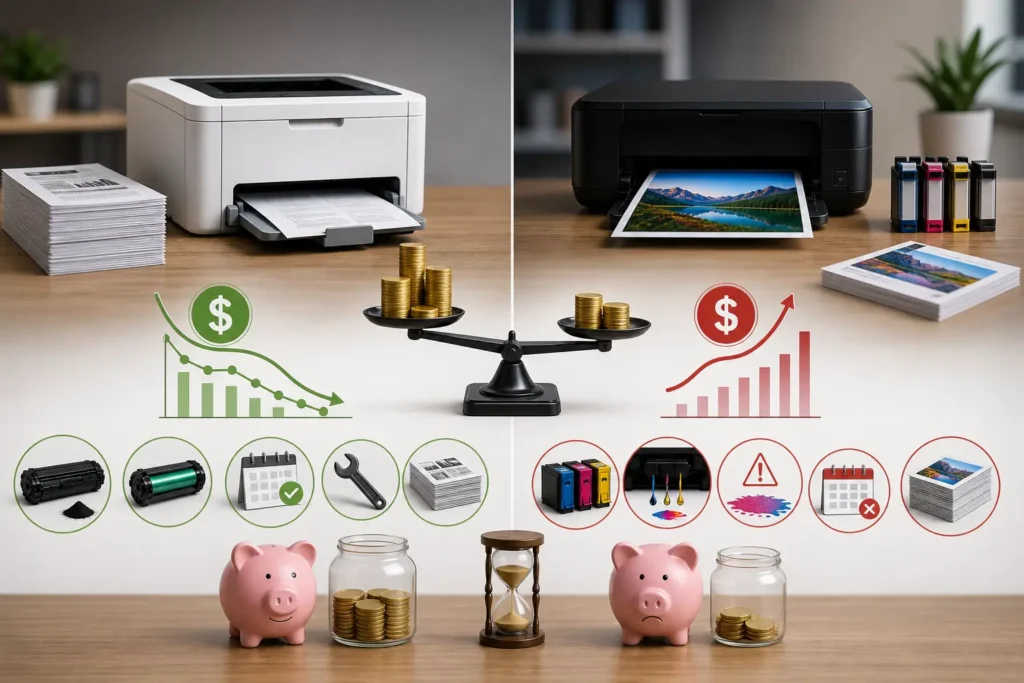
Cost Per Page Comparison (With Real Data)
The most important factor is cost per page.
A laser printer usually has a lower running cost because it uses toner, which lasts longer and prints more pages before replacement. In simple terms, laser printing is built for volume.
An inkjet printer uses ink cartridges, and the ink runs out faster, especially during color printing. This makes each page more expensive over time.
Here’s a simple view:
| Type of Printer | Cost per Page (Long Term) |
| Laser printer | Low |
| Inkjet printer | Higher |
So if someone prints daily, laser printing becomes much more economical. This is the main difference between laser and inkjet that many users ignore at the start.
Inkjet Hidden Costs
Now this is where I get a little frustrated, because people are often not told the full story.
An inkjet printer has hidden costs that show up slowly:
- Ink drying if not used regularly
- Extra ink used during cleaning cycles
- Frequent replacement of ink cartridges
I once saw a home user complain that their printer wasted half the ink just cleaning itself. That’s not rare—it’s normal for many inkjet models.
This is one of the biggest gaps in inkjet vs laser comparisons. It looks cheap at first, but over time, it becomes expensive.
Laser Printer Hidden Costs
A laser printer is more stable, but it still has some costs:
- Toner replacement (needed after many pages)
- Drum unit cost (in some models)
The good thing is that laser toner lasts much longer than ink. So even if the replacement cost is higher, it happens less often.
Some advanced models, like a color laser or all-in-one printer, may cost more upfront, but they reduce stress in the long run. I personally recommend these for offices because they avoid constant interruptions.
Still, I always tell users honestly—no type of printer is completely free. It’s just about which one gives fewer surprises.
Real Cost Example (Long-Term Comparison)
Let’s make this very real so it’s easy to understand.
Imagine printing around 1,000 pages:
- With an inkjet printer, you may need multiple ink cartridges, and costs can rise quickly due to ink usage and cleaning cycles
- With a laser printer, one toner can handle more pages, so the cost stays stable
This is where laser printing clearly wins over time.
To put it simply:
- Short-term thinking → inkjet looks cheap
- Long-term thinking → laser saves money
And this is the same answer I give when people ask, “What’s the difference between laser and inkjet in real life?”
The Idle Printer Problem — What Happens If You Don’t Print Often?
When people compare laser vs inkjet, one thing they often ignore is what happens when the printer sits unused. And trust me, as someone who has seen many frustrated users, this issue shows up more than you think. You buy a printer, use it for a few weeks… then life gets busy. After that, problems start.
This is one of those two types of printer situations where usage matters more than specs. Let’s understand it in a simple way.
Why Inkjet Printers Clog When Not Used
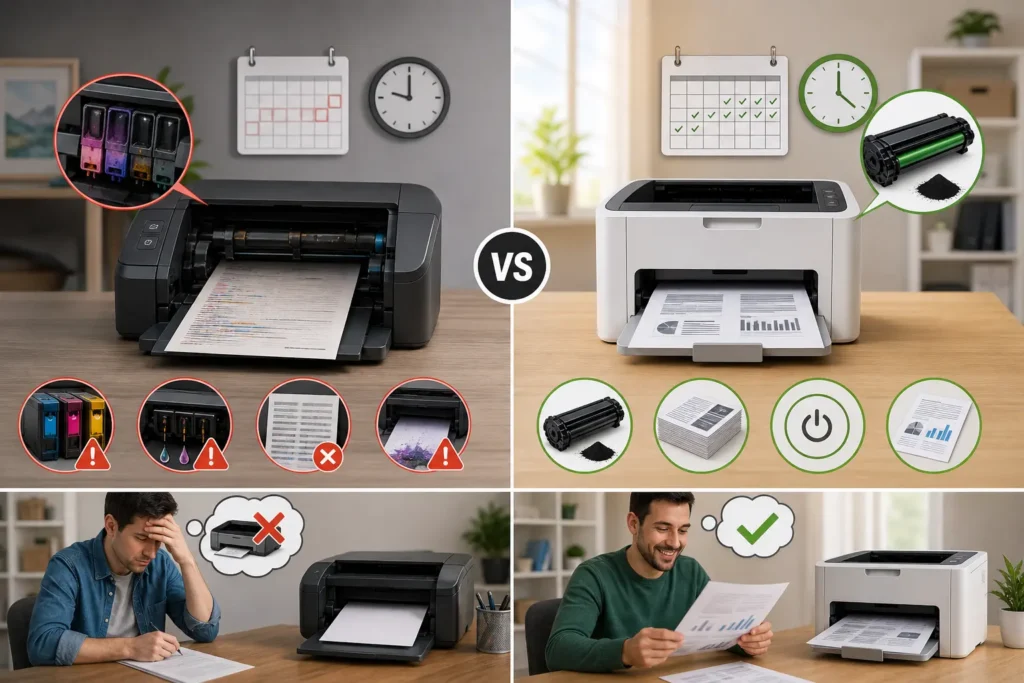
An inkjet printer works by spraying droplets of ink onto paper. It uses liquid ink, which sounds great for color printing and photos. But here’s the problem—when the printer stays idle, the ink inside can start to dry.
I’ve seen users come back after a few weeks and say, “It was working fine before… now nothing prints.” That frustration is real.
Even with advancements in inkjet technology, clogging can still happen. The small print heads get blocked because ink sits for too long. And once that happens, cleaning cycles start, which wastes more ink and time.
Honestly, this is one of my pet peeves in the industry—people are not warned clearly enough about this issue.
So when people ask what the difference is in real life, this idle problem is a big one in laser printing vs inkjet systems.
Why Laser Printers Perform Better When Idle
A laser printer does not use liquid ink. It uses toner, which is a dry powder. The printer uses a laser beam to transfer the toner onto paper during printing.
Because there is no liquid involved, a monochrome laser or even a color model does not suffer from drying issues. You can leave it unused for weeks or even months, and it usually works fine when you turn it on again.
This is one reason many offices prefer laser printing. It just stays ready.
I’ve personally seen small businesses switch to laser after losing time fixing inkjet issues. And I must say, there is a real sense of relief when printing becomes “no stress.”
So, in laser vs inkjet, this is where laser clearly feels more reliable for low usage.
Best Choice for Occasional Users
Now let’s keep it real and simple.
If you print only once in a while, choosing the right type of printer is very important.
- If you want better images or need to print in color, an inkjet might still help
- But if you want reliability and no maintenance stress, a laser printer is safer
For occasional users, I usually recommend a laser because it avoids the whole “printer not working when I need it most” situation. And honestly, nothing is more annoying than that.
So here’s the simple takeaway:
- Occasional printing + low stress → laser printing
- Occasional printing + photo needs → inkjet (with care)
Both are useful, but they behave very differently when left idle. That’s the real difference between laser and inkjet that most people only learn after buying one.
Print Quality Comparison in Real Situations
When people compare laser vs inkjet printers, they often expect one clear winner, but real-life printing is more balanced than that. A laser printer is usually better for sharp text and official documents because it gives clean output that does not smudge easily. On the other hand, inkjet printing feels more natural for images and color-heavy work because it uses ink in fine droplets to create smooth shades. I’ve noticed many users get confused here because they judge a printer only in the shop, not in daily use, and that’s where expectations break.
| Use Case | Best Choice | Reason |
| Text documents | Laser printer | Sharp, clean, no smudging |
| Photos | Inkjet printer | Better color blending with ink |
| School projects | Both | Depends on the text or color needed |
| Water resistance | Laser printer | Toner does not smudge easily |
Durability and Lifespan — Which Printer Lasts Longer?
When comparing laser vs inkjet, durability is one of the most important things people ignore. I’ve seen many users focus only on price, then later feel frustrated when their printer starts giving issues too soon. Honestly, this is where the real long-term difference shows up.
If you are choosing between an inkjet and a laser model, think about how long you want it to last, not just how cheap it looks today.
How Long Do Laser vs Inkjet Printers Typically Last
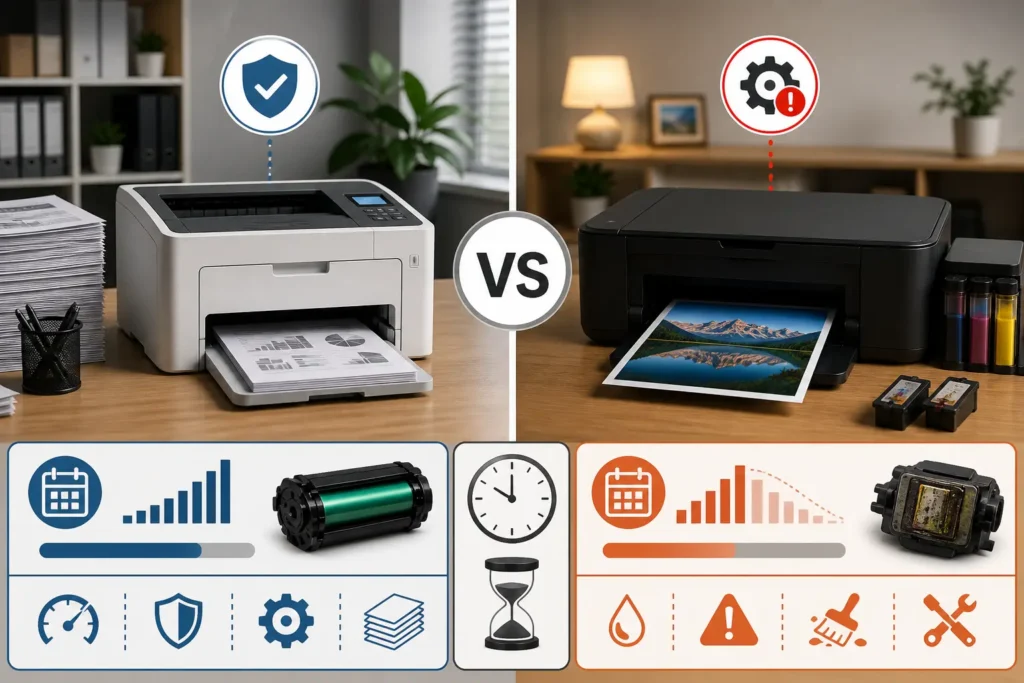
A laser printer usually lasts longer because it is built for heavy and stable use. It uses toner instead of liquid systems, so fewer parts are affected over time. That’s why many offices prefer it for daily work.
In contrast, inkjet printers are usually designed for lighter use. They work fine, but the internal system can face issues if not used regularly. Also, inkjet printers are typically less durable when compared to high-use laser models.
Yes, printers are typically less expensive when they are inkjet, but a lower price does not always mean a longer life. On the other hand, laser printers may cost more at the start, but they often last much longer.
Monthly Duty Cycle (Simple Explanation)
The monthly duty cycle simply means how much a printer can safely handle each month.
A laser printer handles high workloads easily. It is designed for continuous printing, and this is where it performs best. It also benefits from the fact that printers can print much faster during bulk tasks.
An inkjet printer, however, is better for light monthly use. If you push it too much, it may need more maintenance or cleaning.
Which Printer Handles Heavy Workloads Better
For heavy use, the answer is clear.
A laser printer handles big printing tasks, reports, and office work without slowing down. It is built for performance and consistency.
Inkjet printers are better for small, occasional printing. They are not designed for constant heavy workloads, which is the key difference between inkjet printers and laser printers in real-life use.
So simply:
- Heavy work → Laser printer
- Light use → Inkjet printer
Environmental Impact and Energy Use (Quick Insight)
When people are looking for a printer, they usually think about speed and cost, but energy use also matters. A laser printer uses heat during printing, so it needs more electricity, especially at start-up. That’s part of how laser printing works, and it helps it handle heavy tasks, but it increases power use.
On the other hand, inkjet printers work by propelling tiny drops of ink onto paper, so they use less heat and usually consume less electricity. In simple terms, inkjet printers are better for producing smooth images with lower energy use, while laser printers are better for producing high-quality text quickly but with higher power demand.
Laser and inkjet are two different printer types, so the impact depends on how you use them. If you want the right printer for your needs, think about usage: light printing saves energy with an inkjet, heavy printing performs better with a laser.
Common Mistakes to Avoid When Choosing a Printer
When people are deciding between an inkjet and a laser model, they often rush the decision. I’ve seen this many times while helping users choose home printers, and honestly, most problems come from simple mistakes—not the printer itself. The truth is, inkjet and laser are two different systems, and using them in the wrong way leads to frustration.
Let’s go through the most common mistakes so you don’t waste money or time.
Buying Inkjet for High-Volume Printing
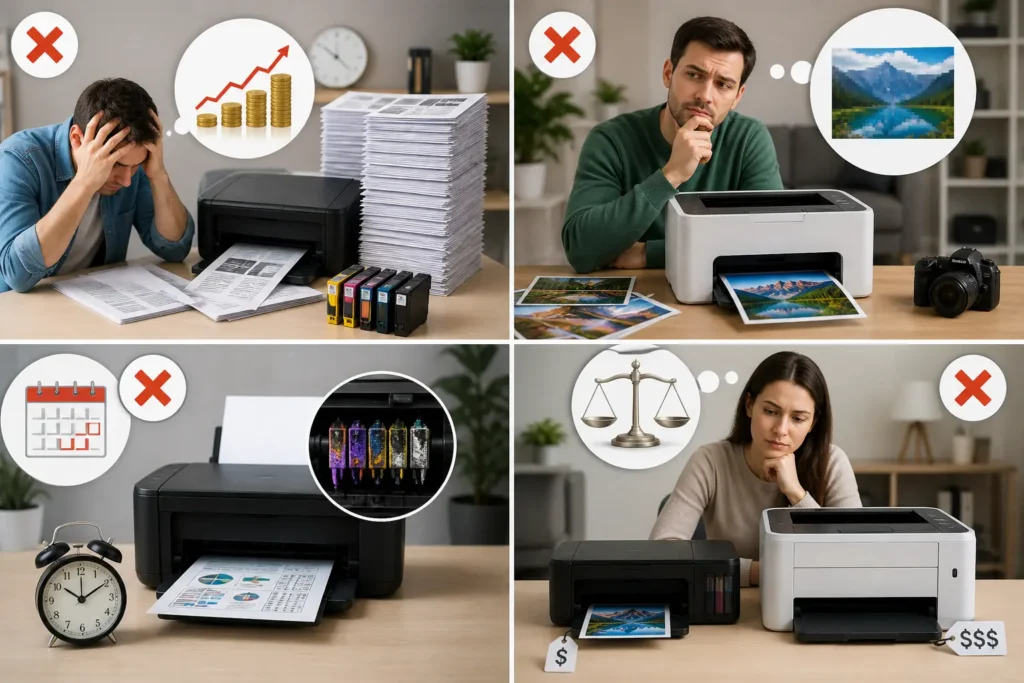
One big mistake is using an inkjet printer for heavy printing. Yes, modern inkjet printers are improved, and they excel at producing nice colors, but they are not built for large daily workloads.
The problem is simple—ink runs out fast. Inkjet printers are known for slower speeds and frequent cartridge changes when overloaded. This becomes expensive and stressful.
At this point, I always feel a bit frustrated because people expect too much from inkjet systems in bulk work. A laser printer can print much faster and handle big tasks without constant interruptions. That’s the smarter choice for heavy users.
Buying a Laser for Photo Printing
Another common mistake is expecting a laser printer to work like a photo printer.
Yes, laser printers can print much faster and handle text very well, but they are not designed for detailed photo output. A laser printer is known for producing sharp documents, not soft image gradients.
If someone wants photo printing, modern inkjet printers still do a better job because they handle colors more smoothly. This is where people get confused while choosing between inkjet and laser options.
I’ve seen users disappointed here, and I always remind them—use the right tool for the right job.
Ignoring How Often You Print
This is probably the most serious mistake.
Many people don’t think about usage. A laser printer can print much faster and stays ready even after long gaps. But ink systems in home printers can dry if unused.
So when people ignore printing habits, they end up with problems like clogged ink or wasted money. A perfect printer for your needs depends more on usage than features.
I’ll be honest—this is the mistake I see the most, and it really should not happen.
Choosing Based Only on Price
This one really bothers me.
People often pick a printer just because it is cheap. But laser printers are known for long-term stability, while cheap ink-based models may cost more over time due to ink replacement.
If you only look at price, you miss the real cost. Inkjet printers excel at producing good color output, but they may become expensive if used often.
Both printers excel at producing high-quality results, but the wrong choice can lead to regret.
So instead of just price, think about long-term value before buying. That’s the real smart decision when dealing with different printer types.
Laser Printer vs Inkjet — Simple Decision Guide
When people are choosing between inkjet and laser, they often feel confused. I understand that feeling because even in real life, the difference between inkjet and laser is not always obvious at first. I’ve helped many users decide, and honestly, most problems happen when people ignore how they actually print.
To make it simple, here is a clear guide showing when to choose an inkjet printer or a laser, based on real use.
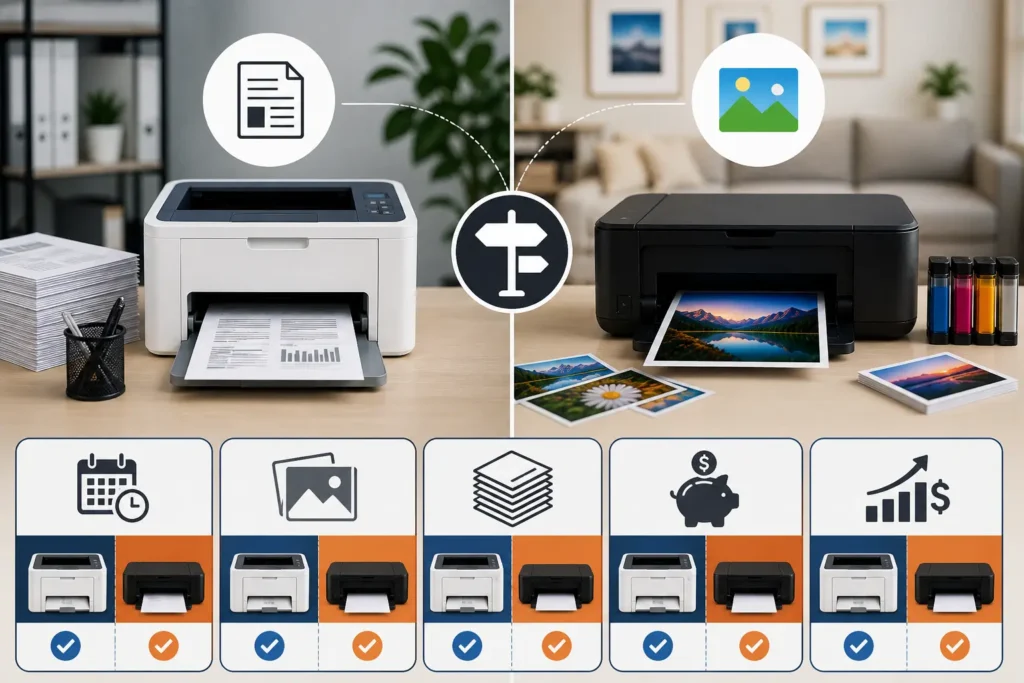
| Situation | Best Choice |
| Print rarely | Laser |
| Print photos | Inkjet |
| Print bulk text | Laser |
| Low upfront budget | Inkjet |
| Long-term savings | Laser |
A laser printer is usually better for people who print often or need fast documents. This is because laser systems handle text-heavy work better and stay stable over time. A laser printer also avoids issues like drying, which sometimes happens with inkjet cartridges when not used regularly.
On the other hand, the choice between an inkjet and a laser depends on budget and usage. Inkjet models are cheaper to buy, which helps if you only print occasionally or want simple home use. But I’ll be honest—people often forget long-term cost, and that’s where they get surprised later.
From my experience, inkjet printers work well for photos and color tasks, but laser printers are more reliable for heavy documents. This is the real difference between the two types, not just what you see on paper.
So if you are still stuck, here’s the simple truth:
- Light use + photos → Inkjet
- Regular printing + long-term savings → Laser
Both are useful, but the right inkjet printer or laser printer depends on your daily habits, not just price or brand. That’s the real smart way of deciding.
Conclusion
At the end of the laser printer vs inkjet printer debate, there is no single “best” option. The right choice depends on how you print in real life. If you print often, need speed, and want long-term savings, a laser printer is usually the smarter and more stable option. It handles heavy work, stays reliable, and avoids common issues like drying or frequent maintenance.
But if you print less, need good color printing, or want a lower starting cost, an inkjet printer can still be a good fit. It works well for photos and simple home use, as long as you use it regularly.
So the real lesson is simple: don’t choose based only on price or ads. Think about your usage, because that is what decides everything. When you understand your needs clearly, choosing between inkjet and laser becomes easy—and you avoid the frustration many people face later.
Frequently Asked Questions
What are the key differences between laser printers and inkjet printers?
A laser printer uses toner powder and is faster, cheaper per page, and better for heavy use. An inkjet printer uses liquid ink, offers better color quality, and is cheaper to buy but more expensive over time.
Which printer type is better for high-volume text documents?
A laser printer is better for high-volume text documents because it prints faster, handles bulk pages easily, and has a lower cost per page.
Which type of printer is better for home use, laser or inkjet?
For light home use, an inkjet printer works well, especially for photos and color printing. However, if you print less often, a laser printer is more reliable.
What are the best printer options for a small business budget?
For small businesses, a laser printer is usually the best option because it handles daily printing, reduces long-term costs, and requires less maintenance.
How do inkjet printers compare to laser printers in print speed?
A laser printer is much faster, especially for multiple pages, while inkjet printers are slower and better suited for small or occasional printing tasks.
Are ink tank printers a good alternative to traditional cartridge models?
Yes, ink tank printers are a good alternative because they use refillable ink instead of cartridges, which lowers the cost per page and makes them better for regular use.

Willis C. Mathes
I’m Willis C. Mathes With hands-on experience and technical knowledge of printers, I dive deep into printer reviews, troubleshooting, and tips, ensuring you get the most out of your printing investment.