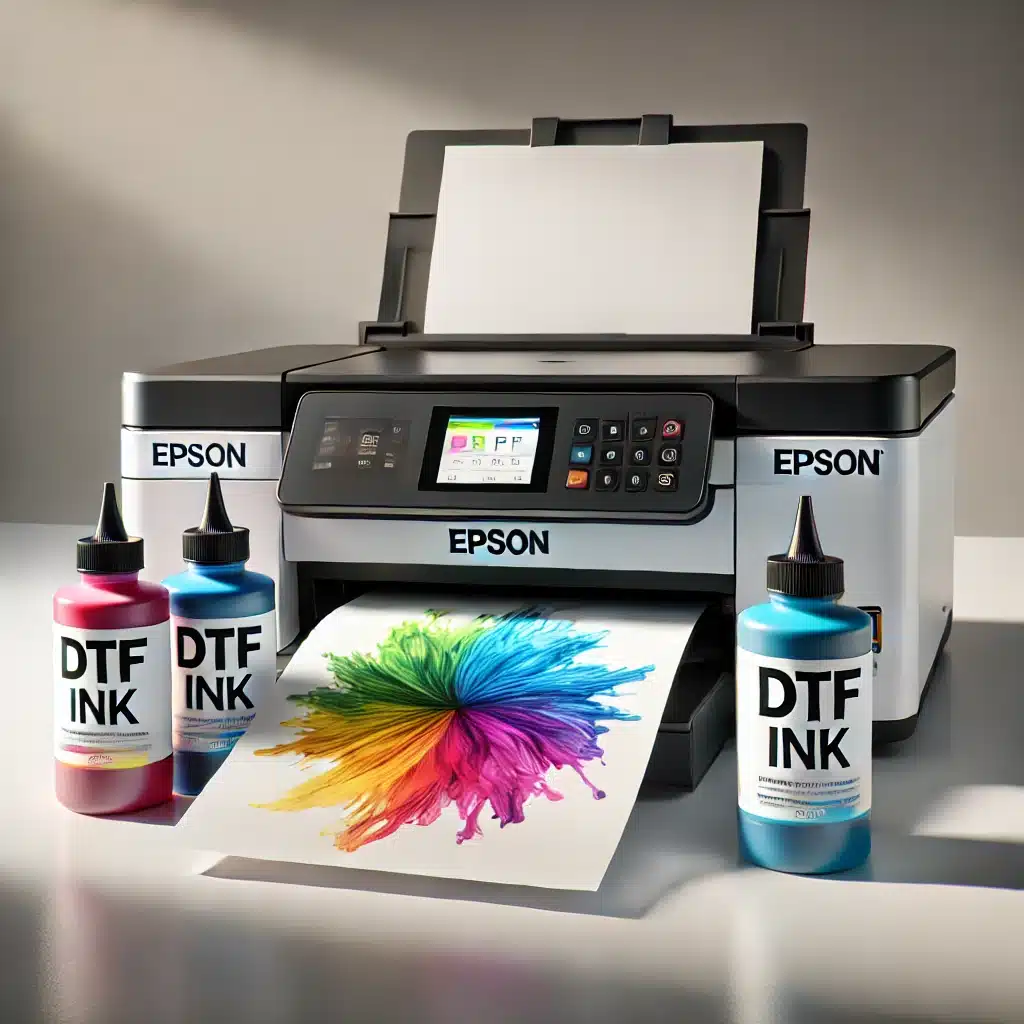
If you are wondering, “Can I use DTF Ink in the Epson Printer?” you’re not alone. The global DTF printer market was valued at USD $1.12 billion in 2024 and is expected to grow at a CAGR of 11.3% by 2033, showing increasing interest from hobbyists and small business owners. Many beginners and small business owners try this method to save money rather than buy an expensive DTF printer. The good news is, yes, it’s possible. But it’s not as simple as just pouring DTF ink into your printer. You need the right Epson model, proper setup, and regular maintenance to avoid damage and get good results.
In this guide, I’ll explain everything in simple terms, so you know exactly what to expect before starting.
Understanding DTF Printing
DTF printing (Direct-to-Film) is a fabric printing method where designs are printed onto a special transfer film using DTF ink, then applied to fabric using adhesive powder and a heat press. This method creates durable, high-quality prints on cotton and polyester blends. This is the best way to make durable, high-quality prints on cotton and polyester blends.
Can I Use DTF Ink in an Epson Printer?
Yes, Epson Printers can use DTF ink. However, not every Epson printer is compatible. Their piezoelectric printhead technology allows for using DTF inks. However, the printer usually needs some modification. Epson designs its printers for traditional inks, either dye or pigment. So the print head needs to adapt to work with thicker, specialised DTF inks.
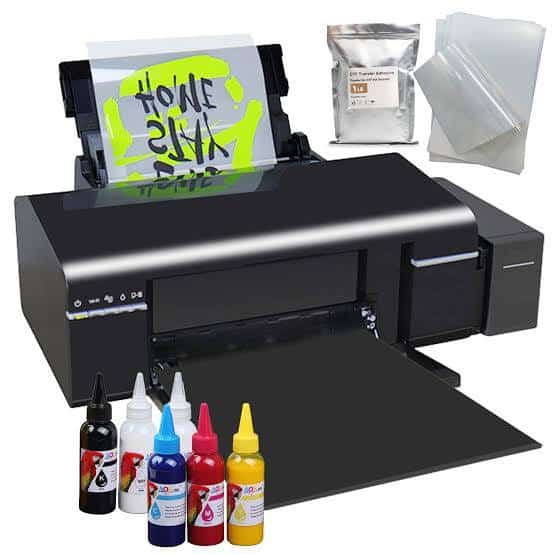
Besides converted EcoTank or L-series models, Epson officially launched the SureColor G6070, a purpose-built DTF printer with a 35.4” print width, PrecisionCore X1 printhead, printing speed of 85 feet per hour, and OEKO-TEX® certified UltraChrome DF inks. This printer is priced under $13,000 and designed for professional garment printing.
Steps to Use DTF Ink in an Epson Printer
Learn the steps to convert your Epson printer to DTF ink use. Start by choosing a compatible model. Then, make the necessary modifications. Finally, use high-quality consumables for the best results. Follow these guidelines for smooth and efficient DTF printing. This process is also known as DTF printer conversion, where a regular Epson printer is adjusted for a proper DTF printing setup.
1. Best Epson Printers for DTF Conversion
Not all Epson printers are compatible with DTF printing. The following Epson EcoTank and L-series printers are now popular for DTF mods:
- Epson L1800
- Epson L805
- Epson EcoTank ET-8550
- Epson P600 or P800 (for professional use)
People prefer these models because they are reliable and easy to convert. They support A3 and A4 printing and come with durable printheads.
| Printer Model | Max Size | Ease of Conversion | Ideal For |
|---|---|---|---|
| Epson L1800 | A3 | Easy | Beginners |
| Epson L805 | A4 | Easy | Small orders |
| Epson EcoTank ET-8550 | A3 | Moderate | Semi-professional |
| Epson P600 / P800 | A3/A4 | Moderate | Professional printing |
2. Modify the Printer
To use DTF ink in an Epson printer, you need to make a few important changes:
- Install a Waste Ink Tank: DTF printing usually leaves extra ink. So, install an external waste ink tank to prevent clogging.
- Replace Ink Cartridges or Tanks: Clean the ink lines. Then, replace them with DTF-compatible ones to avoid contamination.
- Adjust Printer Settings: Calibrate your printer for DTF inks. This will give you vibrant colors.
Epson printers use Epson printhead technology (piezoelectric), which makes them suitable for handling DTF inks after proper modification.
3. Use High-Quality DTF Inks
DTF inks are specially designed for transfer printing. Using generic inks may cause printhead clogs, poor print quality, or compatibility issues. Be sure to buy high-quality DTF ink made for Epson printers. High-quality inks also help reduce issues like white ink clogging, which is common in DTF printing.
For best results, ensure your Epson printer has a piezoelectric printhead, at least 6 ink slots for CMYK + white, and a white ink circulation system to prevent clogs. The printer should also support a minimum of 1440 DPI to achieve sharp, detailed transfers.
4. Pair with DTF Consumables
You will need the following with DTF ink:
- DTF Transfer Films: Sheets that hold ink without smudging.
- Adhesive Powder: It is a primary component binding the ink to the fabric.
- Heat Press Machine: It is a crucial tool for impressing a design from the film onto the fabric.
Advantages of Using DTF Ink with an Epson Printer
- Cost-effective: It’s usually cheaper to convert an Epson printer than to buy a DTF printer.
- Customisability: It allows you to print on different fabrics without pre-treatment.
- Durable Prints: DTF prints resist fading and cracking. They are ideal for long-lasting designs.
Challenges and Considerations
Using DTF ink in an Epson printer is possible, but there are a few challenges you should know about:
1. Printer Maintenance
DTF ink is thicker than regular ink and might clog the printer. So, cleaning the printhead is crucial for smooth operation. One common issue in DTF printing is white ink clogging, which is why regular cleaning is very important.
2. Loss of Warranty
Using DTF ink in your Epson printer often voids the warranty. So, be ready to cover repair costs if issues arise.
3. Learning Curve
DTF printing has a learning curve. It takes time and practice to master. You need to manage printer settings and handle materials.
4. Limited speed
The converted Epson printers are slower than dedicated DTF printers. This can be a problem for high-volume production.
A major challenge in DTF printing is the variability in ink and film quality, which affects print durability and color vibrancy. With proper care and high-quality inks, a converted Epson printer can last 6 months to 2 years or more.
Maintenance Tips for Using DTF Ink in Epson Printers
DTF ink is thicker than usual, so your Epson printer needs a little extra TLC. Here’s how to take care of it:
- Clean the Printhead Often: White ink can clog easily. Run a cleaning cycle every few days if you’re printing a lot.
- Use a Waste Ink Tank: This prevents leaks and clogs by catching extra ink.
- Store Ink Properly: Keep it sealed and away from sunlight to keep it fresh.
- Flush Ink Lines Sometimes: If colors look off or streaky, flush the lines with a cleaner that works with DTF ink.
- Don’t Leave It Sitting: Avoid leaving DTF ink in the printer for weeks; it can cause clogs.
Common DTF Ink Problems and How to Fix Them
Even after converting your Epson, some issues can pop up. Here’s what usually happens and how to fix it:
- White Ink Clogging: Clean the printhead regularly and use good-quality ink.
- Color Fading or Wrong Colors: Check your ink settings, run a nozzle test, and make sure your heat press temperature is correct.
- Transfer Film Smudging: Make sure the film is dry before applying adhesive powder and pressing.
- Printer Not Recognizing Ink: Use DTF-compatible cartridges and lines; reset the printer if needed.
- Slow Printing: Converted Epson printers are slower than dedicated DTF printers. Allow extra time for big jobs.
Conclusion
Yes, you can use DTF ink in an Epson printer. For most small businesses or hobbyists, converting an Epson printer is a cost-effective way to start DTF printing. But make sure you are ready for the needed changes, maintenance, and learning curve. You can get great results with high-quality DTF inks, consumables, and printer care.
If you plan to switch, make sure you research your Epson model and understand the setup before getting started. DTF printing is a great way to make vibrant, durable designs for any small business or creative hobby. With the right DTF printing setup and proper care, you can get professional-quality results even with a converted Epson printer.
Frequently Asked Questions
Can an Epson printer be turned into a DTF printer?
Yes, some Epson printers can be converted into DTF printers by modifying the ink system and settings. Of the printers, the EcoTank and L-series are the best. They use piezoelectric printheads, but this voids the warranty and requires special care.
Can DTF ink be used in regular printers?
No, DTF ink should not be used in regular printers because it is thicker and can damage standard printheads. It is for special printers with piezoelectric printheads. Using it in a regular printer will damage it. Regular printers lack the technology required for DTF conversion and printing needs.
Can I put DTF ink on my sublimation printer?
Yes, you can add DTF ink to a sublimation printer if it is compatible and converted. This entails cleaning the printer of the sublimation ink and reconfiguring its settings. After conversion, it cannot perform sublimation printing again.
Is DTF ink different from sublimation ink?
Yes, DTF is thicker, opaque, and for transfer films. Sublimation ink is thinner and better bonds with polyester. You can use DTF on any fabric. But, sublimation works only on polyester or coated materials.
Is DTF ink different than regular ink?
Manufacturers make DTF ink thicker for transfer films. Regular ink is for paper and daily printing. DTF ink produces durable, washable prints on fabric. Ordinary ink can’t do this.
Which Epson printers are best for DTF printing?
Popular Epson models for DTF printing include the L1800, L805, and EcoTank series because they use piezoelectric printheads and are easier to convert.
1 thought on “Can I Use DTF Ink in the Epson Printer?”