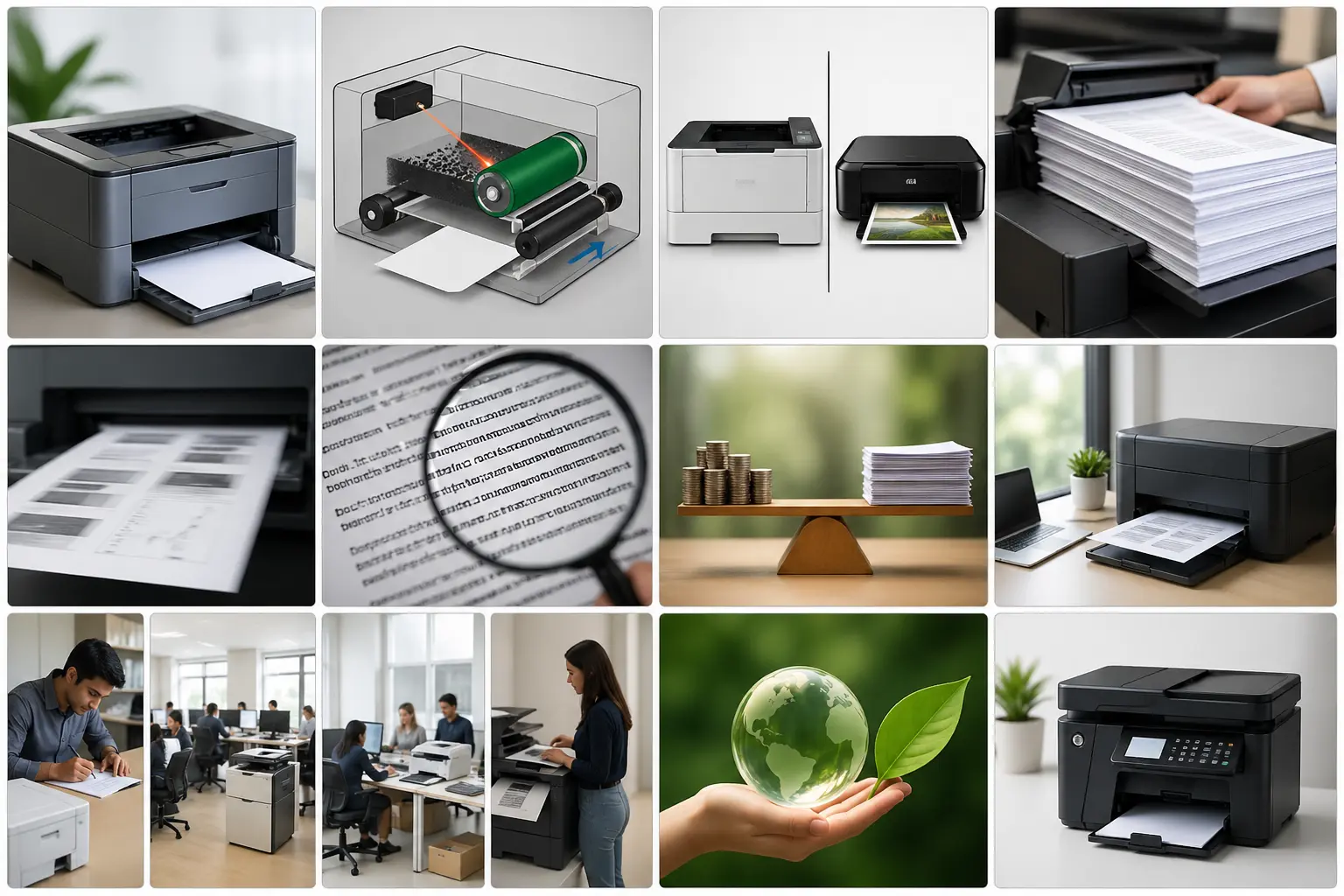
The advantages of laser printer are becoming clearer as it is now widely used in homes, schools, and offices. A laser printer is becoming more common in homes, schools, and offices, and there is a clear reason for it. People are simply tired of slow printing, high ink costs, and repeated printer problems. I have seen many situations where printing turns into a daily frustration—ink runs out too quickly, pages come out messy, and important work gets delayed for no real reason.
A laser printer solves most of these issues simply and practically. It uses a laser system and toner instead of liquid ink, which makes printing faster, cleaner, and more stable. What stands out the most is its consistency—it keeps working smoothly even if you do not use it every day.
For students, it means quick assignments without waiting. For offices, it means handling large printing tasks without stress. And for home users, it simply means fewer problems and more reliability. In short, a laser printer is not just a device; it is a practical solution for anyone who prints regularly and wants to save both time and money.
What Is a Laser Printer and How Does It Work?
A laser printer is a printing device that uses light technology and toner powder to produce sharp documents. It is commonly used in homes, schools, and offices because it handles daily printing tasks more reliably and efficiently.
Instead of liquid ink, it relies on a controlled laser system to create text and images on paper. This makes printing more consistent, especially for regular documents.
Simple Explanation for Beginners
A laser printer works in a few simple steps. First, a laser beam draws the text or image on a drum inside the printer. Then the toner powder sticks to that pattern. Finally, the heat presses the toner onto the paper, making the print permanent.
In simple terms, it uses light to “draw” and heat to “print.”
This process is smooth and reliable, which is why many people prefer it for daily printing needs. It avoids common problems like ink drying or frequent stoppages that people often face with older printer types.
Key Difference Between Laser and Inkjet Printers
| Feature | Laser Printer | Inkjet Printer |
| Printing method | Uses toner powder | Uses liquid ink |
| Speed | Faster | Slower |
| Cost per page | Lower | Higher over time |
| Print quality | Best for text documents | Better for photos |
| Maintenance | Low | Needs more care (ink issues) |
Inkjet printers use liquid ink, which can dry out if not used regularly. Laser printers use toner, which stays stable for longer periods, making them more dependable for regular work.
Why Laser Printers Are Widely Used Today (Market Insight)
Laser printers are widely used because they are practical for both personal and professional work. Offices and businesses prefer them for handling high-volume printing without delays or frequent maintenance issues.
They are also popular because they reduce long-term printing costs and maintain consistent print quality even during heavy use. Many modern models now include scan and fax functions, which makes them more useful in a single device setup.
In simple words, people choose laser printers because they are reliable, cost-efficient, and suitable for everyday printing demands without extra hassle.
5 Advantages of Laser Printer (Real Benefits You’ll Actually Notice)
When people start comparing printers, they often feel confused. I understand that feeling because I have seen users struggle between choosing an inkjet printer and a laser printer. But once you understand the real benefits, things become much clearer. A laser printer offers several advantages that directly improve daily printing needs, especially in offices and busy homes.
Let’s break it down in a very simple and practical way.
1. Lower Cost Per Page
One of the strongest reasons people choose a laser printer is the savings on printing costs. In real life, this is the point that surprises most users.
Toner vs Ink – Why Laser Is Cheaper
A laser printer uses toner instead of liquid ink. A toner cartridge lasts much longer than ink cartridges, and this reduces overall printing costs.
Ink in an inkjet printer runs out quickly, especially when printing large documents. This is where frustration starts. I have personally seen people replace ink again and again, and honestly, it feels like money is just disappearing.
Compared to inkjet printers, laser printers are more cost-effective for regular printing needs because the cost per page stays lower over time.
Quick Example of Printing Cost
Let’s keep it simple.
If a small office prints daily reports:
- Inkjet printer: frequent ink replacements, higher cost
- Laser printer: fewer replacements, lower cost per page
Over a few months, the difference becomes very clear. Printing costs stay controlled, and that gives real relief to users.
2. Fast Printing Speed
A laser printer is known for its strong print speed. This is one area where users immediately feel the difference.
Pages Per Minute Comparison
A laser printer can print multiple pages in seconds, while an inkjet printer is slower when handling large files. This is why many people switch after facing delays during urgent work.
How Speed Helps in Daily Printing
Think about a school student printing an assignment or a small office printing invoices. Slow printing creates stress. I’ve seen people waiting near printers, frustrated because work is stuck.
Laser printing removes that problem. It supports smooth workflow, especially when printing needs are regular and time-sensitive.
3. Sharp and Consistent Print Quality
Print quality matters more than people realise, especially for documents that need a professional look.
A laser printer delivers high-quality and sharp text every time. Even after printing many pages, the result stays clear and stable.
No Smudging or Fading
Unlike ink-based systems, laser printing does not smudge easily. Inkjet printer output can sometimes blur if touched too early, which is honestly annoying when you are in a hurry.
Best for Text and Documents
Laser printers are best for documents, reports, and notes. They are not mainly designed for photo printing, but for text-heavy work; they perform much better.
This is one of the reasons laser printers are known in office environments for clean document output.
4. Low Maintenance and Reliable Use
This is where many users feel real relief after switching. A laser printer does not need constant attention. It works smoothly with fewer interruptions.
No Ink Drying Issues
Inkjet printers often face a common problem—the ink dries if the printer is not used regularly. This leads to cleaning, wasted ink, and frustration.
A laser printer avoids this because it uses toner instead of liquid ink. Toner does not dry in the same way, which makes it more stable.
Works Smoothly Even After Long Gaps
Even if you do not use the printer daily, it still works properly when needed. This reliability is something users truly appreciate, especially in homes or small office setups where printing is not constant.
To be honest, I find this one of the most practical advantages because it saves both time and effort.
5. Handles High-Volume Printing
A laser printer is built for high-volume printing, so it can easily handle large print jobs without slowing down. In busy offices or schools, it keeps working smoothly even when printing hundreds of pages. This makes it more reliable for regular and heavy printing needs.
Built for Heavy Workloads
A laser printer can handle large batches of documents without slowing down. This makes it ideal for offices that deal with continuous printing needs.
Many businesses prefer laser printers because they support high-volume printing without frequent breakdowns or interruptions.
Suitable for Bulk Printing Tasks
If you need to print hundreds of pages, a laser printer performs much better than an inkjet printer. It maintains stable output and does not struggle under pressure.
In real office situations, this matters a lot. When deadlines are tight, you need a machine that simply works without creating problems.
Long-Term Cost Benefits of Laser Printers (Beyond Initial Price)
When people look at printers, the first thing they notice is the price. And yes, I get it—some users feel a bit shocked at the price of a laser printer at first. I have seen this reaction many times, especially from beginners. But here is the truth that most people realize later: the real savings are not in the purchase, they are in long-term use.
When using a laser printer, the biggest benefit is how much it reduces ongoing printing expenses. This is one of the key advantages of a laser printer, especially for people who print regularly at home or in office environments.
Initial Cos
t vs Overall Savings
At the beginning, the purchase price of a laser printer is usually higher than that of other types of printers. That can feel discouraging, I admit. But this is where people often miss the bigger picture.
A laser printer is designed for long-term use. It uses a laser beam and toner, which lasts much longer than ink. So instead of buying ink again and again, users save money over time.
Here is a simple comparison:
| Factor | Laser Printer | Inkjet Printer |
| Upfront cost | Higher | Lower |
| Running cost | Low | High |
| Long-term value | High | Medium/Low |
This is why many experts in types of printers recommend laser models for regular users. The real benefits of using a laser become clear after a few months of usage.
Monthly and Yearly Cost Breakdown
Let’s talk in a simple, real-life way.
Imagine a student or a home and office user who prints regularly:
- An inkjet printer needs frequent ink refills
- A laser printer mostly only needs toner replacement after long usage
Over time, the difference becomes very clear.
On average:
- Inkjet users spend more monthly on ink cartridges
- Laser users reduce their printing costs significantly over the year
Honestly, this is where people feel a bit frustrated with inkjet systems. I have seen users say, “I just changed ink last week… why is it empty again?” That feeling disappears when switching to a laser.
This is one of the strongest advantages of a laser printer for long-term users.
Why High-Volume Users Save More
Laser printers are best for people who print a lot every day, such as in offices and schools. The main reason is simple: the cost per page stays low even when printing in bulk, so overall expenses remain controlled.
When using a laser printer, you do not need to change ink again and again like an inkjet printer. This makes it more stable and cost-friendly for heavy use. Offices that print reports or documents daily can clearly see the savings over time.
For high-volume printing needs, this is a big advantage because the printer keeps working smoothly without frequent interruptions. It also reduces stress in busy environments where printing cannot be delayed.
Why Laser Printers Improve Work Efficiency
In real work life, efficiency matters more than anything. Whether it is a school, a small office, or a business setup, printing should not slow down the work. I have seen many situations where a slow printer creates stress in the middle of important tasks, and honestly, it can be frustrating. This is where laser printers quietly make a big difference.
Compared to inkjet printers, laser printers are often chosen because they handle work in a more stable and organised way. They support better workflow without constant interruptions.
Faster Completion of Large Tasks
A laser printer can handle big printing jobs in a short time. It uses a fast printing process that allows it to produce documents quickly without stopping in between.
A laser printer can produce sharp documents, especially when printing text and graphics together. Unlike inkjet printers, which often slow down during long tasks, laser printers keep a steady flow.
For example, imagine a teacher printing exam papers or an office printing monthly reports. If printing is slow, everything gets delayed. That is where laser printers help complete work faster and keep things on track.
Even when connected through a mobile device, printing is quick and smooth, especially with modern wireless printing features. It feels simple and direct, which saves time in daily work.
Reduces Delays in Busy Environments
In busy places like offices or schools, delays in printing can create real problems. I have personally seen situations where a single slow printer holds back an entire team. That always feels stressful, especially when deadlines are close.
Laser printers are often preferred in such environments because they reduce these delays. Unlike inkjet printers, which may pause for maintenance or ink issues, laser printers keep working more consistently.
Their cost-effectiveness also helps businesses avoid frequent interruptions caused by replacing ink cartridges or fixing printing issues. Even though the upfront cost or initial purchase price may feel higher, the smooth performance in daily use makes it worth it.
Supports Consistent Daily Workload
One of the biggest strengths of laser printers is their ability to handle regular and heavy work without breaking down. They are built for steady performance, which is important for offices that depend on daily printing.
Inkjet printers are often used for light tasks, but when printing high volumes, they may struggle. In contrast, laser printers are designed for handling high volumes without affecting quality.
This makes them reliable for long-term use. They maintain good page yield, which means fewer interruptions for toner changes and more continuous work output.
In simple words, laser printers support daily tasks in a way that keeps everything running smoothly. They do not just print—they help maintain a stable workflow, which is something every busy workplace truly needs.
Who Should Use a Laser Printer? (Practical Use Cases)
Choosing a printer is not the same for everyone. I have seen many people buy the wrong printer and later regret it, especially when their printing needs change. That is why understanding who should use a laser printer is very important before making a decision.
A laser printer is not just about speed or cost. It is about matching the right user with the right printing workload.
Students (Study Material & Assignments)
Students often need to print notes, assignments, and project work. Sometimes it feels like printing happens suddenly before deadlines, and honestly, that rush can be stressful.
For students, a laser printer is helpful because it handles regular text printing without delays. It also reduces the need to frequently replace the toner, which saves time and effort.
Unlike inkjet printers, which may struggle when not used often, laser printers stay ready even after long gaps. This is useful for students who print only during exam time.
Many students also prefer black-and-white printing for professional documents, and here a laser printer performs very well with clean output and stable quality.
Home Users (Reliable Occasional Printing)
At home, printing is usually not very frequent. It may be school forms, tickets, or small documents. In such cases, people often forget about maintenance until something goes wrong—and that is where frustration starts.
Laser printers are a good option for home users because they work smoothly even after long periods of no use. The toner lasts longer than ink cartridges, so users do not face constant replacement issues.
Now, I have seen one common complaint with ink printers—they dry out if not used. That always feels like wasted money. Laser printers avoid this problem, which makes them more reliable for home use.
Even though the upfront cost can be slightly higher, the long-term stability makes it worth it for many families.
Small Businesses (Invoices & Documents)
Small businesses rely on daily printing for invoices, receipts, and reports. Even small delays can disturb workflow, and I have seen how stressful that can become during busy hours.
A laser printer supports small offices because it handles regular printing smoothly and reduces the need to frequently replace the toner. It also keeps printing costs under control when the number of pages increases over time.
For business users, maintenance is usually simple, and the printer does not need constant attention. However, one thing to remember is the potential downsides—for example, it is not the best option if you mainly want to print photos. Still, for documents and invoices, it works very well and stays reliable.
Offices (Regular High-Volume Printing)
Offices are where laser printers are used the most because they handle high-volume printing without slowing down. In busy environments, printing happens all day, and the printer must stay stable.
A colour laser printer or colour laser printer is often used for reports, charts, and business documents. It keeps print quality consistent even during heavy use, which helps teams work without interruption.
Laser printers are often preferred in office environments because they reduce downtime and improve productivity. Even though the upfront cost is higher than that of basic ink printers, offices save more in the long run due to fewer interruptions and steady performance.
Laser Printer vs Inkjet: Which One Should You Choose?
Many people get confused between inkjet and laser printers. I have seen this problem many times, and honestly, choosing the wrong one can lead to daily frustration, like high ink costs or slow printing. Both are useful, but they work in very different ways.
An inkjet and a laser printer can both print documents, but their cost, speeds, and maintenance are not the same. Laser printers focus more on speed and long-term savings, while inkjet printers are often used for light or photo printing tasks.
Quick Comparison Table (Cost, Speed, Maintenance, Quality)
| Feature | Laser Printer | Inkjet Printer |
| Cost per page | Lower | Higher |
| Speed | Faster | Slower |
| Maintenance procedures | Simple | Needs frequent cleaning |
| Print quality | Produce high-quality text | Better for photos |
| Fuser system | Uses fuser | No fuser |
| Printing capabilities | Best for documents | Best for photo printing |
Laser printers use a fuser to heat toner and create sharp prints. Inkjet printers use liquid ink, which can sometimes dry or smudge. From experience, this is where many users start facing trouble.
When a Laser Printer Is the Better Choice
A laser printer is best when you need fast and regular printing. It is commonly used in office printers, schools, and small businesses where documents are printed daily.
Even though it may feel slightly more expensive than ink at the start, it saves money later because it requires less frequent toner replacement. It also offers better paper handling capabilities, especially for bulk printing.
If your work involves regular documents or high print tasks, a laser printer is usually the more reliable option.
Situations Where Inkjet May Work Better
Inkjet printers are better for light use, especially when you print only sometimes or need good photo printing. They handle colour images well, so they are often used for personal or home photo work.
However, there are some potential downsides. Ink can dry out if the printer is not used regularly, and cartridges may need frequent replacement, which can increase cost over time.
Still, for simple home tasks and occasional printing, inkjet printers can be enough, but they are not ideal for heavy or regular document work.
Lesser-Known Advantages of Laser Printers
Most people only talk about speed or cost when discussing printers. But honestly, there are some smaller details about laser printers that people ignore—and these are the things that actually make daily printing easier. I have seen users switch and suddenly realise, “Oh, this is what I was missing.” Let’s look at those hidden benefits simply.
Cleaner Printing with Less Mess
One thing I personally like about laser printers is how clean they are. They don’t spill ink or create stains like some ink-based printers. There is no wet-ink problem, so pages come out neat every time.
I still remember a situation where someone ruined important papers because the fresh ink smudged. That kind of issue just doesn’t happen here. It feels more controlled and stress-free.
Better for Text-Heavy Work
Laser printers are really strong when it comes to documents with a lot of text. They produce sharp and clear letters that are easy to read.
For example, school notes, office reports, or forms look more professional and clean. This is why many people prefer them for daily paperwork instead of heavy graphic printing.
Longer Toner Shelf Life
Another helpful point is that toner lasts much longer than ink. You don’t have to worry about it drying out if you don’t use the printer for a while.
To be honest, this is something many users appreciate after switching. It saves both time and money because you are not constantly replacing supplies.
Secure Printing Options for Offices
In office settings, security matters. Many laser printers come with secure printing features where documents only print when the user confirms them.
This helps protect sensitive information like reports or business data. I have seen offices rely on this feature because it reduces mistakes and keeps documents safe.
Are Laser Printers Energy Efficient?
Laser printers are generally energy-efficient when compared to older printing systems. They are designed to reduce power usage through power-saving features like sleep or standby mode, so they don’t keep consuming electricity when idle. Another helpful part is duplex printing, which prints on both sides of the page and reduces paper usage. This also supports better efficiency in daily work. On the environmental side, laser printers help reduce waste and improve resource use, making them a more balanced choice for modern users.
Key Factors:
- Power saving (sleep/standby mode reduces energy use)
- Duplex printing saves paper and costs
- Lower environmental impact with less waste
- Efficient for regular home and office use
Modern Features in Laser Printers
Modern laser printers are much smarter than older models. They are not only used for printing but also help users work faster and more easily in daily life. These printers now support wireless use, multi-tasking functions, and even smart maintenance alerts. I have seen many people get surprised when they realise how much time these features actually save. In real situations like offices or schools, these features reduce stress and simply improve workflow
| Feature | Simple Explanation | Key Benefit |
| Wireless and Cloud Printing | Print directly from mobile or laptop without cables | Saves time and makes printing easy from anywhere |
| Multi-Function (Print, Scan, Copy) | One machine handles printing, scanning, and copying | Saves space, money, and improves daily work efficiency |
| Smart & AI-Based Maintenance | Printer detects issues and gives alerts early | Prevents breakdowns and improves long-term reliability |
Common Misconceptions About Laser Printers
Many people think laser printers are too expensive, only useful for offices, or that inkjet is always cheaper. But in real use, these ideas are not fully correct. Laser printers can also be used at home and often save more money in the long run. The confusion mostly comes from comparing only the initial cost instead of the long-term performance.
Key Factors:
- Not just for offices, also useful for the home and students
- Higher starting cost, but lower long-term cost
- Inkjet is not always cheaper over time
- Misconceptions come from short-term thinking
Limitations of Laser Printers (What to Consider Before Buying)
Laser printers are very useful, but they are not perfect for every user. Before buying, it is important to understand their limits so you don’t face problems later. I have seen many people choose quickly and then feel surprised by cost or space issues. So a little awareness helps you make a better decision.
Higher Upfront Cost
Laser printers usually have a higher upfront cost compared to basic printers. This can feel difficult at the start, especially for students or home users. I’ve seen people hesitate here, and honestly, that reaction is normal. The price is higher because it is built for long-term use and stronger performance, not just simple printing.
Not Ideal for Photo Printing
Laser printers are not the best option if your main focus is photo printing. They are designed more for documents and text work. Photo colours may not look as rich or detailed as those of ink-based printers. This can disappoint users who expect strong image quality.
| Feature | Laser Printer | Inkjet Printer |
| Document printing | Excellent | Good |
| Photo printing | Average | Better |
| Color depth | Limited | High |
| Best use | Office work | Photo & home use |
Larger Size and Space Needs
Laser printers are usually bigger and need more space than simple printers. This can be a small problem in tight home setups or small desks. I have seen users struggle to adjust the space after buying one. So, it’s always better to plan placement before purchasing.
Conclusion
Laser printers are a very practical choice for people who print regularly and want a smooth, reliable experience. They are widely used in offices, schools, and small businesses because they handle daily printing without much trouble. From what I have seen in real situations, users often feel more relaxed after switching to a laser printer because they don’t have to deal with frequent ink issues or printing delays. It just makes the whole process simpler and more stable.
At the same time, it is also important to be honest about their limits. Laser printers are not the best option if your main focus is photo printing or if you have very limited space at home. These small things can matter depending on your personal needs. But for most users who deal with documents, assignments, or business work, laser printers offer better long-term value, consistent performance, and less day-to-day stress.
Frequently Asked Questions
Which laser printer brands offer the best quality and reliability?
To be honest, HP, Canon, Brother, and Xerox are the names people trust the most. I’ve seen them work for years without much trouble. They usually give stable printing, clean output, and fewer daily issues, which is why many offices stick with them.
How do laser printers perform in high-volume office environments?
They handle heavy printing really well, and that’s something I personally like about them. In busy offices, they just keep going without slowing down or asking for constant attention. It feels like they are built for pressure, honestly.
What are the main advantages of a laser printer over an inkjet printer?
The biggest difference is speed and long-term cost. Laser printers don’t give those annoying ink problems, and they print sharper text. Inkjet printers are fine for light use, but for regular work, laser feels more stable and less stressful.
Why choose a laser device for home office printing?
If you work from home, a laser printer can honestly make life easier. You don’t need to worry about ink drying or constant refills. It just sits there and works when you need it, which saves a lot of small daily headaches.
What are the benefits of a monochrome laser for small businesses?
For small businesses, a monochrome laser printer is actually a smart pick. It keeps printing costs low and handles invoices and documents without any drama. I’ve seen small setups run smoothly just because they switched to this type.

Willis C. Mathes
I’m Willis C. Mathes With hands-on experience and technical knowledge of printers, I dive deep into printer reviews, troubleshooting, and tips, ensuring you get the most out of your printing investment.