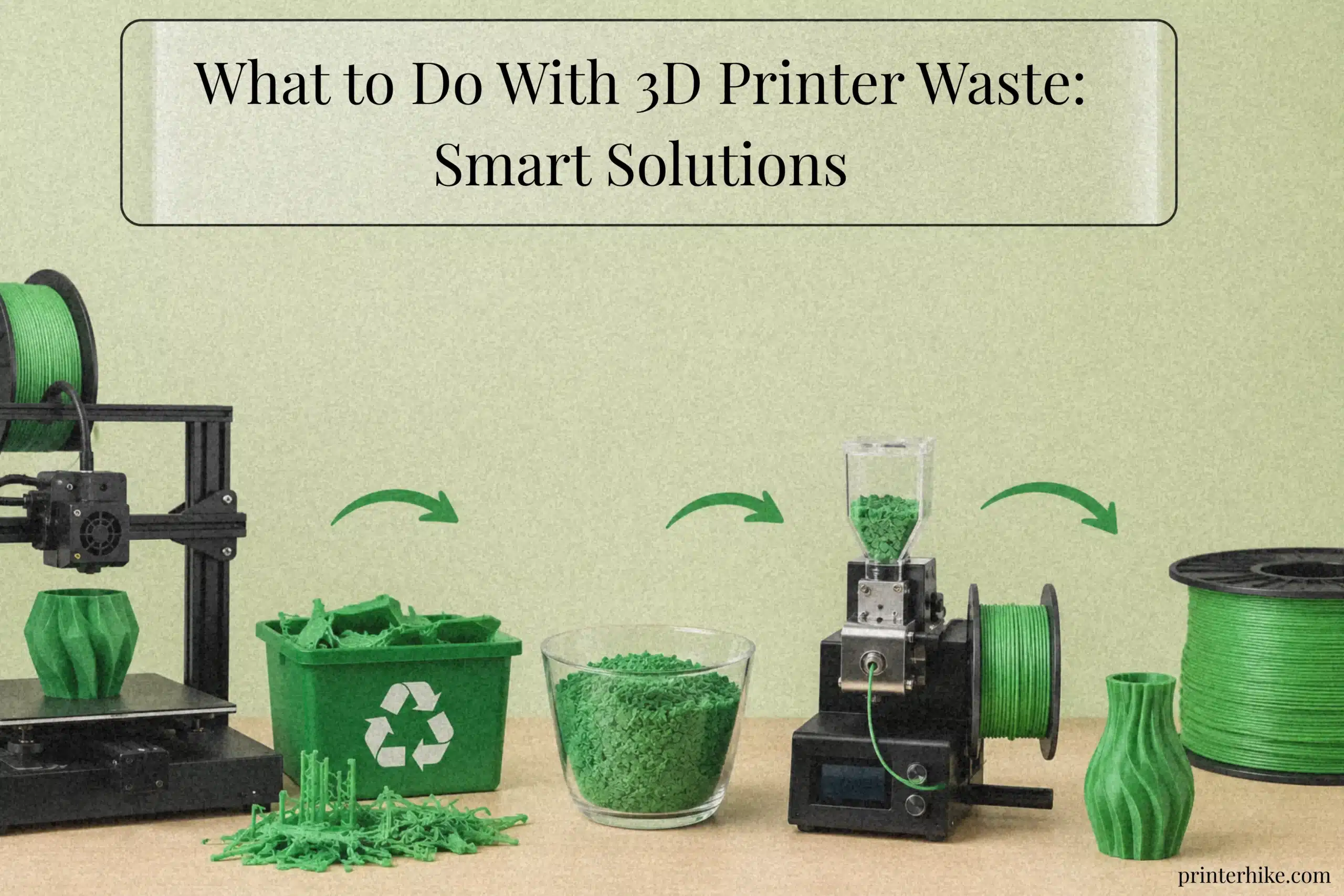
As 3D printing becomes more popular, many users face a growing problem: piles of failed prints, support material, and resin waste. Improper disposal can increase plastic pollution, create safety risks, and waste valuable materials. Knowing what to do with 3D printer waste helps users reduce environmental impact while saving money and resources. This article explores safe disposal methods, recycling options, and smart strategies for creating a more sustainable 3D printing workflow.
What Counts as 3D Printer Waste?
3D printer waste includes much more than broken models. Every stage of printing can create leftover material, from calibration and testing to post-processing and cleanup. As 3D printing becomes more common, waste management has become an important part of sustainable manufacturing. Research suggests that 30–50% of printing material may eventually become waste due to failed jobs, support structures, and test runs. Without proper handling, these materials can contribute to environmental problems and unnecessary costs. Understanding different waste types helps users decide whether to reuse, store, or recycle them safely. It also supports a circular economy by keeping valuable resources in use for longer. Knowing what counts as waste is the first step toward reducing environmental impact and improving printing efficiency.
Failed Prints and Supports
Not every project succeeds on the first try. Incorrect settings, poor adhesion, or calibration issues often result in unusable prints. Support structures also create waste because they are removed after printing. A hobbyist producing miniatures or functional parts may collect several boxes of leftovers within a year. Sorting materials by type makes them easier to recycle and reduces contamination during disposal.
Purge Waste and Filament Scraps
Multi-color systems create purge towers, while trimming and testing generate leftover pieces. A nearly empty spool may still contain usable material, but small pieces often become waste. Materials like PLA and PETG should be stored separately to improve recycling efficiency and prevent them from ending up in a landfill.
Resin Waste and Contaminated Supplies
Resin printing produces waste that requires extra care. Uncured resin, dirty gloves, and cleaning liquids should never be poured down drains. Many users cure leftover resin under UV light before disposal, helping make it safer to handle and reducing environmental risks.
Why 3D Printer Waste Matters
3D printing has made it easier to create custom tools, models, and replacement parts, but it also creates waste that is often overlooked. Support structures, test prints, and leftover material can build up quickly over time. Research shows that nearly 30–50% of printing material may eventually become waste due to failed jobs, calibration, and post-processing. That figure can feel surprising at first. A small workspace may seem efficient, yet bins of leftovers often appear faster than expected.
Managing waste is not just about keeping a desk clean. It helps reduce environmental impact, lowers costs, and supports a more sustainable future. As the 3D printing industry continues to grow, responsible waste handling is becoming an important part of everyday printing.
Environmental Impact of Plastic Waste
One major concern is plastic waste. When discarded carelessly, leftover material can remain in the environment for many years. Globally, only a small percentage of plastics are recycled, while a large portion ends up in disposal sites or natural ecosystems.
Some schools and makerspaces have started using recycling programs to collect used materials and process them into new products. In some cases, old material can even become new filament for future projects. Community recycling programs have become more common as interest in sustainable printing increases.
Microplastics and Resin Hazards
Tiny particles released during sanding or finishing may enter the air without being noticed. These microplastics are difficult to collect and can spread through indoor environments. Resin printing introduces additional concerns because uncured liquids require careful handling.
A common practice in workshops is curing resin under UV light before disposal. Protective gloves and good ventilation also help improve safety. Although simple, this step helps reduce environmental risks, but careful handling protects both users and the environment.
The Growing Scale of 3D Printing Waste
The global 3D printing market continues to expand, increasing demand for better waste management. A hobbyist creating a prototype for testing may collect containers of leftover material throughout the year. As more industries adopt advanced 3D printing materials, the need for waste reduction becomes even more important.
Innovations such as PLA recycling and recycled filaments are helping create a circular economy. Some companies now recycle 3D printing scraps into usable products, reducing material loss. Responsible handling of filament waste and smart use of 3D printer filament can support a more sustainable future for additive manufacturing.
Can 3D Printing Filament Recycling Really Work?
Filament recycling has become an important topic as 3D printing grows in homes, schools, and businesses. With studies estimating that 30–50% of printing material may become waste, finding better ways to reuse leftovers is more important than ever. The good news is that recycling can work, but success depends on the material, equipment, and handling methods. Clean and sorted scraps have a much better chance of being reused effectively. While recycling is not a perfect solution, it helps lower costs and supports more sustainable manufacturing practices.
Recyclable Materials
Some materials are considered recyclable when processed correctly. PLA, ABS, and PETG can often be reused if they are clean and separated by type. A makerspace that sorts materials into labeled bins may find that recycling becomes much easier over time. Proper sorting also improves the recycling process and reduces contamination.
Materials That Are Difficult to Recycle
Resin and mixed-material prints are harder to handle because different ingredients may not blend well together. Frequent filament changes can accidentally mix materials, reducing quality. This extra material waste can feel frustrating, especially after a long print session.
Home vs Industrial Recycling
Home systems can shred scraps and feed them into an extruder to create usable material through extrusion. However, industrial facilities usually provide more consistent results. As technology improves, better tools may help reduce 3D printing waste while supporting plastic recycling and responsible recycling and waste management.
| Material | Recyclable | Notes |
|---|---|---|
| PLA | Yes | Easy to sort and process |
| ABS | Yes | Often recycled industrially |
| PETG | Limited | Depends on local facilities |
| Resin | No | Requires special disposal |
How to Dispose of PLA, ABS, PETG, and Resin Safely
Proper disposal of 3D printing waste is just as important as creating successful prints. Different materials require different handling methods because each one behaves differently after use. Throwing everything into the trash may seem easier, but it can create long-term environmental problems. As additive manufacturing continues to grow, responsible disposal practices help reduce waste and support sustainability. A hobbyist printing detailed 3D models may collect boxes of leftovers over time without even noticing. Safe disposal protects the environment while keeping workspaces organized and efficient.
PLA Disposal
PLA is often described as biodegradable, but it does not break down easily in normal outdoor conditions. Most PLA requires industrial composting facilities to decompose properly. Clean scraps can sometimes be accepted by a recycler or stored for future projects. Small habits like sorting materials separately can make a surprising difference over time. For example, a hobbyist printing tabletop miniatures may collect several kilograms of PLA scraps over a year. Keeping those scraps in labeled containers makes recycling easier and prevents different plastics from mixing.
ABS and PETG Disposal
ABS and PETG are durable materials that should be separated from other waste. These different materials lose value when mixed. Parts removed from a print, including a broken raft, may still be reusable. Some workshops use a shredder to process scraps and turn them back into filament. Small makerspaces that print functional prototypes often collect failed PETG parts in dedicated bins and recycle them in batches to reduce material costs. Reducing waste plastic and extending material life.
Safe Resin Disposal
Resin requires extra care because uncured liquid may harm the environment. Leftover resin should never be poured into drains. A common practice is curing resin under UV light before disposal. Even gloves and paper towels should be hardened first. This extra effort may feel tedious at times, yet it makes the recycling journey much safer for everyone.
How to Recycle 3D Printing Resin Safely
Resin printing produces highly detailed models, but it also creates waste that requires extra care. Unlike regular plastics, liquid resin contains chemicals that should never be poured into drains or thrown away carelessly. A single print job can generate leftover resin, dirty tools, and cleaning liquids that need proper handling. Safe disposal practices may take a little extra effort—perhaps more than expected—but they help protect both people and the environment. As resin printing grows in popularity, responsible handling has become an important part of sustainable manufacturing. These simple steps can significantly reduce environmental risks and encourage more sustainable practices.
Curing Unused Resin
Unused resin should always be cured before disposal. A common method is placing small amounts of resin under UV light or direct sunlight until it fully hardens. This process can transform liquid waste into solid material that is safer to handle. Some users store leftovers in clear containers to avoid spills and make cleanup easier.
Handling Contaminated IPA Alcohol
Isopropyl alcohol (IPA) used for washing resin prints becomes contaminated over time. Allowing resin particles to settle and cure before disposal can improve safety. Researchers continue the development of sustainable solutions, though resin recycling remains challenging because the material cannot easily return to its original raw material form.
Disposing of Gloves and Paper Towels
Gloves, filters, and paper towels often contain uncured resin. These items should be cured under UV light before disposal. While resin cannot be re-extruded into new products like some plastics, careful handling after test prints helps create a safer workspace and supports long-term sustainability.
Recycle Failed 3D Prints: Practical Methods
Recycling failed prints is one of the easiest ways to make 3D printing more sustainable. Support structures, test pieces, and leftover material often pile up over time. It may not seem like much at first—well, until a storage box suddenly fills with scraps. Research suggests that a significant portion of printing material eventually becomes waste, which is why better recycling methods matter. Instead of throwing leftovers away, users can sort, clean, and reuse them to reduce costs and lower their environmental footprint. As recycling technology improves, more hobbyists and businesses are finding practical ways to keep materials in use for longer.
Sorting and Cleaning Scraps
A hobbyist printing replacement brackets or organizers may fill several containers with supports over a year, making sorting by material much easier later. The first step in recycling is sorting materials by type and color. Mixing plastics can reduce quality and make reuse difficult. Small leftovers, supports, or even a removed brim should be cleaned before storage. Dust, glue, or dirt can affect future recycling results.
A workshop printing functional parts may keep separate bins for each material. This simple habit saves time later and improves recycling efficiency. Some materials, especially thermoplastic polymers like PLA and ABS, are easier to process when kept clean and dry.
Using Recycling Services
Not everyone has recycling equipment at home. Local recycling centers and mail-in services can process scraps into reusable products. Some companies even create products made from recycled materials, supporting a circular economy.
These services help repurpose waste that would otherwise be discarded. It is encouraging to see schools and makerspaces adopting such programs because they promote long-term sustainability.
Turning Waste Into New Filament
Advanced systems can grind scraps into small pieces and convert them into pellets before processing them into fresh material. In some cases, waste can be turned into new filament for future projects.
While PLA is often marketed as compostable, most facilities require industrial conditions for breakdown. Recycled leftovers may also be repurposed into prototypes or workshop tools, helping users extend material life and reduce waste.
How to Reduce 3D Printer Waste Before Printing
The best way to manage 3D printing waste is to prevent it before a print even starts. Failed jobs, support structures, and calibration errors can quickly consume material. Research suggests that 30–50% of printing material may become waste, which highlights the importance of careful planning. A few small adjustments can save money, improve print quality, and reduce environmental impact. It may sound simple, but prevention often works better than recycling later. Smart printing habits help reduce waste while making projects more efficient and sustainable.
Optimize Supports and Slicer Settings
Slicer settings directly affect material use. Rotating a model or lowering support density can significantly reduce unnecessary structures. Efficient settings focused on minimizing material use often produce high-quality prints without sacrificing strength. A little experimentation may feel tedious at times, yet it often leads to better results and fewer discarded pieces.
Improve Print Success Rate
Regular maintenance plays a major role in reducing waste. Cleaning the print bed, checking nozzle condition, and calibrating settings improve reliability. Some users perform small test prints before large projects to avoid costly mistakes. Many makers print a small calibration cube before starting long jobs. Catching a leveling or temperature issue early can save hours of printing time and reduce wasted filament. This approach is surprisingly cost-effective because it prevents failed jobs and saves material. In maker spaces, maintenance routines often help reduce waste while improving print consistency.
Reduce Waste in Multi-Color Printing
Multi-color systems create extra purge material during color changes. Careful planning of color sequences can lower waste significantly. Some creators reuse scraps for art projects using a heat gun, while others experiment carefully with a toaster oven for shaping leftovers. In some areas, local government initiatives encourage sustainable printing practices and responsible waste management.
Creative Ways to Upcycle 3D Printing Waste
Upcycling is one of the easiest ways to reduce 3D printing waste while giving old materials a new purpose. Failed prints, support structures, and leftover scraps may seem useless at first. Many leftover pieces can still serve practical purposes. Instead of throwing them away, users can turn waste into practical items, educational tools, or design experiments. This approach not only saves money but also supports more sustainable printing habits.
Functional Workshop Items
Small scraps can become cable clips, tool holders, drawer organizers, or parts trays. A broken container with a cracked edge may still work perfectly for storing screws or nuts. It is satisfying to reuse materials rather than discard them, especially when a simple fix creates something useful.
Educational and Art Projects
Teachers and hobbyists often use leftover prints for learning activities. Geometry shapes, science models, and painting practice pieces work especially well. Colorful scraps can also be arranged into mosaics or decorative artwork, proving that waste does not always have to stay waste.
Reusing Scraps for Prototypes
Leftover materials are ideal for quick prototypes. Designers often test size, fit, or shape before making a final version. A simple trial print may reveal design issues early, saving both time and material. Small habits like these help create a more efficient and environmentally responsible workflow.
Is Recycling 3D Printer Waste Worth the Cost?
Recycling 3D printer waste can save money and reduce environmental impact, but the value depends on how often printing takes place. A person who prints occasionally may not generate enough waste to justify buying recycling equipment. On the other hand, schools, makerspaces, and small businesses often produce large amounts of scrap material each month. Research shows that 30–50% of printing material can become waste due to failed prints, supports, and test runs. Waste can accumulate quickly after repeated printing sessions. Recycling offers a way to recover some of that value while supporting sustainability.
Filament Recyclers and Extruders
Filament recyclers grind leftover material into small pieces, while extruders melt and reshape it into usable filament. The process allows users to create reusable filament from scraps—but the process requires clean and sorted material for the best results. Home systems are improving every year, making recycling more accessible to hobbyists.
Cost Savings for Hobbyists and Businesses
For light users, recycling services may be more affordable than purchasing equipment. Businesses that print prototypes or custom parts often save more because they create larger amounts of waste. Turning failed prints into usable filament helps reduce waste and recover material costs.
When Recycling Makes Financial Sense
Recycling usually becomes worthwhile when the printing volume is high. Frequent users recover equipment costs faster, while occasional users may benefit more from community recycling programs.
| Equipment | Typical Cost | Best For |
|---|---|---|
| Basic Shredder | $100–$300 | Hobbyists |
| Filament Extruder | $300–$1,000+ | Frequent Users |
| Industrial Recycler | $5,000+ | Businesses |
Where Can You Recycle 3D Printer Waste?
Recycling 3D printer waste is becoming easier, but finding the right option still requires a little research. Unlike paper or glass, printing materials are not always accepted in standard recycling bins. Different materials have different recycling requirements, and local rules may vary. As more people adopt 3D printing at home and in workshops, recycling programs and take-back initiatives have become easier to find. This is encouraging because it gives users better ways to reduce environmental impact and support a circular economy.
Local Recycling Centers
Some local recycling centers accept clean PLA, ABS, or PETG materials, while others do not. It is always best to call ahead and ask about accepted plastics. Materials should be sorted and cleaned before drop-off to improve recycling success.
A school makerspace that collects scraps from students may send them to specialized facilities rather than disposing of them. Small community efforts like these can make a meaningful difference over time.
Mail-In Programs
Mail-in recycling services are useful when local options are unavailable. Users simply package clean scraps and send them to companies that process them into reusable products. Some services even provide discounts or rewards for participation, which feels like a nice bonus.
Manufacturer Take-Back Services
Several manufacturers now offer take-back programs for used materials. These programs help keep waste out of landfills and support sustainable production. Some users collect failed prints in a dedicated storage box and ship them in larger batches. This reduces shipping costs while making recycling more practical. As more companies adopt these initiatives, the future of 3D printing looks cleaner and more responsible.
Building a Sustainable 3D Printing Workflow
Simple printing habits, such as sorting materials and tracking failed prints, can reduce waste while improving efficiency. Small habits often create the biggest impact over time. Failed prints, support structures, and leftover scraps can quickly build up, but better organization keeps materials in use for longer. A well-planned workflow also supports recycling efforts and reduces environmental impact.
Sort Waste by Material
Different materials should always be separated. PLA, ABS, PETG, and resin have different recycling requirements, so mixing them lowers recycling quality. Using labeled containers makes sorting easier and prevents contamination.
Store Scraps Correctly
Scraps should be stored in dry, sealed containers to protect them from moisture and dust. Proper storage keeps materials reusable and prevents useful pieces from being discarded by mistake.
Track Material Usage
Some users keep a simple spreadsheet of failed prints and notice repeated nozzle or leveling issues that would otherwise go unnoticed. Tracking material use helps identify waste patterns and improve printing habits. For example, a workshop that records failed prints may discover repeated setting errors and fix them quickly. This simple practice saves material, lowers costs, and creates a more sustainable printing process.
Common Mistakes to Avoid
Managing 3D printing waste is not only about recycling. Small mistakes during storage, sorting, and disposal can reduce recycling success and even create safety risks. It is easy to overlook these details—well, until bins fill up with mixed scraps or a workspace becomes difficult to manage. A few simple habits can prevent problems and make waste handling safer and more sustainable. Avoiding these common mistakes helps protect the environment while keeping valuable materials in use for longer.
Mixing Different Plastics
One of the biggest mistakes is mixing materials such as PLA, ABS, and PETG in the same container. Each material has different properties and recycling requirements. When mixed together, the quality of recycled material often decreases.
For example, a school makerspace that separates scraps by material type usually finds recycling easier and more effective. Labeling storage bins may seem like a small task, but it saves time and prevents contamination later.
Throwing Resin Into Household Trash
Uncured resin should never be poured down drains or thrown directly into household trash. Liquid resin can harm the environment and may violate local disposal rules. A safer approach is curing resin under UV light until it hardens completely before disposal.
This extra step takes only a little time, yet it greatly reduces environmental risks. It is encouraging to see more resin users adopting safer disposal habits.
Ignoring Safety Equipment
Safety equipment is sometimes overlooked during cleanup and disposal. Gloves, eye protection, and good ventilation help reduce exposure to dust and chemicals. Even experienced users follow these practices because accidents can happen unexpectedly.
A safer workspace not only protects people but also supports responsible and sustainable 3D printing.
Conclusion
Knowing what to do with 3D printer waste is becoming more important as 3D printing continues to grow in homes, schools, and businesses. From failed prints and support structures to resin waste, every type of material requires proper handling. Recycling, upcycling, and safe disposal not only reduce environmental impact but also help save valuable resources.
Small actions can make a big difference. Sorting materials, improving print settings, and using recycling programs help create a cleaner and more efficient workflow. A hobbyist printing a few projects each month may not notice waste at first, but those leftovers can add up surprisingly fast over time.
Better recycling technologies and eco-friendly materials are making sustainable 3D printing more practical for everyday users. By adopting responsible habits today, users can reduce waste, lower costs, and support a circular economy. In the end, sustainable printing is not about achieving perfection—it is about making smarter choices, one print at a time.
Frequently Asked Questions
How to make new filament from old 3D prints?
Old prints can be cleaned, sorted by material, shredded into small pieces, and processed through a filament extruder. The recycled material is then melted and formed into usable filament for future projects.
Companies offering take-back programs for used 3D printer materials?
Several filament manufacturers and recycling services offer take-back programs where users can send used prints and scraps for processing. These programs help reduce waste and support more sustainable 3D printing practices.
Where can I find a service that recycles 3D printing filament?
Local makerspaces, specialized recycling companies, and mail-in programs often accept 3D printing waste. Checking nearby recycling centers or manufacturer websites can help users find available services in their area.

Willis C. Mathes
About the Author
Willis C. Mathes is a technical writer focused on 3D printing workflows, printer setup, and troubleshooting. His content is based on practical research into FDM and resin printing systems, slicer optimization, filament handling, and common beginner printing problems.
He regularly covers topics related to printer performance, calibration, maintenance, and beginner-friendly 3D printing setups.