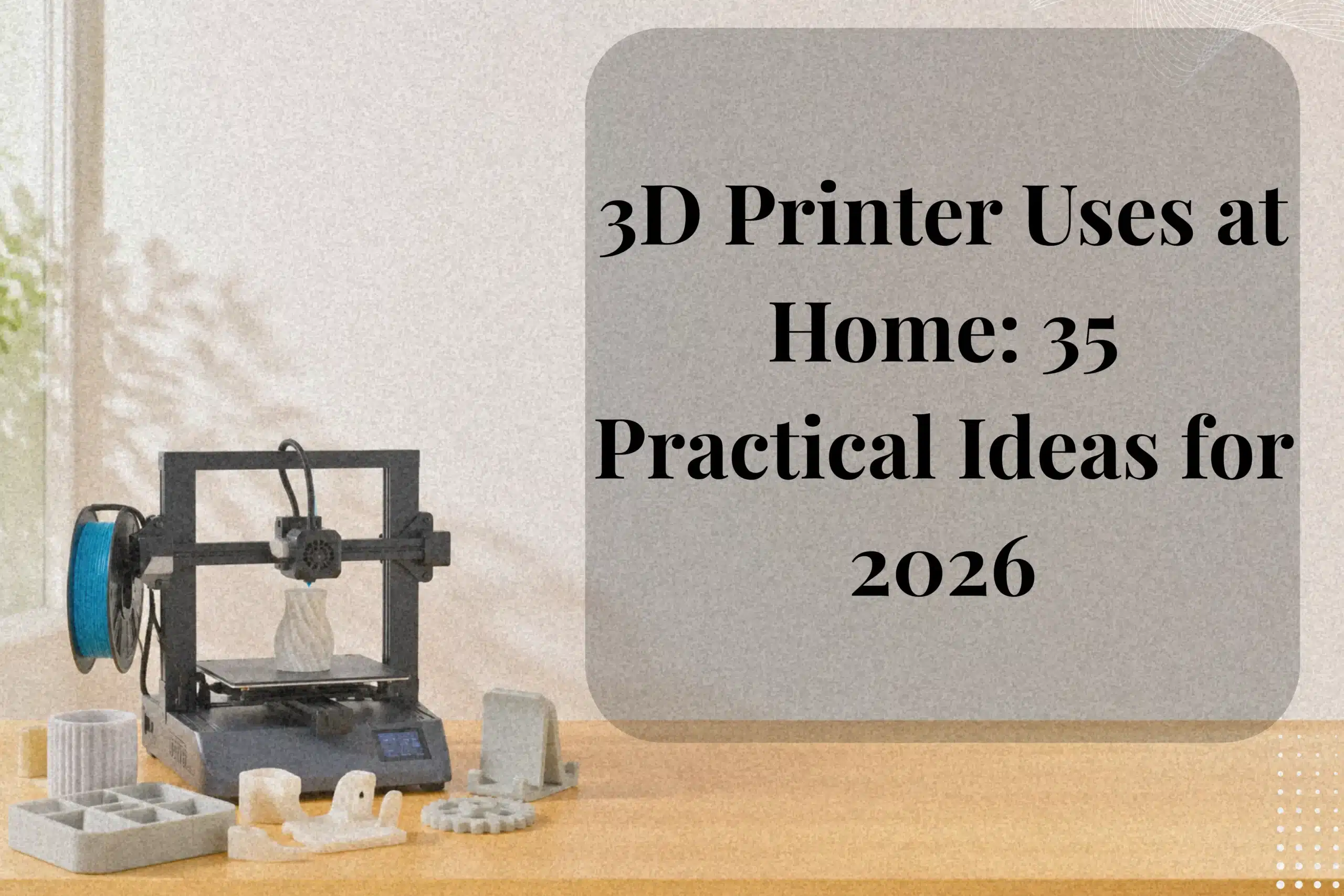
3D printers uses at home are becoming more popular as affordable printers make it easier to create useful, customized items. Homeowners can print storage organizers, replacement parts, decorations, and everyday accessories without relying on expensive store-bought products. In this article, you’ll discover practical ways to use a 3D printer at home, along with creative ideas that can save money and make daily tasks more convenient.
Why More Homeowners Are Using 3D Printers in 2026?
A 3D printer is no longer a tool reserved for engineers or large businesses. In 2026, more homeowners are using 3D technology to create useful items, complete small repairs, and customize everyday products without leaving home.
One reason for this growth is affordability. Modern machines are easier to set up, more reliable, and available at prices that fit many household budgets. Recent market data shows that the home 3D printing market reached approximately $1.85 billion in 2025, reflecting growing consumer interest.
Convenience also plays a major role. Instead of searching stores for a replacement part or a specific accessory, homeowners can often create exactly what they need in a few hours. From storage solutions to home organization tools, the possibilities continue to expand.
| Why Homeowners Use a 3D Printer | Benefit |
|---|---|
| Home Repairs | Create replacement parts quickly |
| Organization | Make custom storage solutions |
| Personalization | Design products to fit specific needs |
| Education | Support STEM learning and creativity |
| Cost Savings | Reduce spending on small household items |
The rise of DIY culture, STEM education, and personalized products has also encouraged adoption. As technology becomes easier to use, a 3D printer is quickly becoming a practical household tool rather than just a hobby device.
Room-by-Room 3D Printer Uses at Home
A 3D printer can be useful in nearly every room of a house. Instead of buying generic products that may not fit properly, homeowners can create customized solutions designed for their exact needs. A home 3D printer helps improve organization, solve small storage problems, and create practical accessories used every day.
| Room | Popular 3D Printed Items |
|---|---|
| Kitchen | Bag clips, spice organizers, utensil holders |
| Bathroom | Toothbrush holders, soap trays, storage organizers |
| Bedroom | Phone docks, cable organizers, jewelry trays |
| Living Room | Remote holders, decorative accessories |
| Garage | Tool racks, battery holders, storage bins |
Kitchen Tools and Organization Accessories
The kitchen is one of the most practical places for 3D printing projects. Homeowners often create drawer dividers, spice organizers, bag clips, and utensil holders that fit cabinets perfectly. These simple additions reduce clutter and make cooking tasks easier while maximizing available storage space.
Bathroom Storage and Holders
Bathrooms often have limited storage space. A 3D printer can create toothbrush holders, razor stands, soap trays, and compact organizers for daily essentials. Some users even design a custom mount for electric toothbrush chargers to keep countertops neat and organized.
Bedroom and Living Room Accessories
Bedrooms and living rooms benefit from customized organization solutions. Popular projects include phone docks, cable organizers, remote control holders, and headphone stands. A board game organizer is another useful addition because it keeps pieces sorted and makes family game nights more enjoyable.
Garage and Workshop Helpers
The garage is where a 3D printer often delivers the most practical value. Tool racks, battery holders, drill-bit organizers, and storage bins are among the most useful garage projects. battery holders, drill-bit organizers, and storage bins. A common example is a wall-mounted holder for cordless drill batteries. Instead of leaving batteries loose in a toolbox, users can keep them organized and easy to reach while working on projects. When a standard product does not fit a workspace, a simple prototype can be designed in Fusion 360 before printing the final version. Platforms like MakerWorld provide ready-made designs that help users get started quickly.
Household Items You Can Stop Buying With a 3D Printer
One of the biggest advantages of owning a 3D printer is the ability to create useful household products instead of purchasing them repeatedly. Small items may seem inexpensive at first, but the cost adds up over time. A simple organizer, cable clip, or storage accessory can often be printed for a fraction of the retail price.
This is one reason the consumer 3D printing market continues to grow. Home users are discovering that a single spool of filament can produce dozens of practical items for personal use. Rather than searching multiple stores for the right size or design, they can create exactly what they need at home.
| Household Item | Why Print It Instead of Buying? |
|---|---|
| Cable Clips | Custom sizes for different wires |
| Phone Stands | Fits specific devices perfectly |
| Hooks and Hangers | Easy to customize for any space |
| Drawer Organizer | Maximizes storage efficiency |
| Bookmarks | Personalized designs and styles |
Cable Clips and Wire Organizers
Loose cables can quickly make a desk or entertainment area look messy. A 3D printer allows homeowners to create custom cable clips and wire guides that fit their setup perfectly. These small projects use very little material and are often among the first things to print for a beginner.
Phone Stands and Charging Docks
Phone stands are one of the most practical things to print. They help keep devices visible while working, studying, or watching videos. Some designs even include space for charging cables, creating a simple docking station without spending extra money.
Hooks, Hangers, and Holders
Custom hooks and holders solve storage problems throughout a home. They can be used for keys, bags, headphones, kitchen tools, or bathroom accessories. PETG is often preferred for projects that require extra strength and durability.
Drawer Organizers and Storage Solutions
Standard storage products do not always fit the available space. For example, one homeowner designed custom drawer dividers for a narrow kitchen drawer that standard organizers could not fit. The printed dividers used every inch of available space and improved kitchen organization. A custom organizer can be designed to match exact drawer dimensions. Some users create their own layouts in Tinkercad, while others download ready-made designs and adjust them as needed.
Bookmarks and Everyday Accessories
Bookmarks, toothpaste dispensers, and small desk accessories are simple yet practical projects. They print quickly, require little material, and provide an easy way to create personalized items that are actually used every day. Even an IKEA drawer can become more functional with a few customized printed additions.
Best 3D Printer Uses for Home Repairs
Home repairs are one of the most valuable reasons to own a personal 3d printer. Small plastic parts break all the time, yet replacing an entire product because of one damaged piece can feel wasteful and expensive. Instead of waiting for replacement parts to arrive, homeowners can often create a solution within hours.
This practical home approach has become increasingly popular because it saves both time and money. A simple repair may only require a few cents worth of material, while a replacement item could cost much more. In some situations, the original part is no longer available, making 3D printing the only realistic option.
| Common Repair | 3D Printed Solution |
|---|---|
| Broken Appliance | Replacement knob or clip |
| Damaged Furniture | Support brackets and connectors |
| Cabinet Hardware | Handles and door catches |
| Vacuum Cleaner | Custom adapter and attachments |
Replacing Broken Appliance Parts
A damaged knob on an oven, fan, or washing machine can make an appliance difficult to use. Instead of replacing the entire unit, homeowners can create a matching replacement part. A simple CAD design is often enough to restore normal function. For example, many homeowners print replacement dishwasher wheel clips when the original plastic parts break. A replacement often costs only a few cents in filament compared to buying an entire rack assembly. In many cases, the printed clip restores smooth rack movement and extends the life of the appliance without requiring expensive repairs. For many homeowners, printing a small replacement part is often quicker than searching for a discontinued component online.
Repairing Furniture Components
Furniture parts wear out over time. Chair supports, shelf clips, and table connectors are common examples. A durable material such as nylon may be chosen when additional strength is needed. These repairs help extend the life of furniture without requiring costly replacements.
Cabinet Handles and Door Hardware
Cabinet hardware is another area where 3D printing proves useful. A broken handle or damaged latch can make daily use inconvenient. Custom replacements can be designed to match existing furniture while improving functionality.
Vacuum Cleaner and Household Attachments
Vacuum accessories often crack or go missing. Useful replacement attachments are often printed when original vacuum accessories become unavailable, such as hose connectors or an adapter that fits a specific model. Some users even add a decorative touch by matching a repair to existing home decoration styles, creating a fix that looks intentional rather than temporary.
Practical Home 3D Printing Projects That Save Money
One of the biggest reasons homeowners invest in 3D printing is the ability to solve everyday problems without spending money on replacement products. Small items often break, disappear, or become difficult to find in stores. A simple project can sometimes save both time and frustration. In fact, this practical value is helping drive the growth of home 3D printing worldwide.
| Project Type | Money-Saving Benefit |
|---|---|
| Replacement Parts | Avoid buying new products |
| Storage Solutions | Reduce spending on organizers |
| Toy Repairs | Extend the life of children’s toys |
| Gardening Accessories | Create tools for specific needs |
Replacing Lost or Damaged Parts
A missing battery cover, broken clip, or damaged handle can make an otherwise useful item difficult to use. Instead of replacing the entire product, homeowners can create a custom replacement. One family recreated missing board game pieces after discovering replacement sets were no longer sold. The printed pieces matched the originals closely and allowed the game to be used again. The replacement worked perfectly and saved the cost of buying a new game set.
Creating Custom Storage Solutions
Storage products do not always fit the available space. That is where 3D printing becomes especially helpful. Custom drawer organizers help make use of every inch of available space, cable holders, paper towel brackets, and desktop storage solutions designed for exact measurements. A quick search on Thingiverse reveals collections full of free designs that can be downloaded and customized within minutes.
Repairing Children’s Toys
Children’s toys often lose small parts long before the main toy wears out. Instead of throwing everything away, replacement wheels, connectors, or decorative pieces can be printed. Some families even create a small figurine or matching accessory to restore a favorite toy. It takes a little effort, sure, but those repairs often bring a surprising sense of pride.
Making Gardening Tools and Accessories
Gardening projects are another great way to save money. Homeowners can print cool plant markers, seed organizers, watering attachments, and small tool holders. A custom pot accessory or support clip can solve a specific gardening challenge that store-bought products cannot address. For anyone willing to put in the work, these practical projects often deliver long-term value while making outdoor tasks easier.
Best 3D Prints for Beginners
Starting with simple projects helps new users learn faster and avoid common frustrations. A new 3D printing enthusiast does not need complex designs to see results. In fact, some of the most really useful projects are also the easiest to create. Simple prints build confidence, teach basic settings, and help users understand how different material choices affect the final result.
| Beginner Project | Why It Works Well |
|---|---|
| Cable Clips | Fast and simple to print |
| Phone Stand | Useful for daily use |
| Bookmark | Uses little material |
| Pen Holder | Improves desk organization |
| Small Gaming Accessory | Fun and practical |
Quick Prints That Take Less Than One Hour
Short projects are ideal for learning. Bookmarks, cable clips, small holders, and simple gaming accessories can often be completed in less than an hour. A single spool of material can produce dozens of these items, making them affordable practice projects. Quick success keeps motivation high and helps users gain experience without wasting time.
Easy Functional Projects for New Users
Practical projects offer the best value. A phone stand, pen holder, custom mug coaster, or desk organizer can improve everyday life while teaching important printing skills. Some users even personalise small household items to match their style. These projects may seem simple, yet they often become the most frequently used items around the house.
Common Beginner Mistakes to Avoid
One common mistake is trying to modify advanced designs too early. Another is selecting the wrong material for the project. For example, resin may produce detailed models, but it requires additional equipment and safety precautions. New users usually achieve better results by starting with simple projects before attempting larger modifications.
When confidence grows, users can experiment with new designs and gradually tackle more challenging projects. This approach reduces wasted material, helps avoid unnecessary frustration, and prevents the need to spend money replacing failed prints.
How to Find Free 3D Printing Files for Home Projects?
Finding good designs is often easier than creating them from scratch. Thousands of free 3D printing files are available online, making it possible to start printing useful household items within minutes. Many websites offer ready-made models for storage solutions, home repairs, desk accessories, and decorative projects.
Best Websites for Free Designs
Popular platforms such as Thingiverse, MakerWorld, and Printables provide large collections of free 3D models. Users can browse categories, download files, and print projects without needing advanced design skills. Many designs also include user reviews and printing recommendations.
How to Choose Safe Designs
Before downloading a file, it is important to check ratings, user feedback, and print instructions. Well-reviewed designs are more likely to print successfully and function as intended. Looking at photos from other users can also help identify potential issues before starting a project.
When to Design Your Own Models
Custom designs become useful when a project requires exact measurements or a unique solution. Simple tools such as Tinkercad allow beginners to create basic organizers, holders, and replacement parts without extensive design experience.
Home 3D Printing Projects for Families and Kids
A home 3D printer is not just a tool for repairs and organization. It can also become a fun learning resource for the entire family. Parents often look for activities that combine creativity with education, and 3D printing does exactly that. Children can see ideas turn into physical objects, which makes learning more engaging and memorable.
Recent education studies show strong growth in STEM-focused learning, and 3D printing is becoming an important part of that trend. Whether creating science models or designing custom school supplies, these projects encourage problem-solving and creativity in a hands-on way.
| Project Type | Learning Benefit |
|---|---|
| Educational Models | Visual learning and better understanding |
| STEM Activities | Problem-solving and creativity |
| School Supplies | Organization and personalization |
| Family Projects | Teamwork and communication |
Educational Models
Complex subjects often become easier to understand when children can hold a physical model in their hands. Students can create maps, solar systems, historical landmarks, or geometric shapes. A simple model can explain concepts that are difficult to learn from a textbook alone.
STEM Learning Activities
STEM projects help children explore science, technology, engineering, and math through practical experience. Learning to design simple objects teaches valuable digital skills. As children become more confident, they may begin learning to design their own creations and even redesign existing projects to improve them.
Personalized School Supplies
A 3D printer allows families to customize school items for individual needs. Pencil holders, name tags, bookmarks, and cable management clips are popular examples. Some families even create matching accessories for tablets and wireless devices used during schoolwork.
Creative Family Projects
Family projects often become the most memorable. Parents and children can work together to create decorative tile patterns, personalized gifts, or simple household accessories. Some projects may require a little sanding with sandpaper for a smoother finish, but that extra effort often makes the final result feel special.
For families who want to add more creativity to learning, a home 3D printer offers something a little different from traditional crafts. Even entry-level machines such as the Anycubic Kobra can help turn everyday ideas into exciting projects without relying on expensive third-party products.
Useful 3D Printed Items for Pet Owners
Pet owners are always looking for practical ways to improve daily care while keeping costs under control. A 3D printer makes it possible to turn digital designs into physical objects that solve real problems around the home. From feeding tools to personalized accessories, these small-scale projects can make life easier for both pets and their owners.
One advantage of 3D printing is flexibility. Instead of relying on pre-made products that may not fit specific needs, owners can tailor designs for different breeds, sizes, and living spaces. This creates solutions that feel more personal and often work better than standard store-bought alternatives.
| Pet Project | Practical Benefit |
|---|---|
| Food Scoops | Accurate meal portions |
| Storage Tools | Better food organization |
| Pet Tags | Easy identification |
| Toys | Mental stimulation and play |
| Feeding Accessories | Customized pet care |
Pet Food Scoops and Storage Tools
Keeping pet food organized can be surprisingly challenging. Custom scoops, storage clips, and container labels help simplify feeding routines. A well-designed scoop ensures consistent portions, while storage tools keep food fresh and accessible. For safety, owners should always choose pet-friendly materials and maintain proper ventilation during the printing process.
Custom Pet Tags and Accessories
Personalized pet tags are among the most popular projects for animal lovers. Owners can add names, contact details, or decorative elements that reflect a pet’s personality. Some even create custom leash clips or smartphone holders that attach to pet-walking gear, making outdoor trips more convenient.
Pet Toys and Enrichment Items
Interactive toys can keep pets engaged and mentally active. Puzzle feeders, chew-safe enrichment tools, and rolling toys are common examples. Many pet owners find that puzzle toys and enrichment accessories keep pets engaged and mentally active during quiet periods at home. However, toys should be inspected regularly for wear, especially around areas near the nozzle-produced layers where damage may occur over time.
These projects demonstrate how 3D printing can support everyday pet care while creating useful, personalized solutions that owners can adapt to their unique needs.
Home Office Accessories You Can 3D Print
A well-organized workspace can improve comfort and productivity, yet small office accessories are often expensive or difficult to find in the right size. A 3D printer allows homeowners to create custom solutions that fit their exact needs instead of relying on generic products.
| Home Office Project | Benefit |
|---|---|
| Laptop Stand | Improves viewing angle and airflow |
| Cable Organizer | Reduces desk clutter |
| Drawer Insert | Keeps supplies organized |
| Headphone Mount | Saves desk space |
| Webcam Holder | Improves camera positioning |
Laptop and Monitor Accessories
Laptop stands and monitor risers are among the most practical office projects. They help create a more comfortable workstation while freeing up valuable desk space. Some users also create a custom phone stand that matches the layout of their desk.
Cable Management Systems
Loose cables can quickly make a workspace look untidy. Printed clips, routing guides, and a simple desk insert help keep wires organized and easy to access.
Desk Organization Tools
Custom desk organizers can store pens, notes, USB drives, and other small items. These solutions are especially useful because they solve very specific storage problems that standard products may not address.
Headphone and Webcam Mounts
A headphone mount or webcam holder can improve desk organization without adding extra clutter. This approach offers a level of customization similar to CNC manufacturing but at a much lower cost. Well-designed accessories may even bespeak a person’s work style and create a more professional workspace.
Smart Home Accessories You Can Create With a 3D Printer
Smart home devices have become common in modern households, but the accessories that support them are not always easy to find. A 3D printer allows homeowners to create custom solutions that improve device placement, organization, and functionality. For someone with a new 3d printer, these projects are often among the most rewarding because they are practical and used every day.
| Smart Home Project | Benefit |
|---|---|
| Speaker Mount | Saves space and improves placement |
| Camera Bracket | Better viewing angles |
| Sensor Holder | Secure installation |
| Charging Station | Reduces cable clutter |
Smart Speaker Mounts
Smart speakers work best when placed in the right location. A custom mount can keep devices off countertops and free up valuable space. In one kitchen setup, a wall-mounted speaker bracket freed up valuable counter space while keeping voice controls easy to access during cooking. Designs can be adjusted to fit different rooms and speaker models without relying on expensive accessories.
Security Camera Brackets
Camera placement plays a major role in home security. A printed bracket can help position cameras exactly where they are needed. Some users even create weather-protected designs for indoor and outdoor monitoring systems.
Sensor Holders
Motion sensors, temperature monitors, and smart switches often require specialized mounting solutions. A custom holder keeps devices secure while maintaining a clean appearance. These are among the most useful things homeowners create because they solve everyday installation challenges.
Charging Stations
Charging stations help organize smartphones, tablets, and other smart devices. Custom docks help hide cables and create a cleaner, more organized charging area. A custom charging station keeps devices organized in one place and helps reduce cable clutter throughout the home.
Most of these projects print well with PLA because it is affordable and easy to use. As printer work becomes more reliable and user-friendly, creating smart home accessories is becoming one of the easiest ways to find 3d solutio\ans for everyday problems. Regular maintenance, such as checking the nozzle and cleaning components, also helps ensure consistent print quality. While phone cases and kitchen accessories remain popular, smart home projects often provide greater long-term value. A few printed parts are even safe to clean by hand rather than placing them in a dishwasher, helping extend their lifespan.
Best Materials for Different Home 3D Printing Projects
Choosing the right material is just as important as choosing the right design. A project that works perfectly with one material may fail with another. This is something new users often discover after a few prints. The good news is that most household projects only require a few common materials.
Each material offers different benefits. Some are easier to print, while others provide greater durability or weather resistance. Selecting the right option helps ensure better results and reduces wasted material.
| Material | Best For | Key Advantage |
|---|---|---|
| PLA | Household accessories and organizers | Easy to print |
| PETG | Repair parts and functional items | Strong and durable |
| ABS | Outdoor accessories | Heat resistant |
| ASA | Garden and outdoor projects | UV resistant |
PLA for Everyday Household Items
PLA is the most beginner-friendly material available. It is commonly used for organizers, storage bins, desk accessories, phone stands, and decorative items. Since it prints easily and requires minimal setup, it is often the first choice for household projects. For indoor use, PLA provides a great balance between affordability and reliability.
PETG for Durable Home Repairs
PETG is a stronger option for parts that experience regular wear and tear. Homeowners frequently use it for replacement clips, storage brackets, tool holders, and repair components. PETG is widely chosen for projects that need a balance of strength, flexibility, and long-term durability. It is especially useful for items that may experience moisture or heavier use.
ABS and ASA for Outdoor Applications
Outdoor projects require materials that can handle sunlight, heat, and changing weather conditions. ABS and ASA are commonly used for garden accessories, outdoor mounts, and utility parts. ASA is especially valued because it resists UV exposure and maintains its appearance longer. While these materials can be slightly more challenging to print, the added durability often makes the extra effort worthwhile.
Choosing the correct material from the start helps homeowners create stronger, longer-lasting projects while avoiding unnecessary reprints.
Seasonal and Holiday Decorations You Can Print at Home
Seasonal and holiday projects are among the most enjoyable ways to use a 3D printer at home. Homeowners can create decorations for Eid, Christmas, Halloween, birthdays, and other special occasions without spending a large amount on store-bought items. Custom ornaments, cake toppers, gift tags, table decorations, and keepsakes can be designed to match a specific theme or event. These projects are often reusable, easy to personalize, and help create memorable celebrations. For families who enjoy creative activities, seasonal printing adds a unique touch that makes holidays and special moments feel even more meaningful.
| Occasion | Popular 3D Printed Decorations |
|---|---|
| Eid | Lanterns, gift tags, table decor |
| Christmas | Tree ornaments, snowflakes, name tags |
| Halloween | Pumpkins, spooky signs, costume props |
| Birthdays | Cake toppers, party favors, banners |
| Special Events | Personalized gifts, keepsakes, photo displays |
How Much Money Can a 3D Printer Save at Home?
One of the biggest reasons homeowners invest in 3D printing is the potential to save money. Small household items may not seem expensive individually, but the costs add up over time. Instead of purchasing replacement parts, organizers, hooks, clips, and accessories, homeowners can often create them at home for a fraction of the retail price. A single spool of filament typically costs between $20 and $30 and can produce dozens of small items. In addition, desktop printers consume relatively little electricity, often costing only a few cents per hour to operate. While a 3D printer will not eliminate every household expense, it can significantly reduce spending on everyday products and simple repairs.
Print vs Buy Cost Comparison
| Item | Store Price | Approximate Print Cost |
|---|---|---|
| Phone Stand | $10–$20 | Under $1 |
| Cable Organizer | $5–$10 | Under $0.50 |
| Drawer Divider | $8–$15 | Around $1 |
| Replacement Knob | $10–$25 | Around $1–$2 |
| Plant Pot Holder | $10–$20 | Around $2 |
Real Household Savings Examples
A homeowner who regularly organizes workspaces, repairs broken parts, or creates storage solutions can save hundreds of dollars over several years. During one home organization project, custom drawer dividers and cable organizers cost only a few dollars in materials. In one home office setup, printing cable organizers and headphone mounts cost less than $5 in filament, while similar store-bought accessories would have cost several times more. Compared to purchasing multiple retail products.
Filament Costs Explained
Filament is the primary material used in most home printers. A standard 1kg spool generally costs $20–$30 and can produce dozens of useful household items. The exact cost depends on the size and complexity of each project.
Electricity Costs of Home Printing
Electricity expenses are surprisingly low. Most desktop 3D printers use around 50–150 watts per hour. In many cases, a multi-hour print costs only a few cents in electricity, making ongoing operation affordable for regular home use.
Things You Should Not 3D Print at Home
A 3D printer can create countless useful household items, but some projects are better left to professional manufacturing. While it is tempting to print almost anything, certain objects require special materials, strict safety standards, or industrial testing. Ignoring these limitations can lead to poor performance, property damage, or even injury. Understanding what should not be printed is just as important as knowing what can be printed.
| Item Type | Reasons to Avoid Printing |
|---|---|
| Food-Contact Products | May not be fully food safe |
| High-Heat Components | Can warp or melt under heat |
| Safety-Critical Parts | Failure could create serious risks |
Food-Contact Items Without Proper Materials
Containers, cups, and kitchen tools may look safe, but some printed surfaces can trap bacteria in tiny gaps. Unless certified food-safe materials and finishing methods are used, these products should be avoided for direct food contact.
High-Temperature Components
Parts used near ovens, heaters, grills, or hot appliances often experience temperatures beyond what common printing materials can handle. Over time, these items may soften, crack, or lose their shape.
Safety-Critical Parts
Items related to vehicle safety, electrical systems, or heavy structural support should never rely on home printing alone. Even a small failure can have serious consequences. For these applications, professionally manufactured parts remain the safest choice.
Is a Home 3D Printer Worth It?
For most homeowners, a home 3D printer can be a worthwhile investment. It offers the ability to create useful household items, replace broken parts, organize living spaces, and personalize everyday products without relying on store-bought solutions. What starts as a hobby often becomes a practical tool for solving small problems around the house.
The value depends on how often it is used. Someone who enjoys DIY projects, home repairs, crafting, or educational activities will likely see greater benefits than someone who only prints occasionally. From custom organizers and pet accessories to home office tools and holiday decorations, the range of possible projects is surprisingly large.
| Benefit | Why It Matters |
|---|---|
| Home Repairs | Replace small broken parts quickly |
| Cost Savings | Reduce spending on everyday items |
| Customization | Create products that fit exact needs |
| Education | Support creativity and STEM learning |
| Convenience | Print useful items when needed |
There is a learning curve, and not every print will be successful at first. However, with a little practice, most users find that the convenience, creativity, and long-term savings make a home 3D printer a valuable addition to their household.
Conclusion
The variety of 3d printer uses at home continues to grow as the technology becomes more affordable and easier to use. From organizing kitchens and home offices to repairing broken parts, creating pet accessories, and making holiday decorations, a 3D printer can solve everyday problems in practical ways. It also offers opportunities to save money, personalize household items, and explore creative projects with family members.
While not every project is suitable for home printing, the right materials and realistic expectations can help homeowners get excellent results. For anyone interested in DIY solutions, home organization, or hands-on creativity, a 3D printer is more than just a gadget—it is a versatile tool that can provide value for years to come.
Frequently Asked Questions
Can 3d printers be used to make custom kitchen tools at home?
Yes, 3D printers can create custom kitchen organizers, measuring scoops, bag clips, and storage accessories. Food-contact items should only be made with suitable food-safe materials and proper finishing methods.
How much money can a 3D printer save at home?
The amount varies based on usage, but printing replacement parts, organizers, and household accessories can reduce spending on small everyday purchases. Regular users may save a noticeable amount over time.
Where to find affordable filament for personal 3D printing projects?
Affordable filament is available from online marketplaces, manufacturer websites, and local 3D printing suppliers. Comparing prices, reviews, and spool sizes can help buyers find good value without sacrificing quality.
Where can I buy reliable 3d printers suitable for household tasks?
Reliable household 3D printers can be purchased from trusted online retailers, manufacturers’ stores, and electronics suppliers. Choosing a well-reviewed model with good customer support is usually the safest option.

Willis C. Mathes
About the Author
Willis C. Mathes is a technical writer focused on 3D printing workflows, printer setup, and troubleshooting. His content is based on practical research into FDM and resin printing systems, slicer optimization, filament handling, and common beginner printing problems.
He regularly covers topics related to printer performance, calibration, maintenance, and beginner-friendly 3D printing setups.