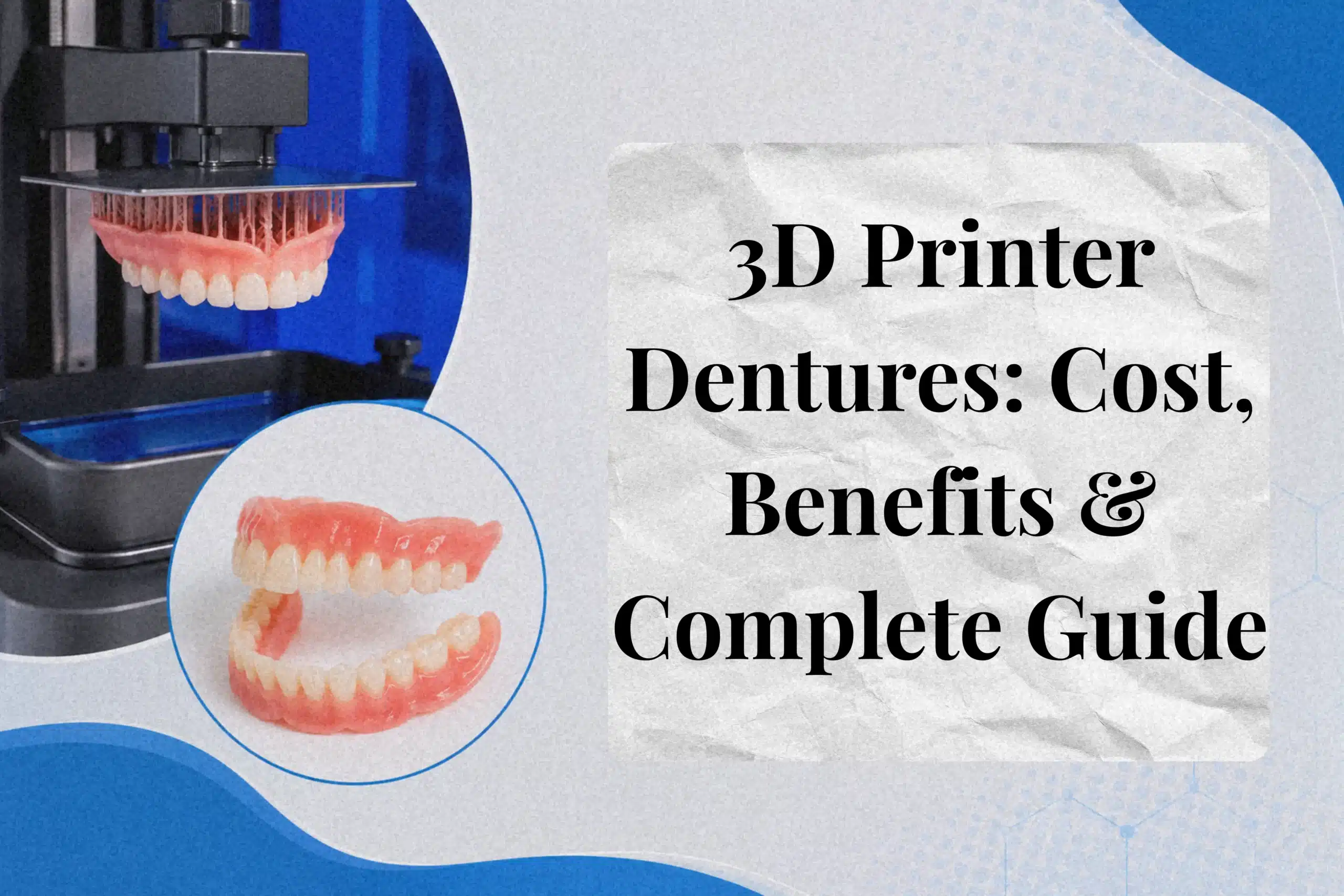
3D printer dentures help solve several challenges associated with traditional denture production, including long manufacturing times, multiple patient visits, and costly remakes. Conventional workflows can take days or even weeks, while digital denture technology allows dental labs to streamline production and store designs for future use. As a result, patients may receive dentures faster and with fewer adjustments, although outcomes still depend on accurate scans, proper design, and high-quality dental materials. This article explores how 3D printer dentures work, their benefits and limitations, production costs, safety standards, and the latest advancements shaping digital denture manufacturing. 3D printed dentures are digitally designed replacement teeth manufactured using dental-grade resins and specialized printers.
In modern prosthodontic workflows, digital denture systems are increasingly adopted in dental laboratories due to improved reproducibility and reduced remake rates driven by advanced scanning and CAD-based design precision. They can reduce production time, improve record storage, and simplify future replacements compared to traditional dentures.
What Are 3D Printer Dentures?
3D printer dentures are custom-made replacement teeth created using digital scans, specialized design software, and advanced manufacturing equipment. Instead of relying only on physical impressions and manual laboratory work, dental professionals use digital files to design dentures with greater efficiency. The process usually begins with a scan of the patient’s mouth, followed by computer-aided design and production using modern dental technology. These digital records can also be stored for future use, making replacements easier if a denture is lost or damaged.
How Digital Dentures Differ From Conventional Dentures
A digital denture follows a different workflow than a conventional denture. Traditional methods often require physical molds, stone models, and several manual laboratory procedures. Digital workflows replace many of these steps with scanning and computer-based design. For example, when a patient needs a replacement, a laboratory may retrieve the saved design instead of creating a new model from scratch. This can reduce delays and simplify communication between clinics and laboratories.
Why Digital Dentures Are Growing in Popularity
Digital dentures are becoming more popular because they help improve efficiency while maintaining quality. Dental practices can store patient records electronically, make design adjustments more easily, and streamline production. Growing demand for tooth replacement solutions and continued advances in dental technology have also encouraged wider adoption. As digital systems improve, more clinics and laboratories are integrating them into everyday denture production.
How Are 3D Printed Dentures Made?
Modern denture production follows a carefully planned process that combines digital tools with advanced manufacturing. The goal is to create a restoration that fits comfortably, functions properly, and looks natural. A well-executed workflow helps reduce errors and improves consistency from one case to another. Dental laboratories and clinics work together throughout the process, starting with patient records and ending with final delivery. While the technology is impressive, the quality of each step still matters. A small issue during data collection or design can affect the final result, which is why experienced teams pay close attention to every stage.
Digital Scanning and Impression Capture
The process begins with collecting information about the patient’s mouth. A dentist may use a digital scan to capture the shape of the gums, bite relationship, and oral anatomy. Compared with traditional impressions, digital records are easier to store and transfer between clinics and laboratories.
For example, if a patient requires a replacement years later, the saved scan can help speed up production. This stage is important because accurate records provide the foundation for the entire workflow. Even the most advanced equipment cannot compensate for incomplete data.
CAD Design and Virtual Denture Setup
After the scan is completed, technicians create a virtual denture using specialized software. During this stage, tooth position, bite alignment, and aesthetics are evaluated carefully. Dental professionals can review the design on-screen and make adjustments before manufacturing begins.
This digital workflow allows changes to be made quickly without rebuilding physical models. It also helps laboratories fabricate restorations with greater consistency.
Printing, Washing, and Post-Curing
Once the design is approved, a dental printer produces the denture components layer by layer. In some dental labs, technicians note that even a small scanning error can lead to noticeable bite discomfort, which is why they double-check occlusion before final curing. After printing, the restoration is washed to remove excess material and then post-cured under controlled conditions. Proper curing is essential because it helps achieve the required strength and stability for daily use.
Finishing and Patient Delivery
The final stage includes polishing, surface refinement, and quality checks. The laboratory reviews fit, function, and appearance before delivery. If adjustments are needed, they are completed before the patient receives the denture. A carefully finished restoration not only improves comfort but also supports long-term satisfaction.
What Materials Are Used in 3D Printed Dentures?
The materials used in 3D printed dentures play a major role in comfort, appearance, and durability. Modern dental materials are designed to create restorations that look natural while standing up to daily use. As digital denture manufacturing has improved, material quality has improved as well, giving dental professionals more reliable options than ever before.
Denture Base Resins
The denture base is the part that rests against the gums and supports the artificial teeth. Most modern systems use specialized resin materials because they can produce accurate details and a comfortable fit. Some laboratories also use acrylic-based materials in specific cases due to their long history in dentistry. A strong and stable base helps improve comfort and supports long-term use.
Denture Teeth Materials
Artificial teeth must balance durability with aesthetics. Modern dentures made through digital design often use materials that closely resemble natural teeth in color and appearance. During the design process, technicians can adjust tooth shape and size to match the patient’s needs. This helps create a more natural-looking smile.
Biocompatible Dental Resins
Biocompatible materials are developed for safe use inside the mouth. These materials undergo testing to help reduce the risk of irritation while maintaining strength and accuracy. The growth of intraoral scanning and digital manufacturing has encouraged the development of more advanced dental materials.
FDA-Approved Denture Printing Materials
FDA-cleared materials meet specific safety and performance standards. Before becoming part of a denture solution, manufacturers evaluate consistency, durability, and intended use. Combined with computer-aided design systems, these materials help laboratories produce predictable and high-quality restorations.
How Accurate Are 3D Printed Dentures?
Accuracy is one of the biggest reasons dental laboratories are adopting modern denture manufacturing methods. A well-made denture should fit comfortably, remain stable during daily activities, and require minimal adjustments. Recent clinical research has shown that a properly produced 3D denture can deliver results comparable to traditional methods in patient satisfaction and function. Still, accuracy depends on more than the equipment alone. Every step, from data collection to final fabrication, affects the outcome. In practice, even advanced equipment cannot guarantee a perfect fit if the initial scan or bite registration contains errors, which is why experienced clinicians and technicians remain essential throughout the process.
Factors That Affect Denture Accuracy
Several factors influence how accurately a denture fits. The quality of the initial records is often the most important. If a patient’s oral anatomy is not captured correctly, even a highly advanced system may struggle to produce an ideal result.
Material selection also matters. Some resin materials shrink slightly during processing, which can affect the final fit if not managed properly. Laboratory calibration, design settings, and fabrication procedures all play a role as well. For example, when creating a full denture, technicians often verify dimensions at multiple stages to reduce the chance of errors.
SLA vs DLP vs LCD Printing Accuracy
Different forms of 3d printing technology can produce highly detailed dental restorations, but their performance varies slightly.
| Technology | Accuracy Level | Common Use |
|---|---|---|
| SLA | Very High | Precision dental applications |
| DLP | Very High | Fast denture production |
| LCD | High | Cost-effective manufacturing |
SLA and DLP systems are commonly preferred because they offer excellent detail and consistency. Some premium systems, including products such as the Lucitone Digital Printed Full Denture workflow, are designed to maximize precision while maintaining efficiency.
Common Causes of Fit Errors
Fit problems can occur when records are incomplete, equipment is not calibrated, or processing steps are rushed. A 3D-printed denture may also require adjustments if shrinkage occurs during curing. In some cases, a patient receiving a new denture experiences discomfort simply because the bite relationship was recorded incorrectly. While a conventional denture can face similar challenges, digital workflows often make corrections easier and more predictable.
What Makes a Good Candidate for 3D Printed Dentures?
3D printed dentures can benefit a wide range of patients, but certain situations make them especially useful. Individuals who need a complete denture, faster treatment, or easier future replacements are often strong candidates. Digital systems allow clinics to store patient records, making it simpler to reproduce or modify restorations when needed. This can save time and reduce frustration if a denture is lost or damaged.
Complete Tooth Loss
Patients with complete tooth loss often benefit from digital denture workflows. Digital impressions capture detailed information about the gums and oral anatomy, helping clinicians create a prosthetic that fits more accurately. Better planning can improve comfort, chewing ability, and overall confidence.
Immediate Denture Patients
Those requiring immediate dentures after tooth extraction may also be ideal candidates. Because treatment timelines are often tight, digital records help speed up production. Patients usually appreciate leaving the clinic with replacement teeth instead of waiting for weeks.
Implant-Supported Cases
Implant-supported restorations require precise planning. Digital tools help align implants with the final prosthetic, improving predictability during treatment. This level of accuracy is one reason digital systems continue gaining popularity among dental providers.
Patients Requiring Fast Replacements
A lost or broken denture can create significant inconvenience. Since dentures are made from stored digital files, a dentures dental lab can often create dentures again without restarting the entire process. Some workflows, including Lucitone Digital Print systems, make replacement production even more efficient. Compared with milled dentures, digital solutions may offer a faster path to receiving a replacement restoration.
3D Printed Dentures vs Traditional Dentures
Both digital and traditional dentures are designed to replace missing teeth, but the way they are produced is very different. Traditional methods have been used for decades and remain effective. However, modern digital technology has introduced faster and more efficient ways to create restorations. The biggest differences involve production methods, treatment time, and record management. Understanding these distinctions can help patients and dental professionals choose the most suitable option.
Manufacturing Workflow
The manufacturing process for traditional dentures often includes physical impressions, stone models, wax try-ins, and several laboratory appointments. Digital denture solutions replace much of this manual work with digital records and computer-guided production.
For example, when a clinic needs a replacement set of dentures, stored digital files can often be used instead of repeating every step. This can save valuable time and reduce laboratory workload. Some facilities, including advanced centers such as Haus Milling Center, use modern systems to streamline denture fabrication while maintaining consistent quality.
| Feature | 3D Printed Dentures | Traditional Dentures |
|---|---|---|
| Records | Digital files | Physical models |
| Workflow | Digital process | Manual process |
| Remakes | Easier | More time-consuming |
| Storage | Electronic | Physical storage |
Fit and Patient Comfort
Fit plays a major role in oral health and daily comfort. Digital systems capture detailed patient data, helping create denture teeth that fit more consistently. A comfortable fit can improve chewing ability, speech, and confidence during daily activities.
Production Time
One reason digital dentures are gaining attention is speed. Advanced 3D printing technology can shorten production timelines compared with conventional methods. While treatment requirements vary, digital workflows often reduce delays between appointments.
Long-Term Maintenance
Long-term care is important regardless of the denture type. If damage occurs, digital denture solutions may simplify replacement because the original design can often be retrieved from stored records. Traditional dentures may require additional laboratory work to reproduce the same restoration. This advantage makes modern dental solutions appealing to patients who value convenience and efficiency.
Pros and Cons of 3D Printed Dentures
Like any dental restoration, 3D printed dentures offer both advantages and limitations. Understanding these factors can help patients and dental professionals decide whether a digital workflow is the right choice.
Advantages
- Faster production and delivery times
- Digital files make future replacements easier
- Reduced material waste during manufacturing
- Consistent results through digital design
- In practice, many dental technicians prefer digital dentures simply because remakes are easier to handle compared to starting from scratch.
Limitations
- Costs may be higher than some conventional options
- Accuracy depends heavily on scan quality
- Specialized equipment and software are required
- Not all dental clinics currently offer digital dentures
3D Printed Dentures vs Milled Dentures
Both 3D printed and milled dentures are modern alternatives to traditional manufacturing methods. While both can produce high-quality restorations, they use different production techniques and offer unique advantages. The right choice often depends on budget, production volume, material preferences, and patient requirements.
| Feature | 3D Printed Dentures | Milled Dentures |
|---|---|---|
| Production Method | Layer-by-layer printing | Carved from a solid block |
| Material Waste | Lower | Higher |
| Production Speed | Faster for multiple cases | Slower for large batches |
| Design Flexibility | High | Moderate to High |
| Scalability | Excellent | Good |
| Surface Finish | May require additional polishing | Naturally smooth finish |
| Cost Efficiency | Better for high-volume production | Better for selected premium cases |
Production Method Differences
The biggest difference is how the denture is produced. Milled dentures are created by removing material from a pre-made block, while fully 3d printed restorations are built layer by layer using design and 3d printing technology. For a laboratory producing maxillary and mandibular dentures, printing often allows multiple cases to be manufactured in a single production cycle.
Accuracy and Surface Quality
When dentures compare in terms of accuracy, both methods can deliver excellent results. Modern workflows often begin with intraoral scanning to capture detailed patient anatomy. Milled restorations are known for their smooth surface finish, while printed restorations can achieve a precise fit when processed correctly.
Material Usage and Waste
Dentures using additive manufacturing generally create less waste because material is placed only where needed. Milling removes excess material during production, leaving unused portions behind.
Cost and Scalability
As production demand increases, printing often becomes more economical. Some dentures require only small design adjustments before reprinting, making digital production easier to scale. This flexibility is one reason dental 3d manufacturing continues to grow in modern laboratories.
How Much Do 3D Printed Dentures Cost?
The cost of 3D-printed dentures depends on the materials used, treatment complexity, laboratory fees, and whether implants are involved. Current market data shows that patients may pay anywhere from $800 to $5,000 per arch, while laboratory production costs are often much lower due to digital manufacturing. Although the initial price may seem high, digital workflows can reduce future replacement expenses because files remain stored for later use.
| Denture Type | Typical Patient Cost |
|---|---|
| Basic Digital Denture | $800–$2,000 |
| Premium Digital Denture | $2,000–$5,000 |
| Implant-Supported Denture | $3,000+ per arch |
Average Patient Pricing
A patient receiving dentures created using modern digital systems may pay more than basic conventional options, but the additional cost often includes advanced planning, customization, and easier future replacements. Since digital dentures are created from stored records, clinics can reproduce them more quickly if damage occurs. Some patients also benefit from fewer appointments, which can reduce travel and treatment time.
Factors That Influence Cost
Several factors affect pricing, including materials, laboratory experience, and case complexity. A restoration created using digital technology for a patient with significant bone loss may require additional planning and customization. A digital denture workflow also involves specialized software and equipment, which contribute to the overall cost.
Cost Compared With Conventional Dentures
Traditional dentures may have a lower starting price, but future remakes can be expensive. Designs created using digital records and computer-aided design software can be retrieved later, making replacements easier. Some clinics using Formlabs Dental systems report lower remake costs over time. Patients often appreciate the improved comfort and reduced risk of sore spots. In addition, both printed and milled production methods can provide predictable results when handled correctly.
Does Insurance Cover 3D Printed Dentures?
Insurance coverage varies by provider and treatment plan. Some dental insurance policies may cover part of the cost if dentures are considered medically necessary. Patients should check with their insurance provider to confirm eligibility, coverage limits, and out-of-pocket expenses.
Cost of Producing 3D Printed Dentures for Dental Labs
The cost of producing 3D printed dentures involves more than buying a printer. Dental laboratories must invest in equipment, materials, software, and trained staff. Although the startup cost may seem high, digital manufacturing can lower long-term expenses. Industry data shows that digital production has reduced denture manufacturing costs significantly, with some laboratories lowering per-unit costs from around $500 to nearly $100–$115. This improvement in time and cost is one reason digital production continues to grow.
| Cost Category | Typical Expense |
|---|---|
| Dental Printer | High initial investment |
| Resin Materials | Ongoing cost |
| Design Software | Subscription or license fees |
| Washing & Curing Units | Additional equipment |
| Labor & Training | Continuous investment |
Printer Investment
A dental laboratory must first purchase a professional printer capable of producing accurate restorations. After a precise digital design is completed, the file is often sent to a 3d printer for production. High-end systems require a larger investment but can handle more cases and improve consistency.
Resin and Material Expenses
Material costs are usually lower than traditional manufacturing methods. However, resin expenses still add up over time, especially for laboratories producing printed maxillary and mandibular restorations daily. Material selection also affects durability and final appearance.
Software and Equipment Costs
Most dentures are created using digital tools and specialized software. A digital model must be designed, reviewed, and prepared before manufacturing begins. In addition to software, laboratories need washing stations, curing units, and quality-control equipment.
Labor and Production Economics
3d printed dentures represent a shift toward a more efficient digital process. Trained technicians remain essential because they verify accuracy, monitor production, and perform finishing procedures. Better planning can create a comfortable fit for patients while reducing follow-up adjustments. Compared with older workflows, digital production often improves productivity and supports higher case volumes without sacrificing quality.
Why Dental Labs Choose 3D Printed Dentures
Dental laboratories are adopting digital manufacturing because it improves efficiency, reduces waste, and simplifies future remakes. Industry data shows that more than one-third of dental labs have already integrated digital production into their workflows. This growing adoption is driven by the need for faster service, lower production costs, and better patient support.
| Benefit | Advantage |
|---|---|
| Faster Production | More cases completed in less time |
| Digital Records | Easier replacements and modifications |
| Lower Remake Costs | Reduced material waste |
| Better Workflow | Improved laboratory efficiency |
Faster Manufacturing
A digital denture process helps laboratories move from design to production more quickly. By using digital scans instead of relying entirely on physical models, technicians can begin work sooner. Modern systems enable dental professionals to manufacture restorations with fewer delays, helping patients receive treatment faster.
Lower Remake Costs
Traditional denture fabrication often requires repeating several steps when a denture is lost or damaged. Because patient records can be stored electronically, laboratories often avoid repeating the entire fabrication process when a replacement is needed. If a replacement is needed, the original design can often be reused, saving both time and materials.
Digital File Storage and Workflow Efficiency
One major advantage of digital production is long-term file storage. Using precise scans and advanced software allows laboratories to keep detailed records for future use. High-quality 3d manufacturing also supports consistent production of dental prosthetics and other dental products. As a result, laboratories spend less time recreating cases and more time delivering reliable patient solutions.
How Long Do 3D Printed Dentures Last?
The lifespan of 3D printed dentures depends on material quality, oral habits, and ongoing maintenance. In most cases, a well-made denture can last between 5 and 10 years. Recent improvements in materials and manufacturing methods have increased durability, making modern restorations stronger than earlier generations. Still, daily wear and tear eventually affects every denture.
| Factor | Effect on Lifespan |
|---|---|
| Daily Cleaning | Helps extend service life |
| Material Quality | Improves strength and durability |
| Regular Checkups | Identifies issues early |
| Teeth Grinding | Accelerates wear |
| Accidental Drops | May cause cracks or fractures |
Expected Lifespan
A fully digital denture can provide years of reliable use when properly maintained. The precision of digital manufacturing helps create restorations that fit consistently, which may improve long-term performance. Good dental care and regular professional evaluations often help maximize lifespan.
Factors Affecting Durability
Durability depends on several factors, including chewing habits, cleaning routines, and material quality. Modern digital fabrication methods reduce material waste while producing highly accurate restorations. However, even a detailed digital workflow cannot completely prevent damage from accidents or excessive force.
Signs a Denture Should Be Replaced
A denture may need replacement if it becomes loose, develops visible cracks, causes discomfort, or no longer supports normal chewing. Changes in gum tissue can also affect fit over time. A complete digital record makes replacement easier because the original design can often be accessed without repeating the entire process.
Best 3D Printers for Denture Production
Choosing the right printer is important for dental laboratories that want consistent results, efficient production, and reliable accuracy. Modern dental printers are designed to handle complex restorations while maintaining high precision. Most digital dentures are created using advanced software and specialized hardware that work together throughout the manufacturing process. The systems below are among the most recognized options for denture production.
| Printer | Best For | Key Strength |
|---|---|---|
| Formlabs Form 4B | Dental labs | Speed and accuracy |
| SprintRay Pro 2 | High-volume production | Fast workflow |
| Asiga MAX | Precision cases | Material flexibility |
| Ackuretta SOL | Small to mid-size labs | User-friendly operation |
Formlabs Form 4B
The Formlabs Form 4B is widely used in dental laboratories because it combines speed with excellent detail. Laboratories producing fabricated dentures often choose this system for its reliable performance and material compatibility. It also supports workflows that involve acrylic-based dental materials.
SprintRay Pro 2
SprintRay Pro 2 focuses on production efficiency. Laboratories handling larger case volumes appreciate its fast printing speeds and streamlined workflow. This can help reduce turnaround times without sacrificing quality.
Asiga MAX
Asiga MAX is known for accuracy and flexibility. Laboratories using computer-aided design systems often choose this printer because it supports a wide range of validated dental materials and applications.
Ackuretta SOL
Ackuretta SOL is popular among smaller laboratories looking for an accessible digital solution. It offers dependable results and an easy learning curve. For facilities entering digital denture production, it provides a practical starting point while still delivering professional-level performance.
Common Problems With 3D Printed Dentures
3D printed dentures can provide excellent results, but like any dental restoration, they are not completely free from problems. Most issues occur because of inaccurate records, processing errors, material stress, or changes in a patient’s oral tissues over time. A denture that initially fits well may require adjustments months or years later. For example, dental laboratories occasionally see cases where a patient experiences looseness after gum changes or notices a crack after accidentally dropping the denture. Regular checkups and proper maintenance help reduce these risks and support long-term performance.
| Problem | Common Cause | Solution |
|---|---|---|
| Poor Fit | Inaccurate records or tissue changes | Relining or adjustment |
| Cracks and Fractures | Accidental drops or heavy chewing forces | Repair or replacement |
| Tooth Attachment Failures | Bonding issues or long-term wear | Rebonding or remake |
| Shrinkage and Surface Defects | Processing or curing errors | Refinishing or reprinting |
Are 3D Printed Dentures Safe?
Yes, 3D printed dentures are generally considered safe when they are produced using approved dental materials and proper manufacturing procedures. Modern dental laboratories follow strict safety standards, including biocompatibility testing, material validation, and quality-control checks. Regulatory agencies such as the FDA review specific materials before they can be used for dental applications. When laboratories follow recommended printing, cleaning, and curing procedures, the final denture is designed to be safe, durable, and suitable for long-term daily use.
| Safety Area | Why It Matters |
|---|---|
| Biocompatibility Testing | Helps reduce irritation risks |
| FDA Clearance | Confirms approved dental use |
| Material Validation | Verifies product performance |
| Quality Control | Supports consistent production |
| Proper Curing | Improves material stability |
Real-World Applications of 3D Printed Dentures
3D printed dentures are no longer limited to research labs or experimental projects. They are now used in everyday dental treatment to help patients regain function, appearance, and confidence. One of the biggest advantages is flexibility. Dental teams can create replacement teeth faster, store digital records for future use, and simplify complex cases. This technology is especially useful when treatment needs to move quickly or when a replacement is required unexpectedly. Real-world use continues to grow because it helps both patients and dental providers solve practical problems efficiently.
| Application | Benefit |
|---|---|
| Immediate Dentures | Faster tooth replacement after extraction |
| Implant-Supported Dentures | Improved stability and retention |
| Rapid Replacement Dentures | Easier reproduction from saved records |
Immediate Dentures
Patients who need teeth removed often prefer receiving replacement teeth as soon as possible. Digital workflows help dental teams prepare restorations before extraction appointments, reducing waiting time and helping patients maintain their appearance during recovery. For example, a patient scheduled for multiple tooth extractions may prefer not to spend weeks without teeth. By planning the restoration digitally before surgery, the dental team can often provide replacement teeth much sooner, helping the patient maintain normal daily activities and confidence.
Implant-Supported Dentures
Implant-supported restorations are commonly used when greater stability is needed. Accurate planning allows dental professionals to create restorations that work with implant positions, improving comfort and chewing performance.
Rapid Replacement Dentures
A lost or broken denture can create stress and inconvenience. Consider a patient who accidentally leaves a denture behind while traveling. With a traditional workflow, creating a replacement may require new impressions and several appointments. When a digital file is already stored, the dental laboratory can often reproduce the denture much faster, reducing inconvenience and treatment delays.
Future Trends in Digital Denture Manufacturing
Digital denture manufacturing continues to evolve rapidly, and the next few years are expected to bring even more exciting changes. Dental laboratories are already benefiting from faster workflows and improved accuracy, but future developments may further simplify production while improving patient outcomes. Artificial intelligence, automation, and advanced materials are expected to play major roles. While some of these innovations are still developing, several are already being adopted in modern dental facilities. The goal is simple: produce better restorations in less time while maintaining high quality and consistency.
| Future Trend | Potential Benefit |
|---|---|
| AI-Assisted Design | Faster and more accurate planning |
| Automated Tooth Placement | Reduced manual work |
| Same-Day Production | Shorter treatment times |
| Advanced Materials | Greater strength and durability |
AI-Assisted Denture Design
Artificial intelligence is beginning to help technicians create restorations more efficiently. Software can analyze patient data and suggest tooth positioning, bite relationships, and design adjustments. This reduces manual work while helping maintain consistency across cases.
Automated Tooth Arrangement
Traditionally, arranging teeth required significant technician involvement. Automated systems can now assist with positioning and alignment, helping laboratories complete cases more quickly. This technology also reduces the chance of human error during design.
Same-Day Denture Production
One of the most exciting developments is same-day production. Improved equipment and streamlined workflows may allow some patients to receive restorations much faster than before. For individuals needing urgent treatment, this could significantly reduce waiting times.
Next-Generation Dental Materials
Materials science continues to advance. Researchers are developing stronger, more wear-resistant materials that may improve long-term durability and appearance. These innovations could help future restorations remain functional and attractive for longer periods, providing better experiences for both patients and dental professionals.
Conclusion
Only a few years ago, digital dentures were considered a specialized option offered by a limited number of laboratories. Today, they have become a practical solution for many patients and dental professionals. Faster production, easier replacements, and continued improvements in materials have helped drive their adoption.
Although traditional dentures still have an important place in dentistry, digital manufacturing is changing how restorations are planned and delivered. As software, materials, and automation continue to evolve, 3D printed dentures are likely to become an even more common part of modern dental care.
Frequently Asked Questions
How accurate are 3d printed dentures compared to traditional ones?
Modern 3D printed dentures can achieve accuracy similar to traditional dentures when high-quality scans and validated workflows are used. Their digital design process also helps improve consistency and fit.
What types of biocompatible resins are used for printing permanent dental prosthetics?
Permanent dental prosthetics are typically produced with biocompatible denture base and tooth resins approved for long-term oral use. These materials are tested for safety, durability, and everyday performance.
Top-rated denture 3d printing materials for durability and comfort
High-impact denture resins and premium long-term wear materials are among the most trusted options for denture production. They offer good strength, natural appearance, and comfortable daily wear.

Willis C. Mathes
About the Author
Willis C. Mathes is a technical writer focused on 3D printing workflows, printer setup, and troubleshooting. His content is based on practical research into FDM and resin printing systems, slicer optimization, filament handling, and common beginner printing problems.
He regularly covers topics related to printer performance, calibration, maintenance, and beginner-friendly 3D printing setups.